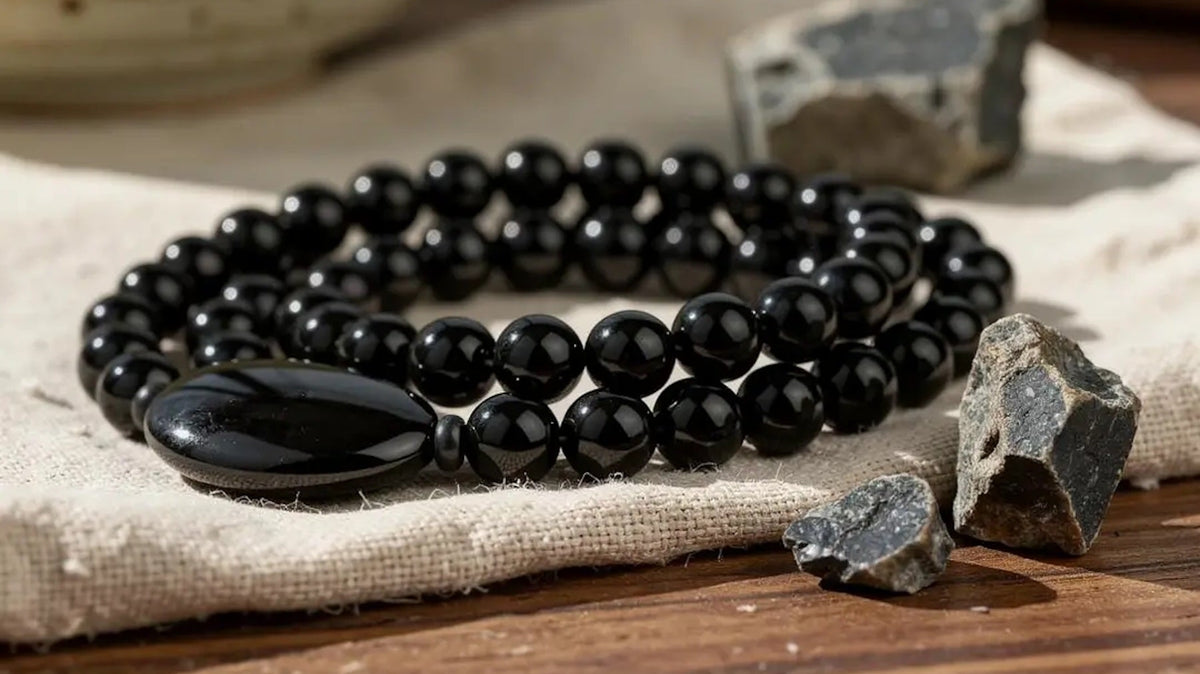
Black onyx is one of those gemstones most people recognize instantly. Its deep black color and polished finish make it a popular choice for everything from beaded bracelets to statement jewelry. But if you've ever shopped for black onyx gemstone beads, you may have wondered what black onyx actually is and whether it's considered a true gemstone.
Part of the confusion comes from the way the name "onyx" is used. You'll see it attached to stones with different colors, patterns, and appearances, while black onyx tends to look remarkably consistent from strand to strand. For jewelry makers buying beads, understanding what that name tells you can make it much easier to know what you're actually purchasing.
The answer has a little more nuance than you might expect. Here's what "onyx" really means, where black onyx fits in, and what jewelry makers should know when shopping for it.
What Gemologists Mean by "Onyx"
Onyx belongs to the quartz family. More specifically, it's a type of chalcedony, or quartz made up of crystals so small they can't be seen individually. What distinguishes onyx is its straight, parallel bands of contrasting color.
That banding also separates onyx from agate. Both are chalcedony, but agate typically has curved or concentric bands rather than straight ones. You may also come across sardonyx, a variety with bands of reddish-brown sard alongside white or black onyx.
Historically, those distinct layers made onyx especially well suited to carved pieces like cameos, where artisans could cut through contrasting layers to create a raised design.
Does "Gemstone" Mean "Precious"?
No. Calling something a gemstone doesn't depend on it being a diamond, ruby, sapphire, or emerald. In fact, the traditional split between "precious" and "semi-precious" stones is more of a marketing convention than a meaningful gemological classification.
Onyx is a gemstone, just like agate, jasper, and other members of the quartz family. For jewelry makers, a few of its physical properties are particularly useful:
- Composition: Chalcedony, a form of microcrystalline quartz
- Hardness: 6.5 to 7 on the Mohs Hardness Scale
- Durability: No cleavage planes and good resistance to chipping
- Luster: Takes a smooth, glassy polish
- Transparency: Typically opaque in black material
Together, these properties make onyx well suited for jewelry. It's durable enough for regular wear, takes a beautiful polish, and its opaque surface works especially well in both smooth and faceted bead shapes. That combination is a big part of why onyx has remained such a popular jewelry stone for centuries.
Is Black Onyx Natural?
Yes, but there's an important distinction between the stone itself and its color. Most of the solid-black onyx you see in jewelry is natural chalcedony that has been treated to achieve its deep, uniform black appearance.
Naturally occurring onyx typically forms in layers, and solid-black material thick enough to cut into beads is rare. For centuries, the jewelry trade has worked around this by dyeing lighter chalcedony black. Because chalcedony is slightly porous, it takes color well and can produce the rich, consistent finish associated with black onyx today.
In fact, treatment is so common that the International Gem Society recommends assuming black onyx is dyed unless a gemological report specifically identifies it as untreated.
Is Dyed Black Onyx Still a Real Gemstone?
Yes. Dyeing the stone doesn't turn it into glass or make the underlying material synthetic. It is still genuine chalcedony.
The terminology is where things get a little confusing. Under strict gemological definitions, onyx refers to chalcedony with straight, parallel bands. CIBJO notes that much of what is commercially sold as "black onyx" is technically dyed black chalcedony rather than naturally solid-black onyx.
For jewelry makers, the important thing is knowing what you're buying. "Black onyx" is the name commonly used for this material in the bead and jewelry industry, but reputable sellers should be transparent about treatments when applicable.
At The Bead Traders, our black onyx beads are genuine natural chalcedony. As with commercial black onyx generally, their consistent black color may be the result of treatment. When shopping elsewhere, be cautious of inexpensive strands marketed as "natural, undyed, solid black onyx" without any information to support that claim.
If you're interested in learning more about this process, read our full guide to natural vs. treated gemstone beads. This can serve as a helpful resource as you shop for future projects.
Black Onyx vs. Other Black Gemstones
Black onyx isn't the only dark stone you'll encounter when shopping for beads. Several materials can look similar at first glance, and some are even sold under names that include the word "onyx." Here's how to tell the most common options apart.
Black Onyx vs. Onyx Marble
Despite the name, onyx marble isn't true onyx. Also sold as Mexican onyx or banded calcite, it's a much softer form of calcite rather than quartz. With a hardness of around 3 on the Mohs Scale, it scratches far more easily than genuine onyx. This distinction matters for jewelry because calcite won't offer the same durability as chalcedony, especially in pieces intended for regular wear.
Black Onyx vs. Black Agate
Black onyx and black agate are closely related because both are varieties of chalcedony. Traditionally, the difference comes down to banding: onyx has straight, parallel bands, while agate has curved or concentric bands.
That distinction becomes harder to see in uniformly black beads, particularly when either material has been dyed. As a result, the names can overlap in the commercial bead market. To learn more, explore our full guide on natural agate beads and how to identify dyed colors.
Black Onyx vs. Black Obsidian
Black obsidian is natural volcanic glass rather than quartz. It tends to have a glassier appearance and may show some translucency around thin edges, while black onyx is typically opaque. Obsidian is also somewhat softer than onyx, which can make onyx the more durable option for jewelry that sees frequent wear.
Black Onyx vs. Black Spinel and Tourmaline
Black spinel and black tourmaline are naturally dark minerals rather than varieties of chalcedony. Both are generally harder than onyx, but they offer a different appearance. Faceted black spinel tends to have noticeably more sparkle, while black tourmaline can have visible striations and a more textured look. Black onyx is a better fit when you want a smooth, saturated black that can either disappear into a design or create strong contrast.
Compare our black spinel beads and tourmaline beads side by side with onyx to see the difference in surface brilliance.
How to Tell If Black Onyx Is Real
Because most commercial black onyx has been treated for color, identifying a genuine stone isn't about determining whether it's been dyed. Instead, you're trying to confirm that the material underneath is real chalcedony rather than glass, plastic, or another imitation.
Start by looking closely at the beads themselves. Genuine stone may show subtle variations from bead to bead, while perfectly identical color, texture, and finish can be a reason to take a closer look.
Check the Drill Holes
Drill holes can reveal details that aren't visible across a polished surface. Dyed chalcedony may show a slightly lighter or grayish interior where the color hasn't penetrated as deeply. That doesn't mean the bead is fake. In fact, it can be a clue that you're looking at genuine chalcedony that has been dyed, which is common for black onyx. You can learn a little more about this in our bead hole size guide.
Look for Bubbles
If you have a loupe, check the beads for small, round bubbles beneath the surface. Gas bubbles are characteristic of glass rather than natural chalcedony.
Buy From a Seller That Discloses Treatments
Visual inspection can only tell you so much, especially with polished black beads. A trustworthy gemstone supplier should accurately identify the material and be transparent about treatments rather than relying on vague terms like "100% natural" without explaining what they mean. For a closer look at what to check when buying gemstone strands, see our testing guide for natural stone beads.
How to Care for Black Onyx Jewelry
Black onyx is relatively durable, but treated stones still benefit from gentle care. Fortunately, you don't need anything complicated to keep onyx beads looking polished.
Clean black onyx with warm water, mild soap, and a soft cloth or brush. Avoid steam and ultrasonic cleansers, which may not be suitable for dyed chalcedony. You'll also want to keep black onyx away from prolonged heat and strong sunlight, both of which can affect treated color over time. If you're soldering or repairing a piece, remove the onyx beads first rather than exposing them to high temperatures.
When storing finished jewelry, keep onyx separate from harder gemstones that could scratch its polished surface. Our gemstone jewelry care guide has more tips for storing and cleaning mixed-gemstone pieces.
Designing Jewelry with Black Onyx Beads
Black onyx is easy to work into a wide range of jewelry styles because it gives you a strong neutral without fading into the background. Depending on the shape and finish you choose, it can look sleek and understated or become the focal point of the entire piece.
Here's what to pay attention to:
Choose a Smooth or Faceted Onyx
Smooth black onyx beads create a clean, uninterrupted surface that works especially well in simple strands and designs where you want other materials to stand out. Faceted onyx brings more movement to the stone. Each polished facet catches the light, giving an otherwise opaque black bead more dimension and making larger shapes especially noticeable. If you're not sure which will fit your project better, you may appreciate our guide on faceted vs. smooth gemstone beads.
Pair Black Onyx With Metals
Black onyx creates a crisp contrast against sterling silver and other white metals, a combination often associated with Art Deco jewelry. Pairing it with gold-filled findings gives the same stone a warmer look. Because black works as a neutral, you can also change the overall feel of a design simply by switching the metal around it. Browse The Bead Traders' Metal Beads and Findings and Chain By the Foot for an extensive selection.
Mix Onyx With Other Gemstones
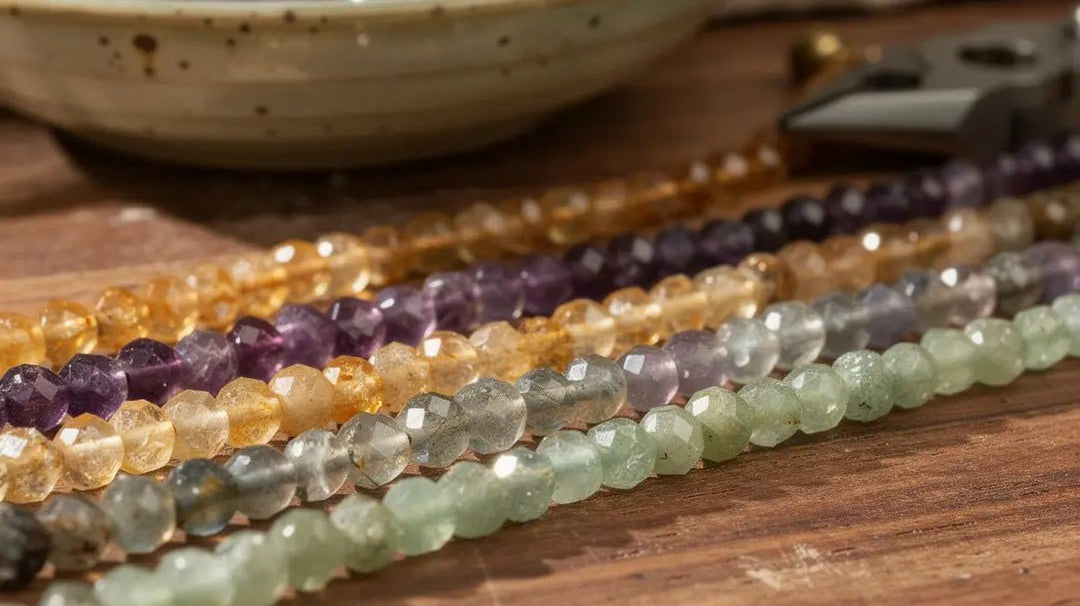
Black onyx is particularly useful for creating contrast in mixed-gemstone designs. White freshwater pearls are a classic pairing, while colorful gemstone beads can stand out more clearly when separated by black onyx beads. You can also use smaller onyx beads as spacers or bring in a larger faceted bead as the focal point rather than building the entire piece around black.
When choosing onyx for a project, look beyond color and consider the consistency of the cut, polish, drill holes, and sizing across the strand. At The Bead Traders, every strand goes through a two-step quality inspection, and our black onyx collection includes a range of smooth and faceted shapes for everything from subtle accents to statement designs.
Frequently Asked Questions
Is Black Onyx a Birthstone?
Black onyx isn't one of the modern traditional birthstones. However, its close relative sardonyx is an August birthstone. You may also see black onyx associated with Leo or other months in alternative birthstone and zodiac traditions.
Can Black Onyx Get Wet?
Yes, occasional contact with water shouldn't harm black onyx. However, it's still best to remove onyx jewelry before swimming, showering, or using household cleaners. When it needs cleaning, stick with warm water, mild soap, and a soft cloth or brush.
Does Black Onyx Scratch Easily?
Black onyx ranks around 6.5 to 7 on the Mohs Hardness Scale, so it holds up well in most jewelry. It can still be scratched by harder gemstones, which is why onyx jewelry is best stored separately from stones like sapphire or topaz.
Does Black Onyx Fade?
Treated black onyx can lose some of its color when exposed to prolonged heat or strong sunlight. Keeping your jewelry away from extreme temperatures and storing it out of direct sunlight can help preserve its dark, even appearance.
Shop Black Onyx Beads at The Bead Traders
Black onyx gives jewelry makers plenty to work with, from polished rounds that add a clean black accent to faceted shapes that catch more light. The key is buying from a supplier that’s clear about what you’re getting and pays just as much attention to the quality of the strand as the name on the label.
Explore The Bead Traders’ collection of black onyx beads, then finish your design with our freshwater pearls, metal beads and findings, chain by the foot, and other jewelry-making essentials. Every gemstone strand goes through our two-step quality inspection, so you can shop with confidence knowing quality and consistency are checked before your order leaves our warehouse.
And when it’s time to stock up for your next project, U.S. orders over $100 ship free. Browse our gemstone beads and jewelry-making supplies to find everything you need for your next design.