Buying wholesale gemstone beads can be one of the smartest ways to lower costs, expand your inventory, and maintain consistency across multiple jewelry designs. Whether you're a professional jewelry maker or hobbyist working on larger projects, purchasing beads in volume often provides better value than buying individual strands.
However, not all wholesale gemstone beads offer the level of quality, consistency, or long-term value. A low price may look appealing, but could be hiding inconsistent sizing, poor drilling, weak color saturation, excessive fractures, or undisclosed treatments. What appears to be a bargain upfront can quickly lead to wasted materials and distrust.
In this guide, we're discussing how to buy wholesale gemstone beads with confidence. We'll discuss specific factors to analyze, how to find a quality provider, and what matters when planning your purchase. With this information, you can approach jewelry making informed and assured.
What Wholesale Gemstone Beads Really Mean
Wholesale gemstone beads typically offer lower per-strand pricing in exchange for purchasing larger quantities. For jewelry makers and designers who use the same materials repeatedly, buying in volume can be extremely effective. However, wholesale doesn't automatically equate to higher quality, rarer gemstones, or the lowest price on the market.
As we discuss in our guide, "How to Buy Wholesale Gemstone Beads Online with Confidence," true wholesale value comes from usable inventory. A low-cost order loses its appeal if inconsistent sizing, poor drilling, weak color, or other quality issues leave a majority of the strand unusable.
Ultimately, the goal is to find the right balance between cost savings and consistency. Before placing a large order, take time to evaluate the quality of the beads, the reputation of the supplier, and how the materials align with your design—all of which we will discuss below.
Shopping Wholesale Gemstone Beads: Start With the Jewelry You Plan to Make
One of the most common wholesale buying mistakes is choosing beads before defining the project. Rather than starting with a strand that catches your eye, start with the finished jewelry you intend to create. Different designs have different requirements, and selecting materials without a clear purpose can leave you with an inventory that you cannot use.
For example, blue freshwater pearl earrings have different requirements than a Heishi beaded bracelet would. Similarly, wire-wrapped earrings often need bead holes that accommodate specific wire gauges, while knotted strands have their own sizing and drilling considerations.
The more clearly you understand your intended design, the easier it becomes to evaluate whether a particular wholesale lot is a good fit.
Match Bead Size and Shape to the Design
When buying wholesale gemstone beads, it's important to evaluate both size and shape before placing your order. Shape influences more than appearance; it affects how a piece drapes, catches light, and feels when worn. Choosing the right bead shape can make assembly easier and create a more cohesive project.
Here's a quick overview of what you can expect from different bead shapes:
- Round beads are among the most versatile options. They're easy to string, comfortable to wear, and work well for classic bracelets, knotted necklaces, and mala-style strands.
- Faceted beads feature multiple polished surfaces that reflect light more dramatically. They're a popular choice for dressier pieces, statement jewelry, and designs where sparkle is a priority.
- Rondelles work exceptionally well as spacers. Their flattering profile helps create visual rhythm between larger beads while adding subtle dimension to a design.
- Nugget beads embrace natural variation and irregularity, making them a great fit for organic, rustic, and bohemian-inspired jewelry.
- Teardrop beads have a natural direction and focal point, which makes them especially effective in earrings, pendants, and other similar hanging designs.
The best wholesale gemstone bead purchase is the one that best supports the jewelry you plan to make. For further guidance, our Gemstone Bead Shapes Guide can be an incredibly informative tool.
Choose Gemstones That Fit Your Customer or Style
When designing jewelry, consider who you're making it for. Beyond this, before placing your wholesale gemstone bead order, think about how the finished pieces will be worn and what qualities matter most to your audience. For example:
- Everyday jewelry calls for durable, versatile gemstones that can withstand frequent wear and pair easily with other pieces.
- Bridal and special occasion jewelry may prioritize elegance, sparkle, color consistency, or more refined finishes over everyday practicality.
- Bohemian and organic designs often work well with stones that showcase natural variation, unique patterns, and earthy color palettes.
- Modern and minimalist collections typically rely on clean shapes, restrained color combinations, and carefully curated materials.
For those building a broader jewelry collection, think beyond individual pieces and consider how your gemstones work together as a whole. Coordinated color stories, seasonal palettes, and complementary stone combinations can help create a more cohesive product line while making future design decisions easier.
Evaluate Gemstone Quality Before You Commit
When buying wholesale gemstone beads, quality matters just as much as price. A strand may look good in photos, but if the beads are poorly matched or inconsistently finished, those issues become even more noticeable when they're incorporated into jewelry.
Here's a quick overview of what you should look at before buying wholesale gemstone beads:
Look at Color, Clarity, and Consistency
Natural gemstone beads rarely look identical, which is what makes them particularly appealing. In fact, many show inclusions, subtle color shifts, and organic pattering, all of which are normal characteristics of genuine stones.
Rather than looking for perfect uniformity, focus on whether the strand feels balanced and visually cohesive. Pay particular attention to color distribution and overall consistency. A quality strand should have a relatively even appearance, even with natural variation.
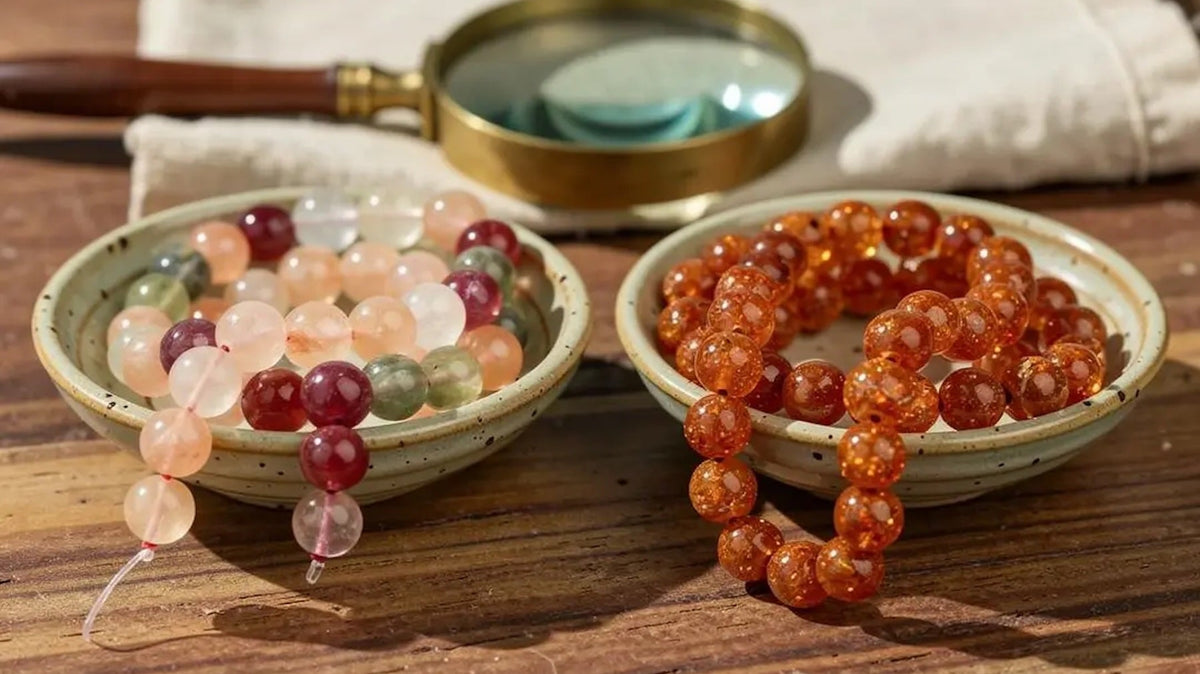
And, whenever possible, evaluate your gemstone beads under natural light. Unlike studio photography, natural light provides a more accurate representation of color, clarity, and patterning. Remember, the goal isn't perfection—it's consistency.
Looking for further guidance? You can find inspiration in our post, "Gemstone Bead Color Combinations Using Color Theory."
Inspect Cut, Shape, and Polish
Even beautiful gemstones can look underwhelming if the beads are poorly cut or finished. The quality of the shaping and polishing process ultimately has a direct impact on how professional the finished jewelry appears. When purchasing wholesale gemstone beads, take time to evaluate the craftsmanship of the strand, not just the gemstone itself.
Look for consistency in shape and sizing across the strand. Round beads should be reasonably round, faceted beads should have clean, symmetrical facets, and drilled holes should be positioned correctly. Minor variations are normal with natural materials, but obvious inconsistencies can make jewelry look less refined.
Additionally, the polishing should also be smooth and even. Dull surfaces, rough spots, chipped edges, and poorly executed faceting can diminish the appearance of the finished piece.
Here's an engaging example: "5 Pearl Bead Shapes and What They Say About You!"
Check Drill Holes and Structural Durability
Drill holes are one of the easiest ways to evaluate the quality of wholesale gemstone beads. However, they're often one of the most overlooked factors during the buying process. Even if a bead has a beautiful color and polish, poor drilling holes can create assembly issues, reduce durability, and limit how the bead can be used.
As we discuss in our Bead Hole Size Guide, look for drill holes that are clean, centered, and consistent. Off-center holes can cause beads to sit unevenly, while chipped edges around the drill opening may weaken the stone overall.
Beyond appearance, hole size matters just as much. Holes that are too small can make stringing difficult and accelerate wear on threading materials. Similarly, oversized holes can cause beads to shift excessively within a design. Clean, centered holes are a basic quality standard—not a bonus.
Understand Treatments, Dyes, and Enhancements
It's not uncommon for most gemstone beads on the market to have undergone some type of treatment. In fact, it's a fairly common practice! Heat treatment, dyeing, stabilization, coating, and other enhancements are most popular throughout the jewelry industry. In many cases, these processes simply improve color, durability, or overall appearance.
However, the important factor isn't whether a gemstone bead has been treated; it's whether those treatments have been disclosed.
A dyed or heat-treated gemstone is still an authentic stone. Ultimately, though, treatment information affects pricing, marketing, care, and jewelry designs. For example, certain dyes may fade with prolonged sun exposure, some coatings can wear over time, and stabilized stones often behave differently. We thoroughly discuss this in our post, "Natural vs Treated Gemstone Beads: Price and Durability."
When evaluating wholesale gemstone beads, prioritize suppliers who clearly disclose every treatment information within their product listings rather than only providing details upon request. Transparent sourcing practices help you make informed purchasing decisions.
Review Bead Size, Strand Length, and Approximate Count
When comparing wholesale gemstone beads, don't focus solely on the price per strand. Bead size, strand length, and approximate bead count all influence the true value of the purchase. Beyond this, it influences how many finished pieces you can realistically create from the material.
Gemstone beads are typically measured in millimeters, and even small size differences can significantly impact the process. For example, a 16-inch strand of 6mm beads will contain substantially more beads than a 16-inch strand of 10 mm beads. Larger beads may appear to offer more material, but they often produce fewer finished pieces per strand.
Because natural stones vary in size and shape, bead counts are usually approximate rather than exact. However, a quality supplier should provide enough information to help you estimate inventory requirements exactly.
Interested in learning even more? Review our guide, "Gemstone Bead Size Chart: Count Beads for Any Project."
Confirm Hole Size and Stringing Compatibility
Hole size is easy to overlook, but it can have a major impact on how usable a strand actually is. Most standard gemstone beads have hole sizes in the 0.6-1.0mm range, which works well with common beading wire, finer cords, and many threading materials.
However, if your designs require thicker elastic, leather cord, or multiple passes of thread, you'll likely need large-hole beads instead. This is why it's essential to verify hole size before placing a wholesale order. Beyond this, a good product listing should clearly state the approximate hole diameter alongside the bead size. Taking a few moments to confirm those measurements can prevent frustration later.
Consider Consistency Across Multiple Strands
If you're purchasing wholesale gemstone beads for production runs, matching jewelry sets, or repeat customer orders, consistency is key. More specifically, it's equally as important as the quality of individual strands.
Natural gemstones vary from batch to batch, and even small differences can become more noticeable when pieces are displayed together. For those who need closely matched materials, order enough inventory upfront and reorder before stock changes.
Compare Price by True Value, Not Just Lowest Cost
A low per-price strand doesn't always translate to the best value. For example, when you're comparing wholesale gemstone beads, it's important to factor in the full cost of the order. This includes shipping fees, minimum purchase requirements, and any potential return costs.
Following this, consider how many finished pieces you can realistically make from each strand and how much of the material is actually usable. If a lower-priced strand requires extensive sorting or contains inconsistency, your true cost per finished piece may be higher than expected.
When evaluating suppliers, look at the complete value proposition rather than the headline price alone. For example, at The Bead Traders, U.S. orders over $100 qualify for free First Class shipping. This helps make larger wholesale purchases more predictable and cost-effective.
Vet the Supplier Before Buying Wholesale Gemstone Beads
The supplier you choose to buy wholesale gemstone beads from can make a significant difference. This can impact everything from product accuracy and order reliability to what happens if you're unhappy with your shipment.
To help protect your investment, here's how to vet wholesale gemstone bead suppliers before buying:
Look for Clear Descriptions and Organized Categories
Quality wholesale listings should tell you exactly what you're ordering. Look for product descriptions that identify the gemstone type, disclose any treatments, and provide specific details, such as bead size, hole diameter, strand length, and approximate bead count. Vague descriptions like "natural style" or "gemstone look" often create more confusion.
Beyond this, organized product categories can also make sourcing significantly easier. Being able to shop by category, whether that's gemstone beads, freshwater pearls, metal beads and findings, or chain by the foot, helps streamline the purchasing process and reduce friction when building an order.
Ultimately, the more transparent the listing, the easier it becomes to evaluate quality, consistency, and trustworthiness.
Review Return Policies and Support Options
Before placing a wholesale gemstone bead order, take a second to review a supplier's return policies and customer support options. If you can't easily find this information, consider it a red flag.
A reputable supplier should make these policies easy to find and understand. For example, The Bead Traders accepts returns and exchanges within 30 days of the order date and offers free returns on U.S. orders over $100. Transparent policies like these can make it easier to shop for wholesale gemstone beads with confidence.
Check for New Arrivals and Fresh Inventory
A supplier that regularly updates its inventory can be a valuable resource for jewelry makers looking to keep their designs fresh. New materials, gemstone varieties, cuts, and color combinations can provide inspiration for seasonal palettes, limited-edition pieces, or upcoming product launches.
The Bead Traders' New Arrivals section demonstrates this perfectly. If staying ahead of trends or offering unique designs is important to your business, keeping an eye on new inventory can help you identify new opportunities.
Order Smart: Sample, Plan, and Reorder
When you're first purchasing wholesale gemstone beads from a new supplier, start with a small test order. Evaluating a few strands allows you to assess color, polish, drill hole qualities, and overall consistency before investing in larger quantities.
Additionally, keep records of what works. Tracking bead sizes, colors, supplier information, and best-selling designs can make future purchase decisions much easier. Once you find a strand that meets your standards, reorder it before you run out. Natural gemstone beads can vary a lot from batch to batch, so purchasing while matching inventory is still available can help maintain consistency for future designs.
Follow these tips when buying wholesale gemstone beads to protect your investment.
Buying quality wholesale gemstone beads comes down to doing the groundwork before you commit. Check quality across color, clarity, cut, polish, and drill holes. Read treatment disclosures. Review strand specs so you know exactly what you're getting. Calculate true cost per design, not just per strand. And choose a supplier whose descriptions, policies, and quality standards make the process reliable rather than risky.
When you're ready to source, explore our full gemstone bead collection, and check out the latest new arrivals. At The Bead Traders, we always prioritize honesty, transparency, and quality.