FREE SHIPPING & FREE RETURNS | 1st CLASS USPS for orders $100+ in the US.
Are Moonstone Beads Real? How to Spot Natural vs Imitation - The Bead Traders

Are Moonstone Beads Real? How to Spot Natural vs Imitation

You've fallen for moonstone's soft shimmer. Now you're ready to buy these gemstone beads for your next design. But here's the problem: not every strand labeled "moonstone" contains the real thing. Glass imitations flood the market, and they're getting harder to spot. Learning to identify real moonstone beads protects your investment and guarantees your finished jewelry has that authentic, billowing glow that makes moonstone so special.

This guide shows you exactly what to look for. You'll learn the science behind moonstone's signature shimmer, spot the red flags that signal fakes, and know where to find genuine strands you can trust.

What Is Moonstone?

Moonstone belongs to the feldspar group of minerals. It forms when two different feldspars—orthoclase and albite—intermix under extreme pressure and high temperatures. These minerals stack in alternating layers inside the stone.

The most common moonstone variety comes from orthoclase feldspar mineral adularia, named after an early mining site near Mt. Adular in Switzerland. Chemically, moonstone is a sodium-potassium aluminum silicate.

Ancient cultures prized moonstone for centuries. Romans from about 100 A.D. believed the stone formed from moonlight itself. In India, moonstone held sacred status. Travelers wore it as a protective amulet, especially during night journeys when the moon was visible.

Today, moonstone remains popular in jewelry making because of its soft, shifting glow and the range of colors it displays—from classic milky white to warm peach and rich chocolate brown.

Real Moonstone Beads: Distinguishing Features

Genuine moonstone shows specific optical and physical characteristics that imitations can't replicate. The most important feature is adularescence—a soft, mobile glow that appears to float beneath the surface. This isn't simple shine or sparkle. It's a billowy sheen that moves across the stone as you change your viewing angle.

Real moonstone contains natural imperfections. You'll see small inclusions, subtle color variations from bead to bead, and occasional irregularities when you examine a strand closely. These aren't flaws—they're proof of natural formation.

Adularescence and Color Variations

Adularescence happens because of how light behaves inside moonstone's layered structure. The stone is composed of two feldspar minerals arranged in thin, alternating layers. When light enters the stone, it scatters between these microscopic layers, creating that characteristic soft glow.

The finest moonstone displays glassy clarity with a blue or silvery shimmer. But the effect varies from stone to stone. Some beads show a gentle white glow. Others flash with hints of peach, grey, or even chocolate brown.

Rainbow moonstone takes this further. This variety shows flashes of yellow, peach, green, or purple as light moves across the surface. Blue adularescence is considered the most valuable, particularly when it shows as a vibrant, electric blue.

Our multi-color moonstone faceted coin beads demonstrate this natural color range perfectly. Each strand shows varied tones—proof that you're looking at genuine material rather than uniform synthetic copies.

Common Imitations to Watch Out For

The most common fake is opalite, a man-made glass. Glass imitations might sparkle, but they lack the soft, shifting adularescence of natural moonstone. The glow in glass looks harsh and static rather than mobile and gentle.

Here's how to spot the difference: authentic moonstone has a gentle, shifting glow that moves as you turn the bead. Glass or synthetic stones show either no glow at all or a harsh, artificial-looking shimmer that stays fixed in place.

Look for natural imperfections and inclusions. If a stone appears perfect with a suspiciously low price, it's likely synthetic or treated. Real crystals also feel cold to the touch and stay cool longer than glass or resin imitations, which warm up quickly in your hands.

Examining Moonstone Quality

Quality assessment starts with examining the stone's clarity, adularescent play, and overall finish. High-grade moonstone shows strong schiller—that soft, internal glow—combined with good translucency and minimal cloudiness.

The shape and cut matter too. Faceted beads add dimension and reflect light from multiple angles, which can intensify the adularescent effect. Our 8mm off white moonstone faceted pillow beads show how precision cutting enhances the stone's natural glow while maintaining a symmetrical, consistent shape.

Clarity and Inclusions

Natural moonstone contains minor inclusions—small bubbles, irregularities, or slight variations in clarity. These are expected and actually help confirm authenticity. What you don't want is a perfectly uniform, flawless appearance at a budget price. That combination signals synthetic material.

Color should vary slightly from bead to bead within a strand. Natural formation creates subtle differences. A strand where every single bead looks identical raises red flags.

Our cream moonstone plain nugget oval beads demonstrate this principle. The strand shows natural variation in tone and intensity while maintaining overall color harmony—exactly what you want in genuine material.

Hardness and Durability

Moonstone ranks 6 to 6.5 on the Mohs scale. This makes it softer than many gemstones and more vulnerable to scratching. The stone also has two cleavage directions, meaning a hard blow can cause breaks along these natural planes.

Because of these cleavage properties, manufacturers typically set moonstone into pendants, earrings, and pins rather than rings, which receive more daily impacts. When working with moonstone beads, handle them carefully and store them separately from harder stones that could scratch the surface.

High heat or sudden temperature changes can cause breaks. Keep your moonstone beads away from extreme conditions and avoid exposing them to rapid cooling or heating.

Where to Buy Real Moonstone Beads

Finding authentic moonstone means shopping with vendors who provide transparency about stone origin and grading. Reputable suppliers carefully select their inventory and can answer specific questions about the material they sell.

Online shopping gives you access to a wider selection than most local bead shops can offer. You can compare multiple strands, read detailed descriptions, and often find better prices because online retailers have lower overhead costs.

The Bead Traders ships throughout the United States and offers free shipping on orders over $100. We also provide returns, so you can order with confidence knowing you're not locked into a purchase if the beads don't match your expectations.

Spotlight on Reputable Retailers

Look for vendors who describe their stones in detail. Good suppliers mention specific characteristics like adularescence quality, color variations, and cut precision. They photograph their actual inventory rather than using stock images.

Our moonstone selection includes everything from tiny 3mm microfaceted beads to substantial nuggets measuring over 25mm. You'll find classic white and grey options alongside warm peach tones and distinctive chocolate varieties. Each strand is carefully selected for consistent quality, well-matched color, and that characteristic moonstone glow.

Check out our new arrivals to see the latest additions to our inventory. We regularly update our gemstone beads collection with fresh material.

Our 4mm chocolate moonstone faceted rondelle beads show how quality vendors present their products. The description notes the rich chocolate brown hue, soft schiller, symmetrical shape, and semi-translucent body—all specific details that help you assess the material before buying.

Care and Maintenance

Proper care keeps your moonstone beads looking their best for years. The key is gentle handling and avoiding harsh treatments that can damage the stone's surface or internal structure.

Warm soapy water is the only recommended cleaning method for moonstone. Mix a few drops of mild dish soap with water, soak your moonstone jewelry for 2-5 minutes, then gently buff dry with a soft cloth. Never use ultrasonic cleaners or steam cleaners—these can cause more damage than cleaning benefit.

Store moonstone beads in soft-lined boxes or cloth pouches, separate from harder stones like sapphires or diamonds that could scratch the surface. Keep them in cool, dry places away from prolonged direct sunlight.

Avoid sudden temperature changes. The stone's cleavage properties make it vulnerable to thermal shock. Don't leave moonstone jewelry in hot cars or expose it to rapid cooling.

Embrace the Glow of Real Moonstone Beads

Real moonstone beads bring something special to handmade jewelry—a soft, shifting glow that synthetic materials can't replicate. That gentle adularescence comes from the stone's natural layered structure, and it's the first thing you should check when evaluating authenticity.

Remember the key identification points: look for that mobile, billowing shimmer rather than harsh sparkle. Expect natural inclusions and slight color variations from bead to bead. Check that the stone feels cool to the touch and shows the characteristic glow when you turn it under light.

Quality matters in moonstone. Well-cut beads with strong schiller and good translucency create more impressive finished pieces. Our moonstone collection offers carefully selected strands that showcase the stone's natural beauty—from classic white varieties to rainbow and chocolate options.

When you choose authentic moonstone, you're investing in a gemstone with centuries of history and a glow that can't be faked. Take your time examining strands, ask questions about origin and quality, and buy from vendors who stand behind their products with clear return policies.

Your next moonstone design deserves the real thing. Start exploring our selection and find the perfect beads for your project.

Read more
Ethiopian vs Australian Opal Beads: What’s the Difference? - The Bead Traders

Ethiopian vs Australian Opal Beads: What’s the Difference?

Opals flash with color in ways few other gemstone beads can match. But not all opals are the same. When you compare Ethiopian vs Australian opal, you'll find differences in how they form, how they look, and how you need to care for them. This guide breaks down the traits that matter—color play, durability, and maintenance—so you can choose the right opal beads for your next jewelry project.

Understanding Opal Beads

Opal beads bring something special to jewelry making. Their play-of-color—the way they flash rainbow hues as light hits them—sets them apart from most other gemstones.

This phenomenon happens because opals are naturally occurring photonic crystals made of silica spheres arranged in regular patterns. When light enters the stone, it diffracts off these microscopic structures, creating flashes of color that shift as you move the bead.

Jewelry makers value opal beads for their ability to add visual interest to any design. A simple strand of opal rondelles can transform a basic necklace into something memorable. The beads come in various shapes—from smooth rondelles to tumbled nuggets—and each format shows off the stone's color play differently.

Ethiopian vs Australian Opal: Key Origins

The story of where an opal forms shapes what it becomes.

Ethiopian opals are the newer discovery. Farmers near Wegel Tena in northern Ethiopia found play-of-color opal in early 2008. These stones form through volcanic activity, which creates a porous structure. The volcanic environment gives Ethiopian opals their characteristic translucency and intense color flashes.

Australian opals have a longer mining history. They develop over millions of years in sedimentary layers, forming in ironstone or sandstone host rock deep underground. This slow formation process in stable sedimentary conditions creates opals with different properties than their Ethiopian counterparts.

The geological differences show up in the finished beads. Our golden Ethiopian opal plain rondelles have translucent bodies with no visible matrix, while our Australian boulder opal tumbled nuggets show a moderate bluish-grey matrix throughout the stone.

The Science of Color Play

The magic of opal color comes down to sphere size and arrangement.

The colors you see depend on the size of the silica spheres inside the opal. Smaller spheres produce blues and greens. Larger spheres create reds and oranges. The spacing between spheres—typically 150 to 300 nanometers—determines which wavelengths of light get diffracted.

Ethiopian opals tend to show a broader color spectrum. Our golden Ethiopian opal beads display excellent play of color in red, blue, green, orange, and periwinkle hues. This wide range suggests the presence of varied sphere sizes within each stone.

Australian opals often emphasize different parts of the spectrum. Our Australian boulder opal beads show little play of color in blue-violet-yellow hues. The color display is more subtle but set against the stone's natural matrix, which can make the flashes stand out in a different way.

Body color matters too. Ethiopian opals often have creamy off-white or golden bodies that let light pass through. Australian opals, particularly boulder varieties, feature light grey to cream body colors with visible matrix that creates a different visual effect.

Durability and Handling

The biggest practical difference between Ethiopian vs Australian opal comes down to water.

Ethiopian opals are hydrophane, meaning they absorb water like a sponge. When you expose them to water, their appearance changes—colors shift, transparency alters, and the stone can even change size temporarily. This happens because of their porous volcanic formation.

Australian opals contain water naturally, but don't absorb it from outside sources. They're non-hydrophane, which makes them more stable in different environments. You can wear Australian opal jewelry without worrying about exposure to moisture affecting the stone's appearance.

The hydrophane nature of Ethiopian opals means you need to think about more than just water. Body oils, lotions, and perfumes can penetrate the porous surface, potentially causing permanent color changes. This doesn't mean Ethiopian opals are fragile—it just means they need different handling.

Both types rank similarly on the Mohs hardness scale, making them softer than many gemstones. Handle all opal beads with care to avoid scratches and chips. Store them separately from harder stones that could damage their surface.

Visual Differences in Jewelry

The way opal beads look in finished jewelry depends on their transparency and color distribution.

Ethiopian opal beads work well in designs where light can pass through them. Their translucent to semi-translucent bodies create a glowing effect when backlit. Our light golden Ethiopian opal faceted rondelles show strong multi-color flashes throughout their waxy-luster bodies, making them eye-catching in pendants or earrings where light hits them from multiple angles.

The color range in Ethiopian opals gives you options. We carry Ethiopian opal beads in olive green, black, and even Barbie pink tones. Each color base creates different effects when the play-of-color activates.

Australian opal beads have a different presence. The visible matrix in our boulder opal nuggets adds texture and depth. These beads are larger and more substantial, with a waxy luster and rounded edges that give them an organic feel. The light grey to cream body colors with bluish-grey matrix create an earthy aesthetic.

For pairing with other materials, consider the overall tone. Ethiopian opals with their clean, translucent bodies complement delicate freshwater pearls and fine chain. Australian boulder opals with their matrix and larger size pair well with heavier metal findings and can anchor a design.

Ethiopian vs Australian Opal: Maintenance and Care

Caring for opal beads requires a gentle approach, but the specifics vary by type.

For Ethiopian opals, avoid water contact. When Ethiopian opals get wet, they temporarily turn translucent yellow or brown and seem to lose their color play. They'll return to normal after air-drying for about 24 hours, but repeated exposure can cause issues.

Keep Ethiopian opal jewelry away from lotions, perfumes, and oils. Apply these products before putting on your opal pieces. Remove opal jewelry before washing hands, showering, or swimming.

Australian opals need less worry about moisture but still benefit from gentle care. Clean them with a soft, slightly damp cloth. Avoid ultrasonic cleaners and harsh chemicals that can damage the surface or dry out the stone's natural water content.

Store both types of opal beads in a soft pouch or lined box. Keep them away from heat sources and direct sunlight, which can cause drying or color fading over time. If you live in a very dry climate, some jewelers recommend storing opals with a damp cotton ball in a sealed container to maintain humidity—though this matters more for Australian opals than Ethiopian ones.

When working with opal beads in your designs, use silk or soft synthetic thread for stringing. The softer material reduces abrasion on the bead holes. Space opals with small knots or soft spacer beads to prevent them from rubbing against each other.

Making Your Choice

Choosing between Ethiopian vs Australian opal beads depends on your design goals and how you plan to wear the finished piece.

Pick Ethiopian opals when you want intense color play and translucent stones that glow with light. They're ideal for special occasion jewelry that won't face daily exposure to water or oils. Our dark golden Ethiopian opal rondelles offer excellent play of color with no visible matrix, perfect for designs where you want the focus on pure color flash.

Choose Australian opals for everyday wear pieces that need to handle real-world conditions. The non-hydrophane nature makes them more forgiving. Our Australian opal plain rondelles and matte nuggets bring opal's beauty to designs you can wear without constant vigilance.

Consider your budget too. Ethiopian opals typically cost less due to plentiful supply, while Australian opals command higher prices for their stability and established reputation.

At The Bead Traders, we carry both types in multiple formats—from small rondelles to larger nuggets. Browse our gemstone beads collection to see the full range. Check our new arrivals for the latest opal strands.

Orders over $100 ship free in the United States, making it easy to stock up on the opal beads you need for your next project. Both Ethiopian and Australian opals have their place in jewelry making. Understanding their differences helps you choose the right stone for each design.

Read more
Fresh Ways To Use Emerald Beads for Jewelry Making - The Bead Traders

Fresh Ways To Use Emerald Beads for Jewelry Making

Emerald beads bring a richness to jewelry that few other gemstones can match. Their deep green tones carry centuries of meaning, and working with them opens up design possibilities that range from simple elegance to complex statement pieces. This post walks you through practical techniques for using emerald beads for jewelry making, from choosing the right stringing materials to pairing emeralds with complementary stones and metals.

The Timeless Appeal of Emerald

Emeralds have held symbolic weight across cultures for thousands of years. Ancient civilizations associated emeralds with renewal, rebirth, and tranquility. Egyptian kings were buried with emerald jewelry as a symbol of eternal life, while Romans believed the stones could refresh both eyes and soul.

The symbolism extends beyond royalty to include wit, eloquence, and foresight. Modern jewelry makers tap into this legacy when they incorporate emerald beads into their designs. The stone's association with wisdom and inner balance makes it a meaningful choice for personal pieces and gifts alike.

Basic Techniques for Incorporating Emerald Beads

Start with the right stringing material. Beading wire works well for emerald beads because it's strong, flexible, and coated with nylon for durability. For a more traditional approach, a silk cord with knotting between beads protects the stones from rubbing against each other.

Wire wrapping secures focal beads and adds decorative elements. This technique works well for pendants and creates professional-looking attachments. Wrapped loops provide secure connections that won't come apart with wear. When stringing, place your focal emerald bead at the center or slightly off-center, depending on your design. Use graduated sizing in your supporting beads to draw the eye toward the focal point.

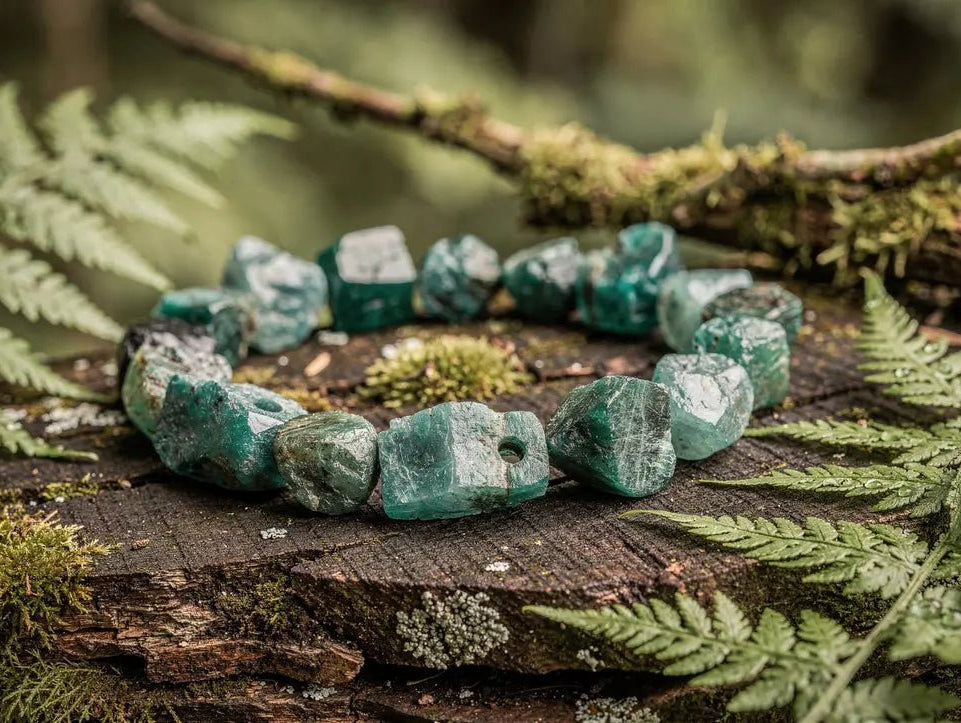
Our Brazilian emerald top-drilled crystal strands work particularly well for organic designs. These beads have a non-polished, slightly tumbled surface that shows off the crystal structure when viewed from the side. The natural irregularities give each piece character.

Pairing Emerald with Complementary Stones

Color planning matters when you combine emerald with other gemstones. Choose your emerald beads first, then select complementary colors for supporting beads. The approach you take—contrast or harmony—shapes the entire feel of your piece.

Choosing Contrasting Colors

Pairing emerald with ruby creates a festive, high-impact look. The red-green contrast demands attention and works well for statement necklaces or bold earrings. Balance the saturation levels—if your emerald beads show deep, rich color, choose rubies with similar intensity.

Diamonds bring elegance to emerald designs, showcasing vibrant growth against sparkling clarity. This pairing works across styles, from vintage-inspired pieces to modern minimalist designs. Layer different bead types around your focal emerald piece. Combine gemstone beads with freshwater pearls and metal spacers for texture and visual interest.

Harmonious Combinations

For softer designs, emerald and aquamarine blend like waves of blue-green. These analogous hues sit side-by-side on the color wheel and create smooth transitions in multi-strand designs. Pearls also pair beautifully with emerald, offering a classic combination that never goes out of style.

Our shaded Brazilian emerald faceted rondelles show varied color saturation from medium dark to light, making them ideal for creating gradients. The 2.9-3mm size works as spacers or detail elements around larger focal stones.

Metals that Complement Emerald

Metal choice influences the mood of your emerald jewelry. Each option creates a different aesthetic and works better with certain design styles.

Gold for Luxurious Designs

Yellow gold enriches emerald's lush green hues with regal warmth. This classic pairing has stood the test of time for good reason. The warm tones of gold enhance the natural richness of emerald, creating pieces that feel both traditional and timeless.

Match your metal findings to your design intent. Gold-filled components coordinate naturally with emerald beads and maintain their finish over time. Consider the shape of your emerald beads when choosing settings—our faceted pear beads with their medium dark saturation and black veining work beautifully in gold wire-wrapped pendants.

Silver, Copper, and Other Options

Sterling silver reads as cool and contemporary. The deep green of emerald enhances silver's cool tone while creating a modern, clean aesthetic. Silver works particularly well with lighter emerald shades and translucent stones.

Brass and copper add warmth and vintage appeal. Antique brass findings give emerald jewelry a heritage feel, while copper brings rustic charm. These metals develop patina over time, adding character to your pieces. Gunmetal plating offers an edgy vibe that contrasts beautifully with emerald's organic green tones.

Our emerald faceted cube beads show medium to dark saturation with black veining and a minty green tone. These work well with mixed metal designs where you combine silver and brass for textural interest.

The Beauty of Emerald Beads for Jewelry Making

Emerald beads for jewelry making come in forms that suit different techniques and styles. Natural crystal beads retain their organic character with surface irregularities that tell the story of their formation. Faceted shapes catch light and add sparkle. Plain rounds and rondelles work as spacers or create delicate chains.

Our emerald plain nugget beads feature a fairly smooth, vitreous luster with a strongly saturated rich green hue and black veining throughout. These unfaceted nuggets make strong focal elements in organic designs. For more textured work, chip faceted petite nuggets create an organic appearance with varied green tones.

Finding High-Quality Emerald Beads

Color is the paramount factor in emerald quality. Look for consistent hue across a strand, though natural variation adds character. Check the clarity—some inclusions are normal and expected in emerald, but the beads should show good transparency or translucency, depending on the style.

Our Colombian emerald chips are described as translucent to transparent with varied green tones. This transparency level works well for layered designs where light passes through the beads. For crystal-forward pieces, our Brazilian emerald top-drilled tumbled crystals show the natural matrix and rich green color in their untouched state.

Work with reputable suppliers who stand behind their products. The Bead Traders offers free shipping and returns on U.S. orders over $100, making it easier to source quality materials for your projects.

Advanced Design Ideas

Push your emerald work further with mixed-metal statement pieces. Combine gold and silver findings in a single design, using emerald beads as the unifying element. The green tones bridge the warm and cool metals naturally.

Layer multiple gemstone strands for depth and movement. Start with a base strand of small emerald beads, then add layers of complementary stones in varying lengths. This technique works well for necklaces that make a statement without feeling heavy.

Experimenting with Complex Patterns

Multi-strand emerald necklaces create visual impact through repetition and pattern. Use graduated sizes across strands, or maintain consistent sizing for a more uniform look. Our Brazilian emerald faceted heishi beads measuring 6.5-7mm work well for multi-strand designs where you want texture without bulk.

Chandelier earrings showcase emerald beads in motion. Use top-drilled emerald shapes like our faceted nuggets with medium dark saturation and forest green tonal quality. The top drilling provides a good side view and allows the beads to hang naturally.

Caring for and Storing Emerald Beads

Emerald rates 7.5 to 8 on the Mohs hardness scale and requires more care than harder stones like ruby or sapphire. Clean emerald jewelry with warm soapy water or a warm soapy cloth. Don't soak emeralds in soapy water, and avoid harsh detergents.

Use a soft baby toothbrush for gentle cleaning. Fill a bowl with lukewarm water, add a tiny drop of mild dish soap, and gently swirl your jewelry. Rinse thoroughly and pat dry with a soft cloth. Limit exposure to chemicals—remove emerald jewelry when cleaning or applying perfumes and hand sanitizers.

Store emerald beads separately from harder stones that could scratch them. A fabric-lined jewelry box works well, or wrap strands individually in soft cloth. Keep them in a cool, dry place away from direct sunlight and heat sources.

Embrace the Radiance of Emerald

Emerald beads for jewelry making offer design possibilities that span from simple to sophisticated. The stone's natural variations—from translucent Colombian chips to matrix-rich Brazilian crystals—give you options for every style and technique. Start with basic stringing and wire wrapping, then move into more complex multi-strand or mixed-metal designs as your confidence grows.

The combination of emerald's symbolic history and practical versatility makes it a gemstone worth exploring. Whether you're drawn to the classic pairing of emerald and gold or prefer modern silver settings, the key is choosing quality materials and techniques that let the stone's natural beauty show through.

Browse our gemstone beads collection to see the full range of emerald options, from tumbled crystals to faceted shapes. Our new arrivals section features the latest additions to help you stay current with fresh design possibilities. With free shipping and returns on U.S. orders over $100, you can experiment with different emerald styles and find the perfect beads for your next project.

Read more
Garnet Beads for Jewelry Making: Practical How-To Guide - The Bead Traders

Garnet Beads for Jewelry Making: Practical How-To Guide

Learn how to choose, plan, and care for garnet beads for jewelry making. Get clear advice on necklaces, bracelets, spiritual pieces, and lasting upkeep tips.

Read more
How to Tell If Garnet Beads Are Real: Checks You Can Do - The Bead Traders

How to Tell If Garnet Beads Are Real: Checks You Can Do

Learn how to tell if garnet beads are real at home, spot fake glass, choose trusted sellers, and care for your pieces so your jewelry keeps its rich color.

Read more
Wholesale Focal Beads Guide: Types, Materials, Choices - The Bead Traders

Wholesale Focal Beads Guide: Types, Materials, Choices

Imagine crafting a necklace that stops people in their tracks. Wholesale focal beads from The Bead Traders give you that star-power at bulk prices, so your designs shine without overspending. Did you know focal beads are distinctive, often larger beads designed to serve as the centerpiece in jewelry pieces? They draw the eye and set the tone for your entire piece.

When you buy these beads wholesale, you get access to premium materials at prices that make sense for your business or hobby. This guide walks you through everything you need to know about selecting and working with wholesale focal beads.

Wholesale Focal Beads: What They Are and Why They Matter

A focal bead is the star of your jewelry piece. It's typically larger than other beads in your design and features distinctive characteristics that make it impossible to ignore. Think of it as the anchor that holds your entire aesthetic together.

Buying focal beads wholesale changes the economics of jewelry making. You get significant cost savings when you purchase in bulk, which means you can experiment with different designs without breaking your budget. This approach works for hobbyists who want variety and professionals who need consistent inventory.

The right focal bead transforms a simple strand into a statement piece. It can shift a design from casual to formal, from subtle to bold. Your choice here matters more than any other component in your jewelry.

Popular Materials and Styles

Material choice defines the mood of your piece. From gleaming crystal to warm wood, each focal bead style influences durability, weight, and color palette.

Color and shape work together to create visual interest. You might choose a bold, angular bead for modern designs or a smooth, rounded piece for classic looks. The material you select influences both of these factors.

Gemstone Focal Beads

Natural gemstones make excellent focal beads. Materials like amethyst, turquoise, and jade are among the most sought-after gemstone focal beads. Each carries distinct colors and patterns. No two gemstone beads look exactly alike, which gives your jewelry an authentic, handcrafted feel.

Gemstones offer superior durability compared to many synthetic materials. They resist scratching and maintain their appearance over time. This makes them ideal for pieces that will see regular wear. High-quality acrylic and wood beads also stand up well as focal pieces.

Semi-precious stones provide the look of luxury at accessible price points. When you source them wholesale, you can stock a variety of colors and types. Gemstone beads pair well with both casual and formal designs, giving you flexibility in your creative work.

Metal Focal Beads

Metal beads bring structure and shine to your designs. Sterling silver, brass, copper, and gold-filled options each create different moods. Silver reads as cool and contemporary. Brass and copper add warmth and vintage appeal.

Choose gunmetal plating for an edgy vibe, antique brass for vintage appeal or high-polish gold-filled for a modern sheen. Textured finishes—hammered, etched or brushed—add depth and catch light in unique ways.

Metal focal beads coordinate naturally with other metal findings in your jewelry. Match your focal bead finish to your clasps, jump rings, and spacer beads for a cohesive look.

Freshwater Pearl Focal Beads

Freshwater pearls offer organic elegance. These cultured pearls come from freshwater mussels, primarily in China. They vary in shape from near-round to baroque, giving you options for different design styles.

The nacre composition of freshwater pearls creates their signature luster. While they're typically less perfectly round than saltwater pearls, this irregularity adds character. Each pearl has its own personality.

Freshwater pearls work in both traditional and contemporary designs. Pair them with gemstones for contrast or use them with other pearls for a monochromatic look. Their affordability compared to saltwater pearls makes them practical for wholesale purchasing.

Glass and Crystal Focal Beads

Glass and crystal beads deliver maximum sparkle. Faceted surfaces catch and reflect light from multiple angles. This creates movement and visual interest even when the wearer is still.

Quality matters with glass and crystal. Well-made beads have clean, sharp facets that maximize brilliance. Poor cutting results in dull surfaces that don't perform as they should.

These beads suit upscale and statement jewelry. They add glamour to evening wear pieces and can elevate simple designs. The variety of shapes and colors available means you can find options for any aesthetic.

Choosing Wholesale Focal Beads for Your Projects

Start with your design theme. A boho piece calls for natural materials like gemstones or wood. Classic designs work well with pearls or simple metal beads. Modern jewelry often features geometric shapes in metal or glass.

Size matters more than you might think. Your focal bead should be large enough to command attention but not so heavy that it makes the piece uncomfortable to wear. Consider the scale of your other components too.

Color schemes require planning. Choose a focal bead color first, then select complementary colors for your supporting beads. Neutrals help balance bold focal pieces. Metallics add polish without competing for attention.

Budget affects your material choices. Wholesale pricing helps, but some materials cost more than others even in bulk. Factor in your target price point for finished pieces when selecting beads.

Work with reputable suppliers who stand behind their products. Look for sellers who offer free shipping and returns on larger orders. This protects your investment and makes it easier to try new materials. Remember The Bead Traders offers free shipping and returns on U.S. orders over $100.

Incorporating Focal Beads into Jewelry Designs

Wire wrapping secures focal beads and adds decorative elements. This technique works well for pendants and creates professional-looking attachments. Wrapped loops provide secure connections that won't come apart with wear. Learn basic wrapped loops and secure attachments in this wire wrapping tutorial.

Stringing requires attention to balance. Place your focal bead at the center or slightly off-center, depending on your design. Use graduated sizing in your supporting beads to draw the eye toward the focal point.

Layer different bead types around your focal piece. Combine gemstone beads with freshwater pearls and metal spacers for texture and visual interest. A chain by the foot can extend your design and add movement.

Consider the practical aspects of your design. Smooth beads feel more comfortable against skin. Check that holes are large enough for your stringing material. Test the weight distribution before finishing your piece.

Browse new arrivals regularly to see what's trending and find unexpected combinations that spark creativity.

Take Your Designs to the Next Level with Wholesale Focal Beads

Wholesale focal beads are the foundation of standout jewelry—shop top-quality options at The Bead Traders and enjoy free U.S. shipping over $100. They provide the visual anchor that makes your designs recognizable and appealing. When you invest in quality materials and thoughtful selection, you create pieces that people want to wear and keep.

The right supplier makes all the difference. The Bead Traders offers curated selections of gemstone beads, freshwater pearls, metal findings, and other materials you need. Free shipping on orders over $100 makes it easier to stock your supplies without worrying about extra costs.

Your choice of focal beads shapes every project you create. Take time to explore different materials, experiment with combinations, and develop your signature style. The beads you choose today become the jewelry people treasure tomorrow.

Read more
Focal Beads for Pens: The Ultimate Guide - The Bead Traders

Focal Beads for Pens: The Ultimate Guide

Imagine every note you take feeling as special as a handwritten letter. Focal beads for pens can turn your everyday tool into a keepsake you're proud to use. Studies show that personalized writing instruments reduce stress and create stronger emotional connections to your work. These decorative elements transform a basic pen into something that reflects your style, making every writing session more intentional.

This guide shows you how to select, attach, and style focal beads to create pens that stand apart from the generic options cluttering your desk drawer.

The Appeal of Personalizing Pens

Handcrafted writing instruments have fascinated people for generations. There's something satisfying about holding a pen that feels different from the mass-produced versions everyone else uses.

When you customize a pen with focal beads, you create an object that carries meaning. It becomes a reflection of your preferences, your aesthetic choices, your personality. You might choose colors that calm you, stones that hold significance, or designs that simply make you smile when you see them.

These personalized pens often become keepsakes. You remember where you got the beads, when you assembled the pen, or who you made it for. They're conversation starters at meetings and thoughtful gifts that show you put time into creating something specific for someone.

Beyond sentiment, personalized pens serve as excellent memorabilia for events or milestones. They mark occasions in a way that standard promotional pens never could.

Focal Beads for Pens: The Basics

Focal beads serve as central elements that draw the eye. Unlike standard beads that blend into a design, focal beads command attention through their size, color, or distinctive features. On a pen, they typically sit near the top or middle, creating a visual anchor point.

You'll find focal beads in several materials. Gemstone beads offer natural patterns and colors that vary from piece to piece. Metal beads provide weight and shine, with options ranging from brass to gold-plated finishes. Freshwater pearls add elegance and subtle luster. Glass and ceramic beads deliver bold colors and artistic designs.

Shape matters too. Round beads work for most pen styles. Oval or barrel shapes sit comfortably against fingers. Horn-shaped or faceted beads add geometric interest. The key is matching the bead's proportions to your pen's diameter so everything looks balanced.

Why Focal Beads Enhance the Writing Experience

Focal beads do more than look good. They change how a pen feels in your hand.

The beads create a tactile reference point. Your fingers naturally find them, establishing a consistent grip. This can reduce the small adjustments you make while writing, leading to less hand fatigue during longer sessions.

Visual appeal affects your mindset, too. Quality pens can improve focus and concentration through their tactile experience. When you use a pen you've decorated yourself, you bring intention to the act of writing. It's no longer automatic—it becomes a small ritual.

That emotional connection matters. Premium materials create tactile experiences that influence how we think and create, building emotional ties to the writing process. Your decorated pen becomes associated with productivity, creativity, or calm, depending on when and how you use it.

Materials and Techniques

Start with beadable pens designed to accommodate decorative elements. These pens have removable tops or sections where you can slide beads onto the barrel.

For silicone focal beads, the process is simple. These beads stretch slightly to fit over pen barrels and stay in place through friction. Silicone focal beads are made from 100% food-grade, FDA-approved silicone—BPA, PVC, phthalate, cadmium, and lead-free, making them safe for all users.

For gemstone or metal focal beads, you'll need to consider the bead's hole size. Large-hole beads work best for pen decoration. Here are the basic tools you'll need:

The assembly process follows these steps:

  1. Disassemble your pen by removing the cap, ink cartridge, and any removable sections.
  2. Slide your chosen focal beads onto the barrel in your preferred arrangement.
  3. Add small spacer beads between focal beads if you want separation or need to adjust positioning.
  4. Apply a small amount of adhesive if needed to keep beads from sliding.
  5. Reassemble the pen, replacing the ink cartridge and cap.
  6. Test the mechanism to confirm everything works smoothly.

Keep function in mind. Your beads shouldn't interfere with the pen's cap, clip, or writing mechanism. Leave enough space at both ends for proper operation.

Focal Beads for Pens: Incorporating Your Personal Style

Your bead choices tell a story about what appeals to you.

Start with color. Do you gravitate toward earth tones that feel grounded? Bright hues that energize? Cool blues and greens that calm? Pick colors that match your mood or the pen's intended purpose. A pen for work might use professional metallics and deep gemstones. A pen for journaling might feature softer, more personal colors.

Mix materials for depth. Combine a statement gemstone focal bead with smaller metal spacers. Pair a freshwater pearl with complementary glass beads. The contrast in textures and finishes creates visual interest.

Consider themes too. Ocean-inspired pens might use aquamarine and seafoam green beads. Autumn themes could incorporate amber, carnelian, and brown jasper. Seasonal designs let you rotate pens throughout the year.

Browse new arrivals regularly to spot fresh options. Trends in jewelry design often translate well to pen decoration, giving you current looks that feel modern.

Where to Source Your Focal Beads

Quality matters when you're creating something you'll use daily.

Look for beads with consistent coloring and smooth finishes. Check hole sizes to confirm they'll fit your pen barrels. Examine the bead's weight—heavy focal beads can make a pen feel unbalanced.

The Bead Traders offers an extensive selection of gemstone beads, metal beads and findings, and more, suited for pen decoration. Their curated inventory focuses on quality pieces that work well for various craft projects. For U.S. orders over $100, they provide free shipping and returns, making it practical to stock up on supplies for multiple pen projects.

Investing in quality materials means your finished pens will last and maintain their appearance through daily use, keeping your pens looking fresh.

Elevate Your Everyday Writing

Focal beads for pens transform routine writing into something more intentional. Each time you pick up a pen you've decorated, you're reminded that everyday objects can carry personal meaning.

Challenge yourself this week: decorate a pen that embodies your favorite color palette, then share your creation on social media with #BeadTraderPens. Experiment with different combinations. Make pens for different purposes or moods. Create gifts that show thought and effort. The possibilities expand as you explore more materials and techniques.

Your writing deserves tools that inspire you. Focal beads for pens offer a simple way to bring creativity and personality to something you use every single day.

Read more
Design Ideas with Hematite Beads for Jewelry Making - The Bead Traders

Design Ideas with Hematite Beads for Jewelry Making

Have you ever held a strand of hematite beads and felt their satisfying weight in your palm? That metallic gleam and substantial feel signal something special. Hematite beads for jewelry making transform simple designs into pieces that feel intentional and refined, with a dark gray to black finish that works across styles.

Layered bead combinations saw a 20% sales lift in 2025, and hematite sits at the center of this trend. Tap into this momentum by mastering hematite beads for jewelry making. The material's versatility lets you create everything from minimalist bracelets to complex statement necklaces.

This guide walks through practical techniques for incorporating hematite into your designs. You'll learn how to string and wire-wrap these beads, what materials pair well with them, and how to tap into current style trends. The goal is to give you actionable ideas you can use right away.

Understanding Hematite's Unique Qualities

Hematite is an iron oxide made up of 70% iron and 30% oxygen. This composition gives it a distinctive metallic appearance that ranges from black to gray. When you scratch hematite, it leaves a reddish-brown streak, which helps identify genuine stones.

The material rates between 5.5 and 6.5 on the Mohs hardness scale. This makes it durable for most jewelry applications, though you'll want to take extra care with rings and bracelets that see frequent wear. Hematite's metallic sheen is due to its iron-rich composition and can range from high-polish mirror-like surfaces to earthy matte finishes, offering multiple aesthetic options.

One common misconception involves magnetism. Real hematite is not naturally magnetic. Many commercial "hematite" beads are actually hematine, a synthetic magnetic material. This doesn't make them inferior for jewelry making, but it's good to know what you're working with.

Hematite Beads for Jewelry Making: Techniques to Explore

Working with hematite beads for jewelry making requires attention to their weight and finish. These beads have substance, which means your stringing materials and findings must support that weight without breaking or stretching over time. The techniques below help you create pieces that last.

Wire Wrapping and Stringing Basics

Start with the right materials. For heavier hematite beads, especially those around 20mm, use professional-grade beading wire with double crimps. Standard thread won't hold up to the weight. For 20mm hematite beads, we recommend SoftFlex .019-inch stainless steel wire for optimal strength and flexibility.

Your basic stringing method involves crimp beads at each end. Thread your wire through a crimp bead, around your clasp, and back through the crimp. Use crimping pliers to secure it flat. String your hematite beads, then repeat the crimping process on the other end.

For clasps, choose sturdy options. Heavy lobster claw clasps with soldered jump rings work well. The extra security matters when your beads have weight to them.

When wire wrapping, keep your loops tight. Hematite's smooth surface can slip if connections are loose. Practice your wrapping technique on scrap wire before committing to your final piece.

Bead Embellishments for Statement Pieces

Statement designs let hematite shine as the focal point. Try layering different sizes of hematite beads in a single piece. Mix 6mm rounds with 10mm faceted beads to create visual interest.

Multi-strand designs work particularly well. String three or four strands of varying lengths, each featuring hematite as the primary bead. The metallic sheen multiplies across strands for a bold effect.

For a modern look, keep spacing uniform and patterns geometric. For vintage-inspired pieces, alternate bead sizes irregularly and add small spacer beads between larger hematite stones.

Combining Hematite with Other Materials

Hematite's neutral metallic tone pairs with almost any material. The key is finding combinations that complement rather than compete.

Gemstone beads create striking contrast. Try pairing hematite with lighter stones like amazonite beads or labradorite. The dark metallic finish makes pastel and mid-tone gemstones pop. For a grounded look, combine hematite with tiger eye or pyrite.

Freshwater pearls soften hematite's industrial edge. Gray or white pearls work especially well. String them in alternating patterns or use pearls as accent beads at intervals. The organic texture of pearls balances hematite's smooth finish.

Metal findings tie everything together. Silver-toned components match hematite's natural color. Gold creates an intentional contrast that reads as sophisticated. Browse metal beads and findings to find clasps, spacers, and connectors that suit your design.

Chain integration adds movement. Use chain by the foot to create segments between bead clusters. This works well for longer necklaces where you want to break up the weight distribution.

Hematite Beads for Jewelry Making in Modern Trends

Current jewelry trends favor layering. Layered necklaces are a main trend in 2025, and hematite works perfectly in these arrangements. Create multiple pieces at different lengths, each featuring hematite as a core element. Wear them together for a curated look.

Minimalist designs remain popular. A simple strand of uniform hematite beads on a thin wire creates a sleek bracelet or anklet. The material's natural luster provides interest without added embellishment.

Bohemian styles incorporate hematite as a grounding element. Mix it with natural materials like wood, leather, or unpolished gemstones. Pair hematite with leather cords and wooden beads for that beachy-bohemian flair. The contrast between hematite's refined finish and raw materials creates depth.

Colorful beaded jewelry is trending, and hematite serves as an anchor. Use it to separate bright gemstone sections or as end beads that frame colorful centerpieces. This approach lets you experiment with color while maintaining visual balance.

Check new arrivals regularly to see how hematite beads for jewelry making fit into emerging styles. Fresh inventory often reflects current design directions.

Take Your Jewelry Designs to the Next Level

You now have the techniques and material combinations to work confidently with hematite. Start with a simple stringing project to get comfortable with the weight and finish. Move on to wire wrapping and mixed-material designs as you build your skills.

The real power of hematite beads for jewelry making lies in their adaptability. They anchor bold statement pieces and add subtle sophistication to minimalist designs. They work in trendy layered looks and timeless classic styles. This versatility means you can build a signature aesthetic while experimenting with different approaches.

Browse The Bead Traders for hematite beads in various sizes and finishes, from small rounds to faceted tubes. You'll find the findings and wire you need to complete your projects. Orders over $100 ship free with returns included.

Your next project is waiting. Pick a technique from this guide, gather your materials, and create something that reflects your style. Hematite beads give you the foundation to make jewelry that feels polished, intentional, and entirely yours.

Read more
Care, Cleaning, and Storage Guide for Biwa Pearl Beads - The Bead Traders

Care, Cleaning, and Storage Guide for Biwa Pearl Beads

When you hold a strand of luminous biwa pearl beads in your hands, each pearl carries the legacy of 1930s Lake Biwa craftsmanship, displaying that signature organic elegance that sets these freshwater pearls apart. But their beauty demands your attention. Without proper care, these delicate gemstone beads can lose their signature glow and develop surface damage that diminishes their value. This guide walks you through the specific techniques you need to preserve your biwa pearl beads for years to come.

Understanding the Unique Qualities of Biwa Pearl Beads

Biwa pearl beads stand apart from other pearls due to their irregular, baroque shapes. You'll notice they're often flattened or elongated rather than perfectly round. This distinctive form comes from their natural growth process in freshwater environments.

The surface of these pearls displays a brilliant luster that ranges from pure white to soft pinks and lavenders. Originally cultivated in Lake Biwa, Japan, these pearls have maintained their reputation for quality since the 1930s. But this same surface makes them vulnerable. The nacre layer that creates their shine is relatively soft compared to other gemstones. It scratches easily when it comes into contact with harder materials.

Their porous nature means they absorb substances from their environment. Oils, perfumes, and even the natural acids in your skin can penetrate the surface. This absorption affects both appearance and structural integrity over time.

Handle your pearls with clean, dry hands whenever possible. The less contact with potentially damaging substances, the better they'll maintain their original condition.

Why Proper Care Maintains Lasting Value

As the nacre's organic layers degrade, biwa pearl beads lose their mirror-like glow and become prone to cracking. This process happens naturally over time, but improper care accelerates it significantly.

Surface-level dullness often results from accumulated residue. You can reverse this with proper cleaning. Deeper damage, however, occurs when the nacre itself deteriorates. Without moisture, pearls lose luster and the nacre becomes brittle.

Dried-out nacre can peel, crack, or discolor. You might notice yellowing or a chalky appearance. Once this structural damage occurs, you can't fully restore the pearl to its original state.

The difference between a well-maintained pearl and a neglected one shows clearly in both appearance and market value. Regular care prevents the need for costly professional restoration or replacement.

Best Practices for Gentle Cleaning

Start with lukewarm water and a tiny drop of gentle dish soap. Mix these in a small bowl. Dampen a soft, lint-free cloth with this solution and gently wipe each pearl. Baby soap in two cups of lukewarm water works particularly well as a cleaning solution. The mild formula won't strip away the natural oils that help maintain the nacre.

Use silk or nylon-coated stainless-steel beading thread for durability and gentle support when stringing your pearls. These materials provide strength while remaining soft enough to avoid abrading the pearl surface.

After cleaning, use a separate damp cloth with plain water to remove any soap residue. Then dry each pearl thoroughly with a clean, soft cloth. Let them air dry completely before storing.

Avoid these cleaning methods entirely: ultrasonic cleaners, steam cleaners, harsh chemicals like bleach or ammonia, and vinegar. The acidity in vinegar can eat away at the nacre layer, causing permanent damage.

Safe Routine vs. Intensive Cleaning

Routine cleaning should happen after each wear. Use a slightly dampened soft cloth to wipe away perspiration, oils, and any residue from cosmetics. This quick wipe-down takes less than a minute but prevents buildup that leads to dullness.

Intensive cleaning becomes necessary every few months, depending on how often you wear your pearls. This involves the soap solution method described above. Take your time with each bead, paying attention to any crevices or irregular surfaces where residue might collect.

If you notice any sticky residue from fruit juice or other acidic substances, clean the affected area immediately. The longer these substances remain in contact with the pearl surface, the more damage they cause.

Storing Your Biwa Pearl Beads to Preserve Luster

Store your pearls at around 68°F with humidity levels around 50%. These conditions prevent the nacre from drying out while avoiding excess moisture that could promote deterioration.

Include a humidity-control pack (around 50% RH) in your jewelry box to stabilize moisture levels. These small packets maintain consistent conditions that protect your pearls from environmental fluctuations.

Keep pearls in soft pouches or dedicated jewelry box compartments with fabric lining. Never store them with other jewelry pieces, especially metal items that can scratch their surfaces. Each strand or piece should have its own space.

Avoid airtight containers and plastic bags. Pearls need air circulation to maintain their moisture content. Plastic bags can trap humidity and create an environment that damages the nacre over time.

A jewelry box with good ventilation works well. Some jewelry makers prefer individual cloth pouches that allow the pearls to breathe while protecting them from dust and contact with other items.

Environmental Dangers for Biwa Pearl Beads

Direct sunlight causes fading and discoloration. UV radiation breaks down the organic components in the nacre, leading to a loss of color and luster. Store your pearls in a dark or shaded location.

Heat poses similar risks. High temperatures can dry out the nacre, making it brittle and prone to cracking. Keep pearls away from radiators, heating vents, and other heat sources.

Perfumes, hairsprays, and cosmetics contain chemicals that damage pearl surfaces. Apply these products before putting on your pearl jewelry, and allow them to dry completely. The same applies to cleaning products, chlorine, and bug spray.

Even natural substances like sweat can harm pearls over time. This makes the post-wear cleaning routine particularly important during hot weather or after physical activity.

Extra Preservation Tips for Ongoing Maintenance

Professional inspection should happen annually for frequently worn pieces. A jeweler can check for signs of wear on the threading and identify any surface damage that needs attention.

Restringing becomes necessary every 12 months for pearl bracelets and other pieces you wear regularly. The silk thread weakens over time, and waiting too long increases the risk of breakage.

Gentle polishing with a soft, dry cloth can restore some shine to pearls that have developed a slight film. Use light pressure and circular motions. Never use jewelry polishing compounds or abrasive materials.

Finding Quality Pearl Supplies and Accessories

You'll need proper storage solutions and occasional replacement beads to maintain your pearl jewelry collection. The Bead Traders offers a curated selection of freshwater pearls and jewelry-making supplies that can help you refresh or repair your pieces.

Explore our New Arrivals for the latest freshwater pearls and jewelry-making supplies. You'll find options that match the quality and character of your existing biwa pearl beads.

Soft jewelry pouches, proper cleaning cloths, and quality storage boxes make a significant difference in preservation. These items represent a small investment compared to the cost of replacing damaged pearls.

For U.S. orders over $100, The Bead Traders provides free shipping and returns, making it easier to stock up on the supplies you need for ongoing maintenance. This includes replacement beads if you need to match existing pieces or create new designs.

Consider keeping spare beads on hand that match your favorite pieces. If a pearl becomes damaged or lost, you can replace it quickly without searching for a match later.

Maintain the Radiance of Your Biwa Pearl Beads

The lasting beauty of biwa pearl beads depends entirely on how you treat them. Regular gentle cleaning removes harmful residues before they cause damage. Proper storage protects against environmental factors that accelerate deterioration. Mindful handling prevents scratches and impacts that compromise the nacre.

These practices don't require significant time or expense. A few minutes of care after each wear and attention to storage conditions will keep your pearls looking their best for decades. The effort you invest in maintenance pays off in preserved value and continued enjoyment of these distinctive gems.

Start implementing these care techniques today. Your biwa pearl beads will reward your diligence with enduring luster and beauty that stands the test of time.

Read more
Top 10 Picks: Finding the Rarest Pearl Color Today - The Bead Traders

Top 10 Picks: Finding the Rarest Pearl Color Today

Imagine discovering the rarest pearl color on Earth—those elusive gold and black hues that collectors spend lifetimes seeking. At The Bead Traders, we specialize in sourcing exceptional beads through our curated selection of freshwater pearls, gemstone beads, and metal findings. This guide explores the top ten rarest natural pearl colors, reveals how to identify genuine specimens, and shares expert tips for selecting the highest quality pearl beads. If you've ever wondered what the rarest pearl color is, you're in the right place—this post uncovers the elusive gold and black hues that define true rarity.

Understanding rare pearl colors matters for both collectors and crafters. These exceptional gems command premium prices and create stunning focal points in jewelry designs. Each rare color tells a story of unique environmental conditions, specific mollusk species, and natural processes that occur only under perfect circumstances.

We provide free shipping and returns for orders over $100 in the United States, making it easier to explore these extraordinary gems for your next project.

What Is the Rarest Pearl Color?

The rarest pearl color depends on natural formation processes and environmental factors. Pearl colors develop when mollusks absorb organic pigments and trace elements during pearl creation. The oyster's species, water conditions, and available nutrients all influence the final hue.

Gold and black pearls are considered the rarest natural colors, followed by pink, light blue, and lavender. These colors occur infrequently because they require specific conditions that rarely align in nature.

Top 10 Rare Pearl Colors

Each rare pearl color offers unique characteristics and formation stories. Here are the ten rarest pearl colors found in nature today.

#1: Conch Pink Pearls

Conch pink pearls come from Queen Conch shells in the Caribbean. These pearls cannot be cultured, making them entirely natural. Only 1 in 10,000 to 15,000 Queen Conchs produces a pearl, and just 15-20% meet jewelry quality standards.

These pearls display a unique "flame structure" - an undulating, silky pattern visible under light. The intense pink color ranges from coral to deep rose. However, the attractive pink hue fades with prolonged sun exposure, making proper storage essential.

#2: Golden South Sea Pearls

Golden South Sea pearls come from golden-lipped Pinctada maxima oysters in the Philippines and Indonesia. According to The Culture of Pearls, the most vibrant golden hues originate in the Philippines, ranging from champagne to deep '24 karat' gold. GIA spectral analysis can distinguish natural gold from dyed pearls. The deepest golden color, called "24 karat," represents the most valuable South Sea pearl color available.

Natural golden pearls show distinct reflectance characteristics that distinguish them from dyed versions. Look for consistent color throughout the pearl and avoid specimens with uneven coloring or artificial-looking brightness.

#3: Tahitian Black Pearls

Tahitian pearls are the only naturally black pearls in existence. Cultivated in French Polynesia using black-lipped oysters, these gems display an incredible color spectrum, including black, gray, green, blue, purple, and the highly prized peacock variety.

Peacock Tahitian pearls show rosé to purple overtones on dark green-gray to blue-gray backgrounds. This combination creates one of the most sought-after pearl colors in the market.

#4: Chocolate Pearls

Most chocolate pearls are color-enhanced rather than naturally brown. No naturally occurring chocolate brown freshwater pearls exist on the market. If you find chocolate brown freshwater pearls, they are automatically dyed.

Some Tahitian pearls naturally display chocolate colors ranging from medium brown to dark cocoa. These natural chocolate Tahitians command higher prices than their enhanced counterparts.

#5: Blue Akoya Pearls

Blue Akoya pearls occur naturally but extremely rarely. Natural silver-blue accounts for less than 15% of total Akoya production. These pearls originate from Japan and Vietnam, displaying body colors from light gray-blue to deeper sky blue.

Pearl farmers don't intentionally cultivate blue Akoyas - they aim for white pearls. This makes naturally blue specimens particularly rare and valuable.

#6: Lavender Freshwater Pearls

Lavender freshwater pearls grow naturally in Chinese freshwater lakes and rivers (The Pearl Source). These pearls display soft purple hues with silky luster characteristics. The natural pastel colors make them popular for delicate jewelry designs.

Genuine lavender pearls show consistent color throughout with natural variations in tone. Avoid pearls with artificial-looking purple coloring or uneven dye distribution.

#7: White South Sea Pearls

White South Sea pearls from white-lipped Pinctada maxima oysters represent luxury in the pearl industry. Australia produces most white South Sea pearls, with additional cultivation in Indonesia, the Philippines, and Myanmar.

These pearls commonly measure 10-13mm with unique satin-like luster and thick nacre layers. Their size and quality make them among the most valuable pearls available.

#8: Silver Pearls

Silver pearls come from various sources, including Tahitian pearls with silver overtones and White South Sea pearls with silvery characteristics. Some Akoya pearls also display natural silver overtones.

Look for a consistent metallic sheen throughout the pearl. Natural silver pearls show subtle color variations while maintaining their distinctive metallic appearance.

#9: Sea of Cortez Pearls

Sea of Cortez pearls are the rarest cultured pearls globally, with only 4,000 produced annually. These pearls come from rainbow-lipped pearl oysters found only in Baja, Mexico, and northern Peru.

They display rainbow colors, including gray, black, pink, gold, green, and purple. When light hits these pearls, unique pigments create luminous rainbow effects that seem to emanate from within.

#10: Edison Pearls

Edison pearls represent modern cultivation breakthroughs in freshwater pearl farming. Developed in early 21st-century China, these pearls use bead-nucleated methods instead of traditional tissue nucleation. Named after Thomas Edison, these breakthrough pearls symbolize innovation in freshwater pearl farming.

Edison pearls can exceed 15mm in diameter, with some reaching 16-20mm. They're cultivated using Triangle Sail mussels and achieve sizes comparable to South Sea pearls while maintaining freshwater characteristics.

How to Choose the Best Quality Pearl Beads

Selecting premium pearl beads requires understanding key quality factors. Luster represents the most important characteristic - high-quality pearls reflect light sharply and clearly. Surface quality matters too; look for minimal blemishes or irregularities.

Size affects both beauty and value. Larger pearls are rarer and more expensive. Shape preferences vary, but round pearls typically command highest prices. For beading projects, consider how pearls will match and complement each other in the finished piece.

Nacre thickness determines durability and luster quality. Thicker nacre creates better light reflection and longer-lasting beauty. Ask suppliers about nacre measurements when purchasing premium pearls. Don't forget to check orient—the rainbow iridescence that appears on only 0.01% of pearls.

How Much Are Pearls Worth?

Pearl valuation depends on multiple factors that determine their market value. Size plays a major role - larger pearls are exponentially rarer and more valuable than smaller ones. Luster quality affects price significantly, with high-luster pearls commanding premium prices due to their superior light reflection.

Color rarity directly impacts value. Natural golden South Sea pearls and peacock Tahitian pearls maintain the highest market values among colored pearls. Origin matters too - pearls from established regions like Australia, French Polynesia, and Japan typically cost more than those from newer cultivation areas.

Surface quality and shape influence pricing. Round pearls with minimal blemishes achieve top prices, while baroque shapes offer more affordable options. Nacre thickness affects both durability and value - thicker nacre indicates higher quality and longer-lasting beauty.

Authenticating Rare Pearls: Spotting Real vs. Imitations

Identifying genuine rare pearls requires careful examination. Natural pearls feel slightly gritty when rubbed gently against teeth, while imitations feel smooth. For a quick at-home check, gently rub the pearl against your front teeth; genuine pearls will feel subtly rough. Real pearls show natural color variations and surface irregularities.

Raman spectroscopy can detect natural pigments (peaks around 1125 cm⁻¹ and 1510 cm⁻¹) to confirm untreated pearl colors (GIA).

Professional grading reports from recognized laboratories provide definitive authentication. These reports identify natural versus cultured pearls and detect color treatments. For expensive purchases, always request certification.

Purchase from reputable dealers who provide detailed information about pearl origins and treatments. Avoid sellers who cannot answer specific questions about their pearls or refuse to provide authentication documentation.

A Simple Real-World Example with The Bead Traders

Recently, a jewelry designer contacted The Bead Traders seeking rare lavender freshwater pearls for a custom necklace design. Our team provided detailed information about natural color variations and helped select pearls with consistent quality and matching tones.

This knowledge helped create a stunning piece that showcased the pearls' natural beauty while meeting the client's specific requirements.

Enhance Your Collection with the Rarest Pearl Color

Rare pearl colors offer unmatched beauty and investment potential for collectors and jewelry makers. These exceptional gems create conversation pieces and heirloom-quality jewelry that appreciates over time. Understanding what makes each color rare helps you make informed purchasing decisions and appreciate the natural processes behind these treasures.

Explore our latest rare pearl finds in the New Arrivals section.

Start exploring our curated selection of freshwater pearls and discover how these natural treasures can transform your jewelry designs. Discover your perfect rarest pearl color today.

Read more
How To Make High-Quality Jade Bead Bracelets - The Bead Traders

How To Make High-Quality Jade Bead Bracelets

Jade's smooth, cool surface has captivated jewelry makers for millennia, and now you can create your own stunning jade bead bracelet that honors this ancient tradition. From selecting the finest gemstone beads to mastering time-tested techniques, this guide shows you how to craft a bracelet that honors jade's rich heritage while expressing your personal style. Plus, with free shipping and returns on U.S. orders over $100 at the Bead Traders, gathering premium materials for your jade bead bracelet is easier than ever.

Crafting Your Own Jade Bead Bracelet: A Timeless Accessory

Jade stands apart from other gemstones because of its rich cultural significance and remarkable durability. The name jade comes from the Spanish expression piedra de ijada—literally "stone of the pain in the side", and it symbolizes prosperity, success, and good luck across many cultures.

Jade artifacts were unearthed in the Liangzhu culture (3300–2300 BCE), symbolizing authority and spirituality. This archaeological evidence shows jade's importance spans millennia, making your bracelet part of an unbroken chain of human appreciation for this remarkable stone.

Modern jewelry makers appreciate jade for its versatility. You can find it in various shapes from classic rounds to elegant ovals, teardrops, and geometric cuts. The stone's natural variations create unique patterns that make each bracelet one-of-a-kind. This combination of historical meaning and contemporary appeal makes jade bead bracelets perfect for both everyday wear and special occasions.

Understanding Jade Quality

Not all jade is created equal. Two main types exist: jadeite and nephrite. Jadeite is rarer, more colorful, and generally more valuable than nephrite, making it the preferred choice for high-end jewelry projects.

Jadeite offers more vibrant colors and better translucency than nephrite. Jadeite rates between 6.5 and 7 on the Mohs scale, making it slightly harder and more durable for jewelry making.

According to the GIA, jadeite's three most important qualities, in order of their impact on market value, are color, transparency, and texture. Hold each bead up to a strong light source to assess translucency; high-quality jadeite will allow some light to pass through, indicating superior transparency and fewer inclusions. These factors determine both the stone's beauty and its value, making them essential considerations for your bracelet project.

Authentic jade feels dense and substantial in your hand. If you pick up a piece and it seems light, it might be a simulant like dyed glass. Real jade also produces a clear, bell-like sound when tapped against another piece of jade, while fake materials sound dull or plastic-like.

Selecting High-Quality Beads

When selecting beads for your bracelet, examine each piece for consistent color throughout. High-quality jade beads show minimal color variation within individual stones.

Look for beads with smooth surfaces free from cracks, chips, or rough spots. The drill holes should be clean and centered. Avoid beads with visible fractures, as these weak points can break during stringing or wear.

Bead size affects your bracelet's overall appearance and comfort. Common sizes range from 4mm to 10mm. Use 4-6mm beads for delicate, refined designs that work well for everyday wear. Choose 8-10mm beads for statement pieces that draw attention and showcase jade's natural beauty.

Consider the overall uniformity of your bead selection. While slight variations add character, dramatic differences in size, shape, or color can make your finished bracelet look unprofessional. The Bead Traders offers an expert-curated inventory of wholesale beads and jewelry supplies that reflect quality and style, making it easier to find matching sets.

Essential Tools and Materials

Professional results require the right tools. Chain nose pliers are essential for bending, creating perfect 90-degree angles, gripping, and shaping wire. You'll also need crimping pliers if you plan to use crimp beads for finishing.

For stringing materials, choose based on your preferred technique. Premium 0.7mm elastic cord works well for stretch bracelets and provides the durability needed for regular wear. Beading wire or silk thread suits more structured designs, while nylon cord offers excellent strength for everyday wear pieces.

Additional supplies include bead stoppers to prevent beads from sliding off during assembly, jump rings for connecting elements, and clasps for non-stretch designs. You can find reliable bead stoppers and premium elastic cord in our Tools & Supplies section (https://thebeadtraders.com/collections/tools), ensuring a clean, snag-free assembly. Metal findings can add professional touches to your finished piece.

Consider accent materials like spacer beads or chain by the foot to create more complex designs that highlight your jade beads.

Top 3 Jade Bead Bracelet Making Techniques

Stretch Cord Technique for Jade Bead Bracelets

This beginner-friendly method creates comfortable, flexible bracelets. String your jade beads onto premium 0.7mm elastic cord, which offers lasting stretch and resilience, leaving enough length to tie secure knots. The stretch allows easy on-and-off wear without clasps.

To finish properly, tie a surgeon's knot by making two loops through the first wrap instead of one. This creates a stronger hold than a simple overhand knot. Pull tight and add a small drop of clear-drying jewelry glue to the knot for permanent security. Trim excess cord once the glue dries completely.

Wire-Wrapping Technique

Wire-wrapping adds structure and sophistication to your jade bead bracelet. Use jewelry wire to create wrapped loops between beads or at connection points. This technique works especially well with irregularly shaped jade beads, as the wire work can accommodate different sizes while maintaining visual balance.

Start with 20-gauge wire for beginners, as it's easier to manipulate while still providing good structure. Practice making consistent loops before working with your best jade beads.

Braided or Macramé Technique

Macramé creates bohemian-inspired bracelets with added texture. Incorporate jade beads into knotted cord patterns for unique designs. This technique lets you adjust bracelet length easily and creates an interesting visual contrast between smooth jade and textured cord work.

Use waxed cotton cord for best results, as it holds knots securely and won't fray with wear. Plan your bead placement before starting to maintain even spacing throughout the design.

Most Popular Jade Colors for Bracelets

Green jade is a beacon of positivity, symbolizing luck, abundance, and prosperity. Light green "icy jade" offers subtle elegance, while deep emerald green makes bold statements.

Beyond traditional green, jade comes in fascinating color variations. Yellow jade adds warmth and uniqueness to designs. Black jade offers dramatic contrast and modern appeal.

Jade collections encompass a wide variety of colors, including green, yellow, black, and brown jade beads, giving you plenty of options to match your personal style or create themed collections.

A General Example from The Bead Traders

Quality suppliers make significant differences in your finished pieces. The Bead Traders provides carefully selected jade beads that meet professional standards for color consistency and craftsmanship. Their new arrivals section regularly features fresh jade options that can inspire your next design.

Key benefits include:

  • Free shipping and returns for orders over $100 in the United States
  • Expert-curated inventory that reflects quality and style
  • Regular new arrivals to keep your designs fresh and current

This policy particularly benefits jewelry makers who want to experiment with different jade varieties without financial risk, allowing you to test color combinations or bead sizes before committing to larger projects.

Create Your Perfect Jade Bead Bracelet

Ready to craft your own jade bead bracelet? Start with our curated selection of premium jade beads and professional-grade supplies. The techniques and quality considerations covered here provide the foundation for countless design possibilities.

Start with simple stretch cord designs to build confidence, then experiment with wire-wrapping or macramé as your skills develop. Each piece you make carries the cultural significance of jade while reflecting your individual style and skill. Explore our complete collection at The Bead Traders today and begin creating your masterpiece with the confidence that comes from using quality materials and proven techniques.

Read more
Red Pearls Necklace: Simple Outfit Ideas and Occasions - The Bead Traders

Red Pearls Necklace: Simple Outfit Ideas and Occasions

A red pearls necklace isn't just jewelry—it's a conversation starter that commands attention from across the room. At The Bead Traders, we understand the magnetic pull of these rare gems that have captivated jewelry lovers for centuries. Red pearls are among the rarest in the world, prized in the Far East as symbols of wisdom and power. This bold piece transforms any outfit from ordinary to extraordinary, offering a perfect blend of classic elegance and modern confidence.

Explore The Bead Traders' latest freshwater pearl and gemstone bead additions here: New Arrivals.

You'll find that styling a red pearls necklace opens up countless possibilities for both men and women. From casual weekend looks to formal evening events, these vibrant gems adapt to any occasion. The key lies in understanding how to balance their dramatic presence with your existing wardrobe.

Why Choose a Red Pearl Necklace?

Red pearls stand apart from traditional white or cream varieties. Red pearls are very rare and highly sought after, making them a distinctive choice for those who appreciate unique jewelry. Italian red pearls from Pinna nobilis and Burmese red pearls from Pinctada maxima contribute to their allure and rarity (Pearl-Guide). In Far Eastern cultures, they symbolize wisdom and power, adding deeper meaning to their visual impact.

The color red naturally draws the eye and projects confidence. When you wear red pearls, you signal that you're comfortable making bold fashion choices. This psychological effect can genuinely boost your confidence throughout the day.

Understanding the Unique Appeal of Red Pearl Jewelry

While most red pearls achieve their vibrant color through careful treatment processes, some Tahitian pearls exhibit natural cherry overtones that are highly prized for their authentic beauty. These natural variations offer subtle color shifts that make each pearl unique.

Varieties include Italian Pinna nobilis, Atlantic Pinctada species, and South Sea Burmese Pinctada maxima, each offering distinct overtones according to the Pearl Guide.

Red carries powerful symbolism across cultures. It represents passion, love, success, and prosperity. Red pearls are "a symbol of success, power and passion" and make "a bold but stunning choice that is more than capable of making a strong statement."

The luxury factor comes from both rarity and visual impact. Red pearls occupy a special place in fine jewelry collections, offering something different from conventional pearl colors.

The Versatility of Red Pearls for Women

Women can incorporate red pearls into virtually any outfit style. The trick is balancing their boldness with complementary colors and textures. Red pearls work particularly well with neutral tones like black, white, gray, and navy.

Pearls add a casual elegance to any outfit, transforming simple pieces like cotton blouses or lightweight sweaters into polished looks. For professional settings, this everyday elegance translates beautifully to crisp white shirts or navy blazers, creating sophisticated outfits that feel approachable rather than overly formal.

Layering offers another styling approach. Wearing a single strand of pearls with jeans and a t-shirt or stacking it with a gold chain and pendants gives them a casual vibe and ups the cool factor. Mix your red pearls with gold chains or other freshwater pearls in complementary colors.

Casual to Semi-Formal Looks

For everyday wear, red pearls pair beautifully with simple cotton blouses, lightweight sweaters, or flowing midi dresses. The contrast between casual fabrics and elegant pearls creates an effortlessly chic look.

Choose shorter strands for higher necklines and longer strands for V-necks or scoop necks. This creates visual balance and prevents the necklace from competing with your outfit's silhouette.

Semi-formal occasions call for slightly more structured pieces. Think tailored dresses, silk blouses, or coordinated separates. Red pearls complement these looks without overwhelming them.

Evening and Formal Attire

Evening events showcase red pearls at their finest. Pairing a choker or long single or triple strand with a little black dress and red lip creates timeless class. The monochromatic red theme ties your look together beautifully.

For black-tie events, consider longer strands that can be worn as a single long necklace or doubled for a layered effect. Cocktail dresses in navy, emerald, or metallic tones provide excellent backdrops for red pearls. Avoid competing jewelry that might detract from the pearls' impact.

red pearl necklace and mens fashion ideas

Men's Guide to Styling a Red Pearls Necklace

Men can wear red pearls with confidence by following a few key principles. Start with classic combinations and gradually experiment with bolder looks. Layering two pearl necklaces, adding in a pendant pearl necklace, or layering with your favorite gold and silver pieces creates a contemporary masculine style. When selecting pearls for formal attire, aim for a strand with uniform size to maintain cohesiveness.

For business settings, pair a classic pearl necklace with a crisp white shirt and tailored suit. Keep the strand relatively short and uniform in size for professional cohesiveness.

Casual styling works well with simple t-shirts, button-downs, or lightweight sweaters. The key is maintaining balance - let the red pearls be the focal point without overwhelming your overall look.

For a subtle nod, men can fasten a single red pearl brooch on their suit lapel (Quick Jewelry Repairs).

Pairing with Other Accessories

Red pearls work beautifully with both gold and silver metals. Gold creates a warm, rich combination that feels luxurious. Silver provides cool contrast that makes the red appear more vibrant. Blend red pearls with garnet gemstone beads from The Bead Traders for seasonal contrast: Gemstone Beads.

Mixing gold and silver can add depth, contrast, and a unique touch to your overall look. Try a 16″ red pearl necklace layered with an 18″ gold chain and a 20″ silver chain for depth.

When layering jewelry, start with your red pearl necklace as the anchor piece. Add complementary chains in different lengths or incorporate gemstone beads in coordinating colors. Avoid overcrowding - three pieces maximum usually work best.

Top Occasions to Shine

Red pearls excel at celebratory events. Weddings, anniversaries, and milestone birthdays call for special jewelry that matches the occasion's significance. Pearls have rich symbolism in many ancient cultures, standing for things like purity, love, good fortune, and new beginnings.

Holiday gatherings provide perfect opportunities for red pearls. In Chinese tradition, pearls are associated with purity, wisdom, and spiritual transformation and are believed to bring good luck, prosperity. Valentine's Day is ideal for red pearls as symbols of passion and romance. The red color adds festive flair to seasonal celebrations.

Date nights and social gatherings benefit from red pearls' confidence-boosting properties. They signal that you've made an effort while maintaining elegance and sophistication.

Essential Tips for Maintenance

Clean properly using a soft cloth and a mild, pH-neutral soap solution, avoiding submerging strung pearls or using harsh cleaning agents. Avoid hanging necklaces to prevent silk-thread stretching, as recommended by Pearls of Joy.

Store your pearls in soft velvet bags or cloth pouches to prevent scratching, and avoid airtight containers that can damage pearls over time. Allow pearls to breathe by storing them in a separate compartment of your jewelry box, as proper moisture balance helps maintain their luster and prevents cracking.

Avoid wearing pearls while swimming, showering, or exercising. Body oils, perfumes, and cosmetics should be applied before putting on your pearls, not after.

Where to Discover High-Quality Red Pearls

Quality matters significantly when purchasing pearl jewelry. Reputable dealers provide authentication and quality guarantees that protect your investment. Look for retailers who specialize in pearl jewelry and offer detailed product information.

The Bead Traders offers carefully curated selections of freshwater pearls and jewelry-making supplies. Their expert curation reflects quality and style, making them a reliable source for pearl enthusiasts.

For orders over $100, The Bead Traders provides free shipping and returns within the United States, making it convenient to explore their pearl collections from home.

Step Out in Confident Style

A red pearl necklace represents more than just jewelry - it's a statement of personal style and confidence. Don't hesitate to experiment with different outfit combinations and styling approaches. The versatility of red pearls means you'll find new ways to incorporate them into your wardrobe.

Start with simple pairings and gradually build confidence with bolder combinations. Remember that fashion rules exist to be broken thoughtfully. Ready to make your statement? Browse The Bead Traders' exceptional collection of freshwater pearls and gemstone beads to create your perfect red pearl look. Your signature style awaits—embrace the confidence that comes with wearing something truly special.

Read more
103 results

Net Orders Checkout

Item Price Qty Total
Subtotal $0.00
Shipping
Total

Shipping Address

Shipping Methods