FREE SHIPPING & FREE RETURNS | 1st CLASS USPS for orders $100+ in the US.

High-Quality Gemstone Beads & Jewelry Supplies

Customer Reviews

thebeadtraders.com widget logo
Ethiopian vs Australian Opal Beads

Ethiopian vs Australian Opal Beads: What’s the Difference?

Opals flash with color in ways few other gemstone beads can match. But not all opals are the same. When you compare Ethiopian vs Australian opal, you'll find differences in how they form, how they look, and how you need to care for them. This guide breaks down the traits that matter—color play, durability, and maintenance—so you can choose the right opal beads for your next jewelry project.

Understanding Opal Beads

Opal beads bring something special to jewelry making. Their play-of-color—the way they flash rainbow hues as light hits them—sets them apart from most other gemstones.

This phenomenon happens because opals are naturally occurring photonic crystals made of silica spheres arranged in regular patterns. When light enters the stone, it diffracts off these microscopic structures, creating flashes of color that shift as you move the bead.

Jewelry makers value opal beads for their ability to add visual interest to any design. A simple strand of opal rondelles can transform a basic necklace into something memorable. The beads come in various shapes—from smooth rondelles to tumbled nuggets—and each format shows off the stone's color play differently.

Ethiopian vs Australian Opal: Key Origins

The story of where an opal forms shapes what it becomes.

Ethiopian opals are the newer discovery. Farmers near Wegel Tena in northern Ethiopia found play-of-color opal in early 2008. These stones form through volcanic activity, which creates a porous structure. The volcanic environment gives Ethiopian opals their characteristic translucency and intense color flashes.

Australian opals have a longer mining history. They develop over millions of years in sedimentary layers, forming in ironstone or sandstone host rock deep underground. This slow formation process in stable sedimentary conditions creates opals with different properties than their Ethiopian counterparts.

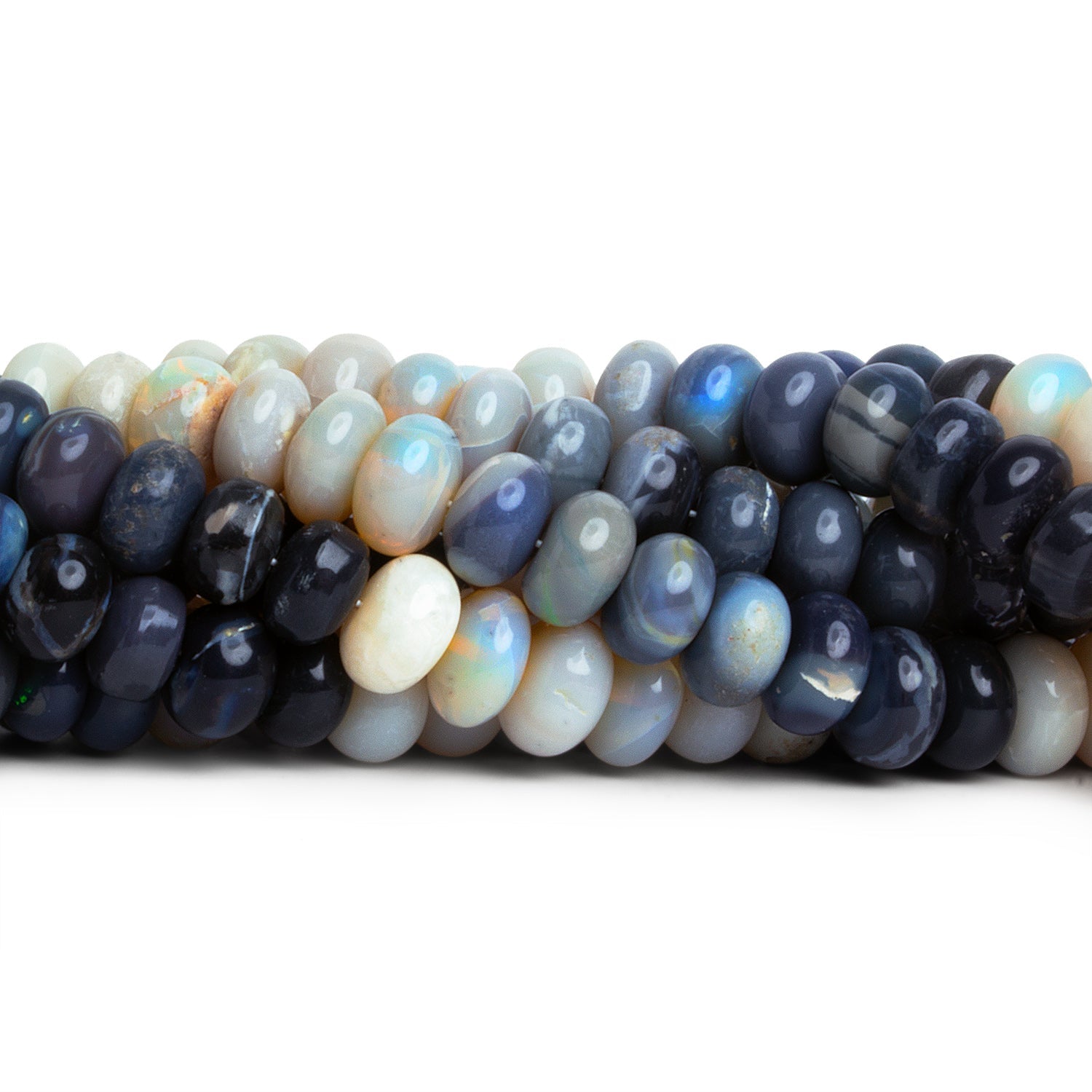
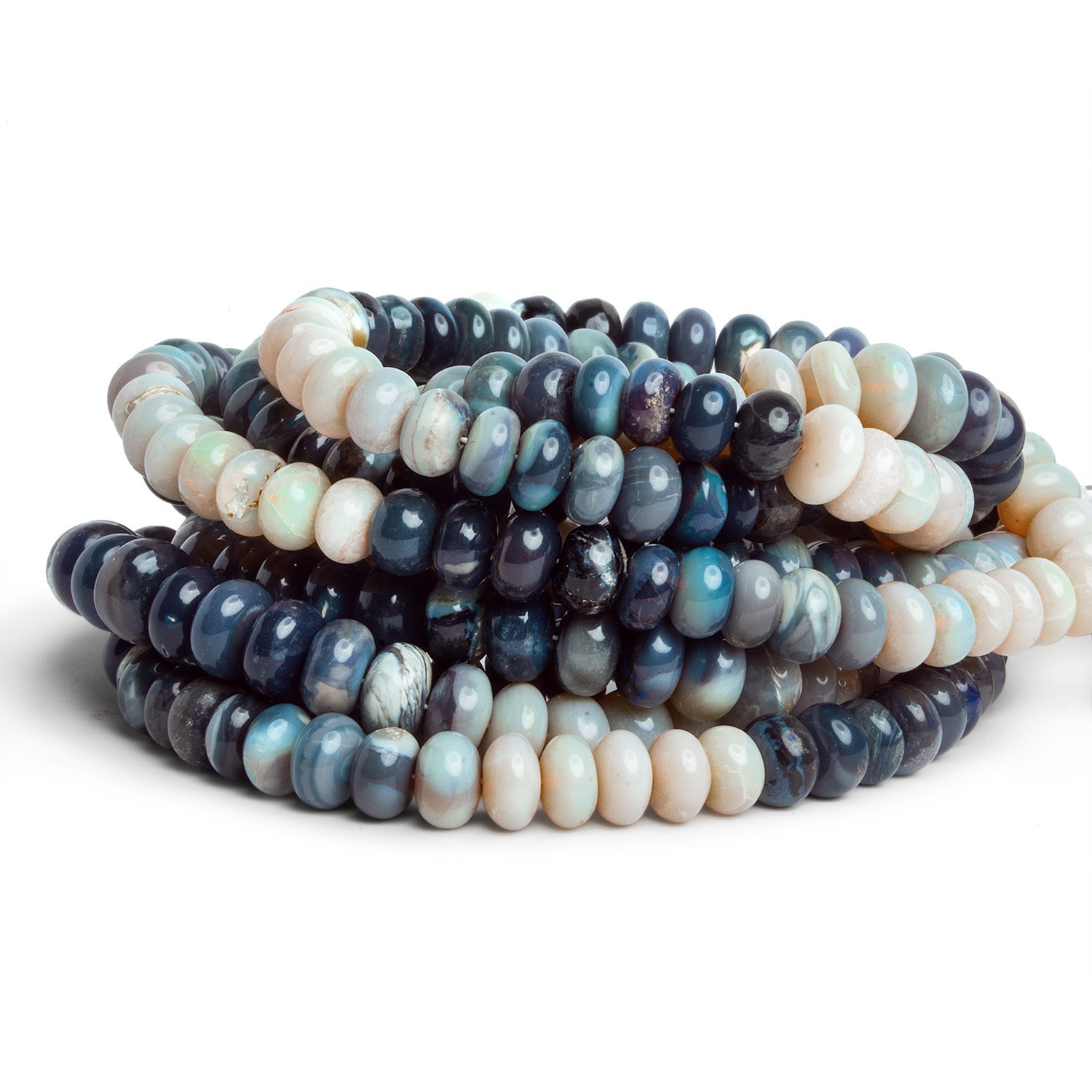
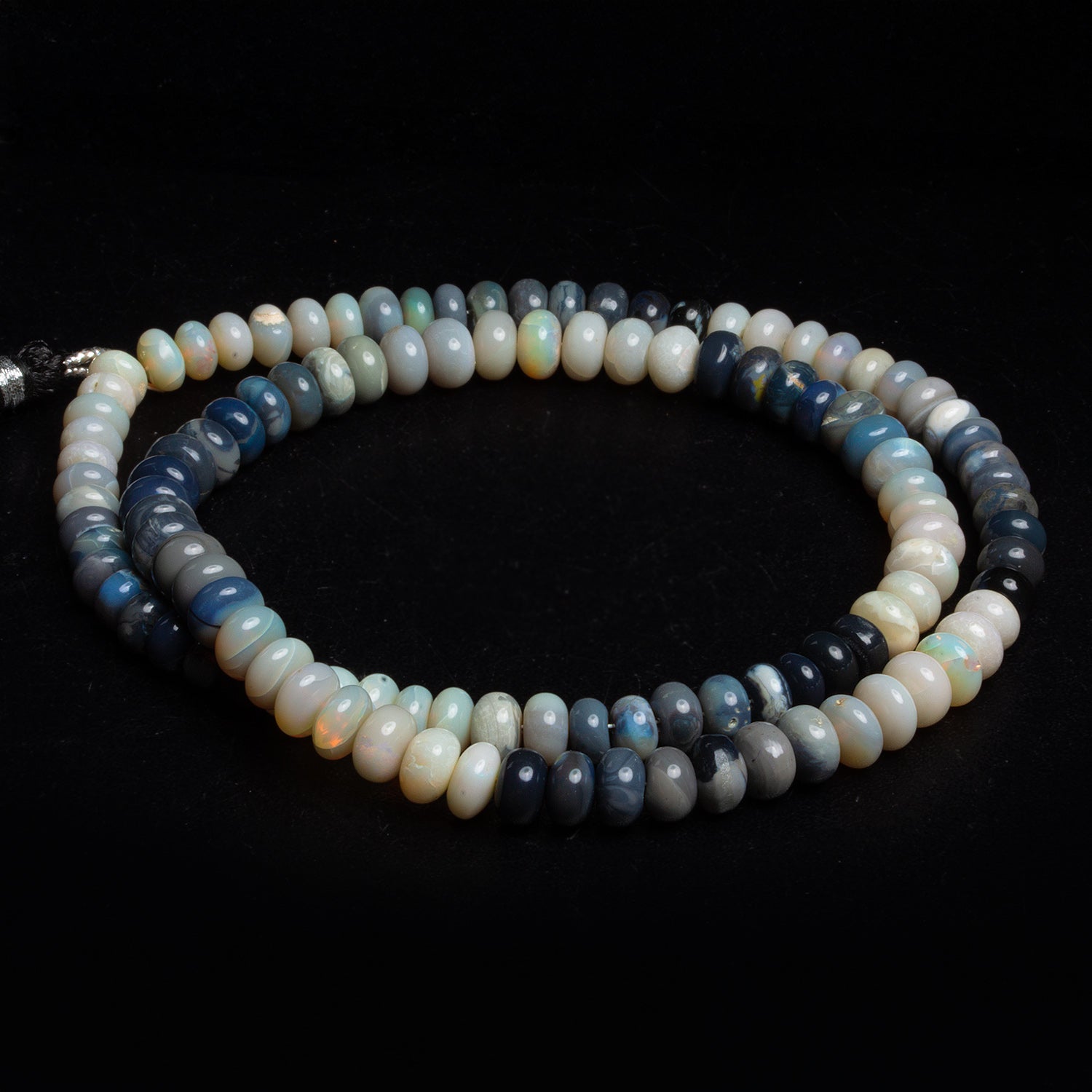
The geological differences show up in the finished beads. Our golden Ethiopian opal plain rondelles have translucent bodies with no visible matrix, while our Australian boulder opal tumbled nuggets show a moderate bluish-grey matrix throughout the stone.

The Science of Color Play

The magic of opal color comes down to sphere size and arrangement.

The colors you see depend on the size of the silica spheres inside the opal. Smaller spheres produce blues and greens. Larger spheres create reds and oranges. The spacing between spheres—typically 150 to 300 nanometers—determines which wavelengths of light get diffracted.

Ethiopian opals tend to show a broader color spectrum. Our golden Ethiopian opal beads display excellent play of color in red, blue, green, orange, and periwinkle hues. This wide range suggests the presence of varied sphere sizes within each stone.

Australian opals often emphasize different parts of the spectrum. Our Australian boulder opal beads show little play of color in blue-violet-yellow hues. The color display is more subtle but set against the stone's natural matrix, which can make the flashes stand out in a different way.

Body color matters too. Ethiopian opals often have creamy off-white or golden bodies that let light pass through. Australian opals, particularly boulder varieties, feature light grey to cream body colors with visible matrix that creates a different visual effect.

Durability and Handling

The biggest practical difference between Ethiopian vs Australian opal comes down to water.

Ethiopian opals are hydrophane, meaning they absorb water like a sponge. When you expose them to water, their appearance changes—colors shift, transparency alters, and the stone can even change size temporarily. This happens because of their porous volcanic formation.

Australian opals contain water naturally, but don't absorb it from outside sources. They're non-hydrophane, which makes them more stable in different environments. You can wear Australian opal jewelry without worrying about exposure to moisture affecting the stone's appearance.

The hydrophane nature of Ethiopian opals means you need to think about more than just water. Body oils, lotions, and perfumes can penetrate the porous surface, potentially causing permanent color changes. This doesn't mean Ethiopian opals are fragile—it just means they need different handling.

Both types rank similarly on the Mohs hardness scale, making them softer than many gemstones. Handle all opal beads with care to avoid scratches and chips. Store them separately from harder stones that could damage their surface.

Visual Differences in Jewelry

The way opal beads look in finished jewelry depends on their transparency and color distribution.

Ethiopian opal beads work well in designs where light can pass through them. Their translucent to semi-translucent bodies create a glowing effect when backlit. Our light golden Ethiopian opal faceted rondelles show strong multi-color flashes throughout their waxy-luster bodies, making them eye-catching in pendants or earrings where light hits them from multiple angles.

The color range in Ethiopian opals gives you options. We carry Ethiopian opal beads in olive green, black, and even Barbie pink tones. Each color base creates different effects when the play-of-color activates.

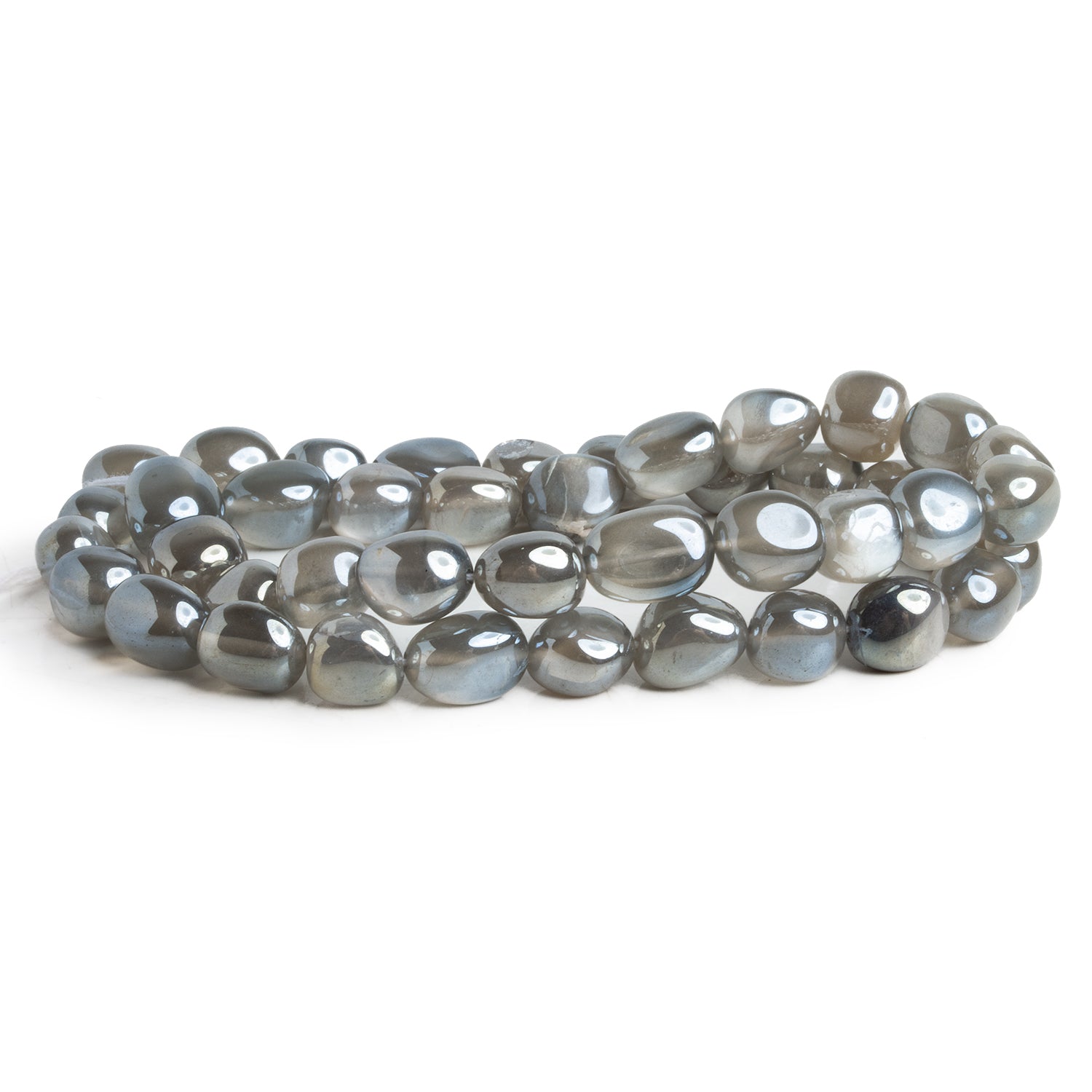
Australian opal beads have a different presence. The visible matrix in our boulder opal nuggets adds texture and depth. These beads are larger and more substantial, with a waxy luster and rounded edges that give them an organic feel. The light grey to cream body colors with bluish-grey matrix create an earthy aesthetic.

For pairing with other materials, consider the overall tone. Ethiopian opals with their clean, translucent bodies complement delicate freshwater pearls and fine chain. Australian boulder opals with their matrix and larger size pair well with heavier metal findings and can anchor a design.

Ethiopian vs Australian Opal: Maintenance and Care

Caring for opal beads requires a gentle approach, but the specifics vary by type.

For Ethiopian opals, avoid water contact. When Ethiopian opals get wet, they temporarily turn translucent yellow or brown and seem to lose their color play. They'll return to normal after air-drying for about 24 hours, but repeated exposure can cause issues.

Keep Ethiopian opal jewelry away from lotions, perfumes, and oils. Apply these products before putting on your opal pieces. Remove opal jewelry before washing hands, showering, or swimming.

Australian opals need less worry about moisture but still benefit from gentle care. Clean them with a soft, slightly damp cloth. Avoid ultrasonic cleaners and harsh chemicals that can damage the surface or dry out the stone's natural water content.

Store both types of opal beads in a soft pouch or lined box. Keep them away from heat sources and direct sunlight, which can cause drying or color fading over time. If you live in a very dry climate, some jewelers recommend storing opals with a damp cotton ball in a sealed container to maintain humidity—though this matters more for Australian opals than Ethiopian ones.

When working with opal beads in your designs, use silk or soft synthetic thread for stringing. The softer material reduces abrasion on the bead holes. Space opals with small knots or soft spacer beads to prevent them from rubbing against each other.

Making Your Choice

Choosing between Ethiopian vs Australian opal beads depends on your design goals and how you plan to wear the finished piece.

Pick Ethiopian opals when you want intense color play and translucent stones that glow with light. They're ideal for special occasion jewelry that won't face daily exposure to water or oils. Our dark golden Ethiopian opal rondelles offer excellent play of color with no visible matrix, perfect for designs where you want the focus on pure color flash.

Choose Australian opals for everyday wear pieces that need to handle real-world conditions. The non-hydrophane nature makes them more forgiving. Our Australian opal plain rondelles and matte nuggets bring opal's beauty to designs you can wear without constant vigilance.

Consider your budget too. Ethiopian opals typically cost less due to plentiful supply, while Australian opals command higher prices for their stability and established reputation.

At The Bead Traders, we carry both types in multiple formats—from small rondelles to larger nuggets. Browse our gemstone beads collection to see the full range. Check our new arrivals for the latest opal strands.

Orders over $100 ship free in the United States, making it easy to stock up on the opal beads you need for your next project. Both Ethiopian and Australian opals have their place in jewelry making. Understanding their differences helps you choose the right stone for each design.

Read more
Fresh Ways To Use Emerald Beads for Jewelry Making - The Bead Traders

Fresh Ways To Use Emerald Beads for Jewelry Making

Emerald beads bring a richness to jewelry that few other gemstones can match. Their deep green tones carry centuries of meaning, and working with them opens up design possibilities that range from simple elegance to complex statement pieces. This post walks you through practical techniques for using emerald beads for jewelry making, from choosing the right stringing materials to pairing emeralds with complementary stones and metals.

The Timeless Appeal of Emerald

Emeralds have held symbolic weight across cultures for thousands of years. Ancient civilizations associated emeralds with renewal, rebirth, and tranquility. Egyptian kings were buried with emerald jewelry as a symbol of eternal life, while Romans believed the stones could refresh both eyes and soul.

The symbolism extends beyond royalty to include wit, eloquence, and foresight. Modern jewelry makers tap into this legacy when they incorporate emerald beads into their designs. The stone's association with wisdom and inner balance makes it a meaningful choice for personal pieces and gifts alike.

Basic Techniques for Incorporating Emerald Beads

Start with the right stringing material. Beading wire works well for emerald beads because it's strong, flexible, and coated with nylon for durability. For a more traditional approach, a silk cord with knotting between beads protects the stones from rubbing against each other.

Wire wrapping secures focal beads and adds decorative elements. This technique works well for pendants and creates professional-looking attachments. Wrapped loops provide secure connections that won't come apart with wear. When stringing, place your focal emerald bead at the center or slightly off-center, depending on your design. Use graduated sizing in your supporting beads to draw the eye toward the focal point.

Our Brazilian emerald top-drilled crystal strands work particularly well for organic designs. These beads have a non-polished, slightly tumbled surface that shows off the crystal structure when viewed from the side. The natural irregularities give each piece character.

Pairing Emerald with Complementary Stones

Color planning matters when you combine emerald with other gemstones. Choose your emerald beads first, then select complementary colors for supporting beads. The approach you take—contrast or harmony—shapes the entire feel of your piece.

Choosing Contrasting Colors

Pairing emerald with ruby creates a festive, high-impact look. The red-green contrast demands attention and works well for statement necklaces or bold earrings. Balance the saturation levels—if your emerald beads show deep, rich color, choose rubies with similar intensity.

Diamonds bring elegance to emerald designs, showcasing vibrant growth against sparkling clarity. This pairing works across styles, from vintage-inspired pieces to modern minimalist designs. Layer different bead types around your focal emerald piece. Combine gemstone beads with freshwater pearls and metal spacers for texture and visual interest.

Harmonious Combinations

For softer designs, emerald and aquamarine blend like waves of blue-green. These analogous hues sit side-by-side on the color wheel and create smooth transitions in multi-strand designs. Pearls also pair beautifully with emerald, offering a classic combination that never goes out of style.

Our shaded Brazilian emerald faceted rondelles show varied color saturation from medium dark to light, making them ideal for creating gradients. The 2.9-3mm size works as spacers or detail elements around larger focal stones.

Metals that Complement Emerald

Metal choice influences the mood of your emerald jewelry. Each option creates a different aesthetic and works better with certain design styles.

Gold for Luxurious Designs

Yellow gold enriches emerald's lush green hues with regal warmth. This classic pairing has stood the test of time for good reason. The warm tones of gold enhance the natural richness of emerald, creating pieces that feel both traditional and timeless.

Match your metal findings to your design intent. Gold-filled components coordinate naturally with emerald beads and maintain their finish over time. Consider the shape of your emerald beads when choosing settings—our faceted pear beads with their medium dark saturation and black veining work beautifully in gold wire-wrapped pendants.

Silver, Copper, and Other Options

Sterling silver reads as cool and contemporary. The deep green of emerald enhances silver's cool tone while creating a modern, clean aesthetic. Silver works particularly well with lighter emerald shades and translucent stones.

Brass and copper add warmth and vintage appeal. Antique brass findings give emerald jewelry a heritage feel, while copper brings rustic charm. These metals develop patina over time, adding character to your pieces. Gunmetal plating offers an edgy vibe that contrasts beautifully with emerald's organic green tones.

Our emerald faceted cube beads show medium to dark saturation with black veining and a minty green tone. These work well with mixed metal designs where you combine silver and brass for textural interest.

The Beauty of Emerald Beads for Jewelry Making

Emerald beads for jewelry making come in forms that suit different techniques and styles. Natural crystal beads retain their organic character with surface irregularities that tell the story of their formation. Faceted shapes catch light and add sparkle. Plain rounds and rondelles work as spacers or create delicate chains.

Our emerald plain nugget beads feature a fairly smooth, vitreous luster with a strongly saturated rich green hue and black veining throughout. These unfaceted nuggets make strong focal elements in organic designs. For more textured work, chip faceted petite nuggets create an organic appearance with varied green tones.

Finding High-Quality Emerald Beads

Color is the paramount factor in emerald quality. Look for consistent hue across a strand, though natural variation adds character. Check the clarity—some inclusions are normal and expected in emerald, but the beads should show good transparency or translucency, depending on the style.

Our Colombian emerald chips are described as translucent to transparent with varied green tones. This transparency level works well for layered designs where light passes through the beads. For crystal-forward pieces, our Brazilian emerald top-drilled tumbled crystals show the natural matrix and rich green color in their untouched state.

Work with reputable suppliers who stand behind their products. The Bead Traders offers free shipping and returns on U.S. orders over $100, making it easier to source quality materials for your projects.

Advanced Design Ideas

Push your emerald work further with mixed-metal statement pieces. Combine gold and silver findings in a single design, using emerald beads as the unifying element. The green tones bridge the warm and cool metals naturally.

Layer multiple gemstone strands for depth and movement. Start with a base strand of small emerald beads, then add layers of complementary stones in varying lengths. This technique works well for necklaces that make a statement without feeling heavy.

Experimenting with Complex Patterns

Multi-strand emerald necklaces create visual impact through repetition and pattern. Use graduated sizes across strands, or maintain consistent sizing for a more uniform look. Our Brazilian emerald faceted heishi beads measuring 6.5-7mm work well for multi-strand designs where you want texture without bulk.

Chandelier earrings showcase emerald beads in motion. Use top-drilled emerald shapes like our faceted nuggets with medium dark saturation and forest green tonal quality. The top drilling provides a good side view and allows the beads to hang naturally.

Caring for and Storing Emerald Beads

Emerald rates 7.5 to 8 on the Mohs hardness scale and requires more care than harder stones like ruby or sapphire. Clean emerald jewelry with warm soapy water or a warm soapy cloth. Don't soak emeralds in soapy water, and avoid harsh detergents.

Use a soft baby toothbrush for gentle cleaning. Fill a bowl with lukewarm water, add a tiny drop of mild dish soap, and gently swirl your jewelry. Rinse thoroughly and pat dry with a soft cloth. Limit exposure to chemicals—remove emerald jewelry when cleaning or applying perfumes and hand sanitizers.

Store emerald beads separately from harder stones that could scratch them. A fabric-lined jewelry box works well, or wrap strands individually in soft cloth. Keep them in a cool, dry place away from direct sunlight and heat sources.

Embrace the Radiance of Emerald

Emerald beads for jewelry making offer design possibilities that span from simple to sophisticated. The stone's natural variations—from translucent Colombian chips to matrix-rich Brazilian crystals—give you options for every style and technique. Start with basic stringing and wire wrapping, then move into more complex multi-strand or mixed-metal designs as your confidence grows.

The combination of emerald's symbolic history and practical versatility makes it a gemstone worth exploring. Whether you're drawn to the classic pairing of emerald and gold or prefer modern silver settings, the key is choosing quality materials and techniques that let the stone's natural beauty show through.

Browse our gemstone beads collection to see the full range of emerald options, from tumbled crystals to faceted shapes. Our new arrivals section features the latest additions to help you stay current with fresh design possibilities. With free shipping and returns on U.S. orders over $100, you can experiment with different emerald styles and find the perfect beads for your next project.

Read more
Garnet Beads for Jewelry Making: Practical How-To Guide - The Bead Traders

Garnet Beads for Jewelry Making: Practical How-To Guide

Learn how to choose, plan, and care for garnet beads for jewelry making. Get clear advice on necklaces, bracelets, spiritual pieces, and lasting upkeep tips.

Read more

Net Orders Checkout

Item Price Qty Total
Subtotal $0.00
Shipping
Total

Shipping Address

Shipping Methods