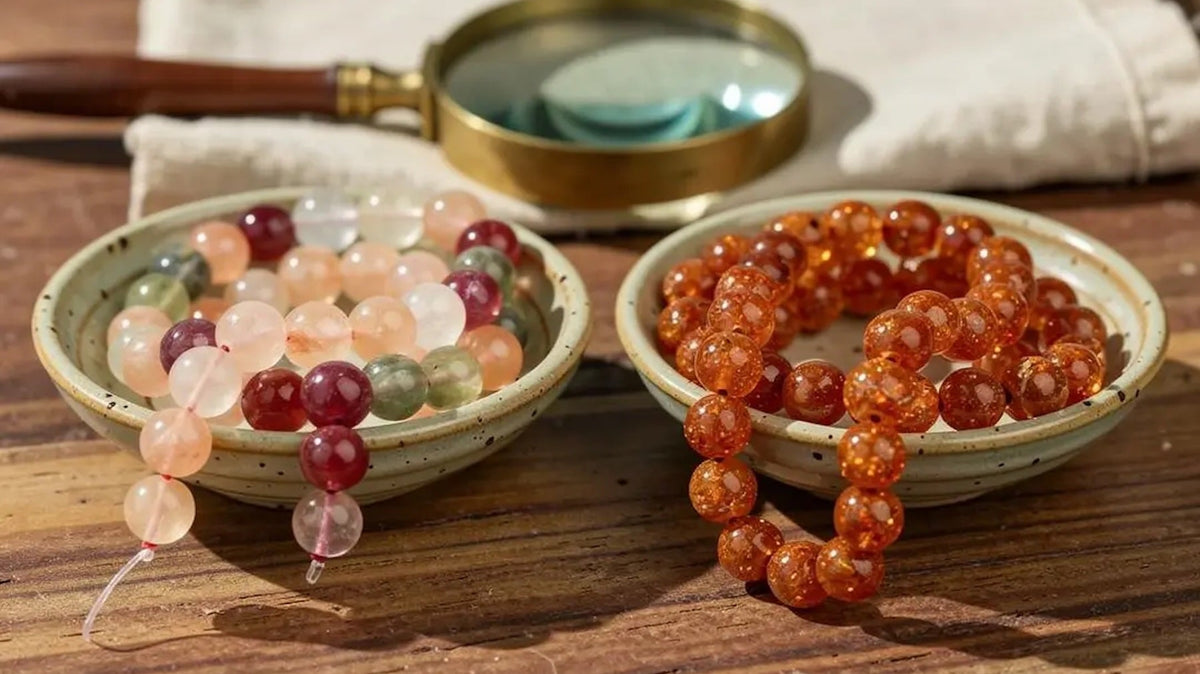
Sunstone has collected quite a few stories over the centuries. Some connect it to Viking navigation, while others trace its meaning back to Native American legends or the warmth and energy of the sun itself.
What's interesting is that these stories don't always refer to the same mineral, even though they share the same sunstone. Today, sunstone is often associated with confidence, joy, and new beginnings. But its history goes well beyond the meanings you'll find in modern crystal guides. From references in medieval Icelandic sagas to copper-flecked stones found in Oregon, there's plenty to explore about how sunstone earned its reputation.
For jewelry makers, that history adds another layer to an already beautiful gemstone. Below, we'll explore sunstone meaning across different traditions, separate historical evidence from folklore, and look at how these stories can inspire your next beaded design.
What Is Sunstone?
Sunstone belongs to the feldspar family, the same mineral group as moonstone. According to the Gemological Institute of America (GIA), the name describes the stone's appearance rather than one specific mineral. Both orthoclase and plagioclase feldspars can be classified as sunstone.
What makes it recognizable is its sparkle. Tiny, reflective inclusions of minerals such as copper or hematite catch the light, creating a glittering effect called aventurescence, often referred to as schiller. Depending on the size and arrangement of those inclusions, the stone may have a subtle golden sheen or flashes of metallic-looking glitter.
Sunstone comes in shades of yellow, peach, orange, red, brown, and even green or colorless varieties. It measures approximately 6.5 to 7.2 on the Mohs Hardness Scale, depending on the feldspar species, making it suitable for many jewelry designs with proper care.
And while moonstone is known for its soft, floating glow, sunstone has a livelier sparkle. That contrast is part of what makes the two stones so appealing together. You can explore the symbolism behind its cooler counterpart in our moonstone meanings and design guide.
The Viking Sunstone: A Legend With a Twist
One of the most famous stories about sunstone comes from the Vikings. According to a medieval Icelandic tale called Rauðúlfs þáttr, a special stone known as sólarsteinn, or "sunstone," could help locate the sun even when clouds or snow obscured it.
It's a fascinating story, especially considering how much Norse sailors depended on navigation. But there's an important detail that often gets lost when the legend is retold: the text never identifies the mineral.
Researchers have since explored whether the stone might have been Iceland spar, a transparent variety of calcite. In 2011, scientists demonstrated that calcite would be used to determine the sun's direction by analyzing polarized skylight. A calcite crystal was also discovered in a sixteenth-century shipwreck near navigation equipment, adding another interesting piece to the theory.
Neither finding proves that Vikings navigated with calcite, but the mineral is a plausible candidate for the legendary sunstone. So, where does that leave the orange, glittering gemstone used in jewelry today? It's a different material altogether. Modern sunstone is feldspar, while Iceland spar is calcite.
The connection is really in the name and the symbolism. Both became associated with the sun, and the idea of finding light or direction when it's hidden remains one of the most enduring interpretations of sunstone meaning.
Oregon Sunstone: Native American Lore and a State Gemstone
Sunstone's history in Oregon is much more closely connected to the feldspar we recognize today. The gemstone forms in ancient volcanic rock in the state's southeastern high desert, where people have collected it for generations.
According to the Oregon Encyclopedia, Native Americans valued sunstone for trade and ceremonial purposes. Stones have been found in burial sites and sacred bundles, offering evidence of their important long before Oregon sunstone became popular in the jewelry industry.
There's also a regional legend about how the gemstone got its reddish color. As recorded by the GIA, the story tells of a great warrior whose blood fell onto pieces of sunstone after he was wounded by an arrow. His spirit was said to enter the stones, giving them their red color and sacred significance.
It's a memorable part of Oregon sunstone lore, although the version commonly circulated today comes from gemological and museum accounts rather than a clearly identified tribal source. It's best understood as a regional legend rather than a story attributed to any particular Native American nation.
Beyond its history, Oregon sunstone is prized for its unusual appearance. Some specimens contain tiny platelets of native copper that create brilliant flashes of color. Depending on the stone, you'll find everything from pale champagne and peach to vibrant red, green, and rare blue-green combinations.
Unlike some gemstones whose colors are enhanced through treatment, Oregon sunstone is known for its naturally occurring copper-related colors. The stone eventually became such an important part of the region's identity that Oregon designated sunstone its official state gemstone in 1987. Today, collectors can still search for specimens in parts of Lake and Harney counties, including a public collection area.
Sun Meaning in Other Historical Traditions
Sunstone's history extends beyond Scandinavia and Oregon, although the records become harder to interpret the further back we look. Part of the challenge is that ancient gemstone names don't always match modern mineral classifications. A stone described as a "sun gem" centuries ago wasn't necessarily the aventurescent feldspar sold as sunstone today.
In India, for example, the name Suryakant, meaning "sun gem," appears in traditional gemstone discussions. Some modern interpretations connect it to sunstone or heliolite, but that identification isn't firmly established.
India does, however, have a documented connection to the gemstone itself. The country is a known source of sunstone, including the reddish-brown, glittering feldspar associated with Tamil Nadu. Sunstone was also relatively rare and expensive in the early nineteenth century. As deposits were discovered in places such as Norway and Siberia, the material gradually became more accessible.
Rather than pointing to one continuous tradition, these histories show how different culture and periods developed their own associations with stones connected to the sun. The recurring themes of warmth, light, and vitality help explain why sunstone's symbolism has remained popular.
What Does Sunstone Symbolize Today?
These days, sunstone is most often associated with joy, confidence, optimism, and personal strength. In modern crystal traditions, it's sometimes called a stone of leadership or new beginnings, with its warm colors representing the energy of the sun.
Some crystal practitioners also connect sunstone to the sacral and solar plexus chakras, which are traditionally associated with creativity, confidence, and personal power.
Of course, these are spiritual and symbolic beliefs rather than scientifically demonstrated effects. Still, they can provide meaningful inspiration for jewelry designs, especially pieces intended to celebrate milestones, fresh starts, or personal achievements.
Sunstone is also frequently paired with moonstone. Symbolically, the two represent complementary qualities: sunstone is associated with outward energy and confidence, while moonstone is often linked to intuition and reflection.
They happen to look beautiful together, too. Our 16x12mm sunstone and moonstone plain ovals combine both gemstones on one strand, making it easy to bring that contrast into a necklace or bracelet.
Designing with Sunstone Beads
One of our favorite things about sunstone is how much its appearance changes with the light. A strand might look softly peach-colored at first, then reveal tiny flashes of copper or gold when you turn it toward a window.
At The Bead Traders, our sunstone beads collection offers a range of warm shades, from pale champagne to richer orange, red, and brown. Whether you're designing around the gemstone's symbolism or simply love its sparkle, the cut and finish can make a noticeable difference.
Here's some guidance for when you create your own pieces:
Choose Polished Beads to Show Off the Schiller
Sunstone's reflective inclusions are especially noticeable on smooth, polished surfaces. Oval beads and nuggets and give the light plenty of room to catch those tiny flashes.
Our 8x6mm Madagascar sunstone plain ovals and 8x7mm plain nuggets are lovely options when you want the gemstone's natural appearance to shine through.
Try Faceted Beads for Extra Sparkle
If you're looking for something a little more delicate, faceted sunstone creates a different effect. Instead of emphasizing broad flashes of schiller, the cut surfaces reflect light as the beads move.
Our 4mm microfaceted rounds work well for stacking bracelets and dainty necklaces, while 4-8mm graduated faceted rondelles add a little more variation to a design.
Pair Sunstone With Warm Metals
Gold and brass are natural companions for sunstone's peach, orange, and copper tones. They bring out the gemstone's warmth without competing with its color.
For a different look, try silver findings. The cooler metal creates a contrast that can make orange and peach sunstone stand out. Our 22kt gold plated copper beads, brass beads and gold plated link chain are all worth considering when putting together a sunstone design.
Use Gemstone Chain for Simpler Designs
You don't necessarily need to string an entire piece to incorporate sunstone into your jewelry. Our chain-by-the-footselection includes 4-4.5mm sunstone faceted rondelle gold chain and sunstone double nugget gold chain. Both offer an easy starting point for necklaces, bracelets, or layered designs.
Pay Attention to Where Your Sunstone Comes From
One thing worth remembering when shopping for sunstone beads is that not every strand comes from Oregon. Many of our sunstone strands are sourced from Madagascar, and Oregon material is less commonly offered in bead strands. If a product listing doesn't identify the stone as Oregon sunstone, it's better not to describe it that way in your own finished jewelry.
The same goes for similarly named materials. Agate sunstone, for example, is different from traditional feldspar sunstone, as we explain in our agate sunstone vs. regular sunstone guide.
We include bead dimensions, strand lengths, bead counts, and known treatment information in our listings so you can choose materials with confidence. And with free U.S. shipping on orders over $100, it's easy to explore a few different cuts and colors for your next project.
How to Care for Sunstone Jewelry
Sunstone is durable enough for many everyday jewelry pieces, but it does need a little care. Although its Mohs hardness ranges from approximately 6.5 to 7.2, feldspar has cleavage, meaning it can split along certain internal planes if stuck at the wrong angle. A sharp impact can cause more damage than you might expect.
To keep your sunstone jewelry looking its best, we recommend:
- Clean beads with lukewarm water, mild soap, and a soft cloth.
- Avoid ultrasonic and stream cleansers.
- Skip harsh chemicals and abrasive cleaning products.
- Store sunstone separately from harder gemstones to help prevent scratches.
- Consider protective settings for rings or bracelets that may be frequently hit or knocked.
Earrings and necklaces are especially nice choices for sunstone because they're generally less likely to experience the impacts that rings or bracelets do. For more advice on caring for your materials, read our gemstone jewelry care guide.
Frequently Asked Questions About Sunstone
What Does Sunstone Mean?
Sunstone is traditionally associated with the sun, giving it symbolic connections to warmth, vitality, and light. in modern crystal traditions, it also represents confidence, joy, leadership, and new beginnings. These meanings come from folklore and spiritual beliefs rather than scientifically proven properties.
Did Vikings Really Use Sunstone to Navigate?
Medieval Icelandic literature describes a sunstone that could help locate the sun in cloudy conditions. Researchers have shown that Iceland spar, a form of calcite, could potentially do this, but there's no conclusive proof that Vikings used it for navigation. The stone described in the legend was likely different from modern feldspar sunstone.
Why Is Sunstone Oregon's State Gemstone?
Oregon designated sunstone its official state gemstone in 1987. The state is known for naturally colored, copper-bearing sunstone found in its southeastern volcanic deposits. The gemstone also has a long history of collection and trade in the region.
Is Sunstone Good for Everyday Jewelry?
Yes! Especially in earrings, necklaces, and carefully worn bracelets. Sunstone has a Mohs hardness of approximately 6.5 to 7.2, but its cleavage makes it vulnerable to sharp impacts. Protective settings and gentle cleaning can help keep your jewelry in good condition.
Bring Sunstone's Story Into Your New Jewelry Design With The Bead Traders
From Viking legends to Oregon's copper-rich gemstones, sunstone has a history that's just as interesting as its appearance. And while the stories don't all refer to the same mineral, they've helped shape the symbolism jewelry makers still draw inspiration from today.
At The Bead Traders, you'll find a variety of sunstone beads in warm, earthy colors and cuts that show off the stone's natural sparkle. Whether you're creating a piece inspired by its history or simply love the way it catches the light, there's plenty of room to make the design your own.
Explore our sunstone bead collection and our New Arrivals to find the perfect strand for your next project.