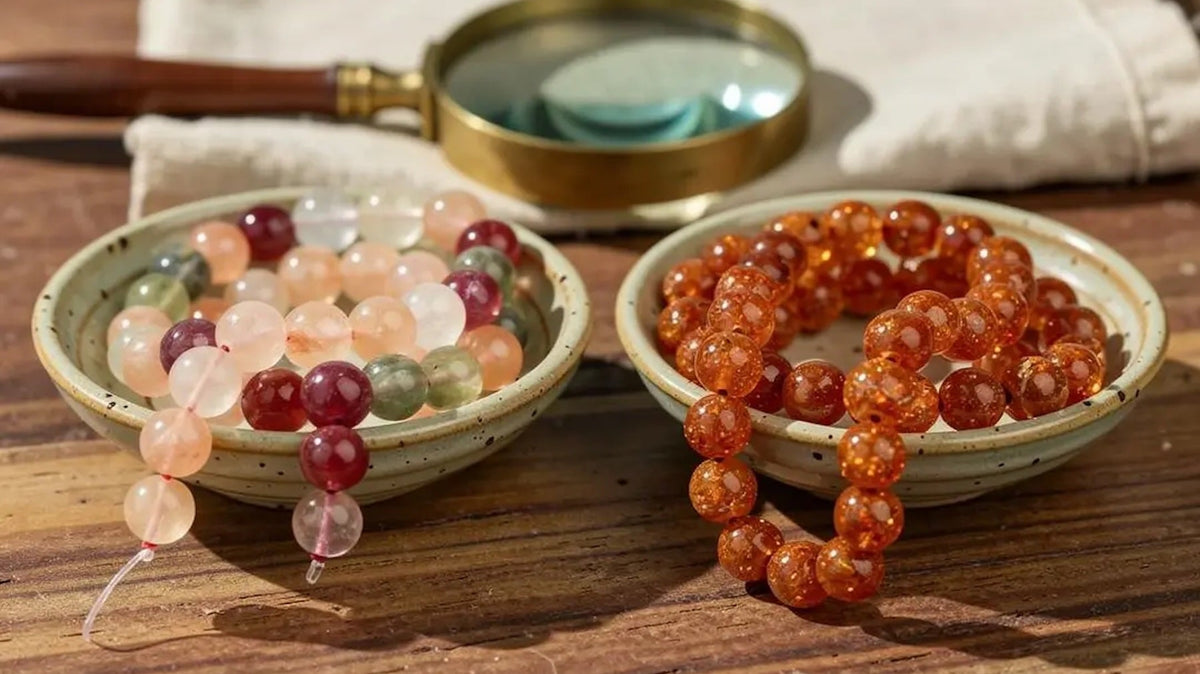
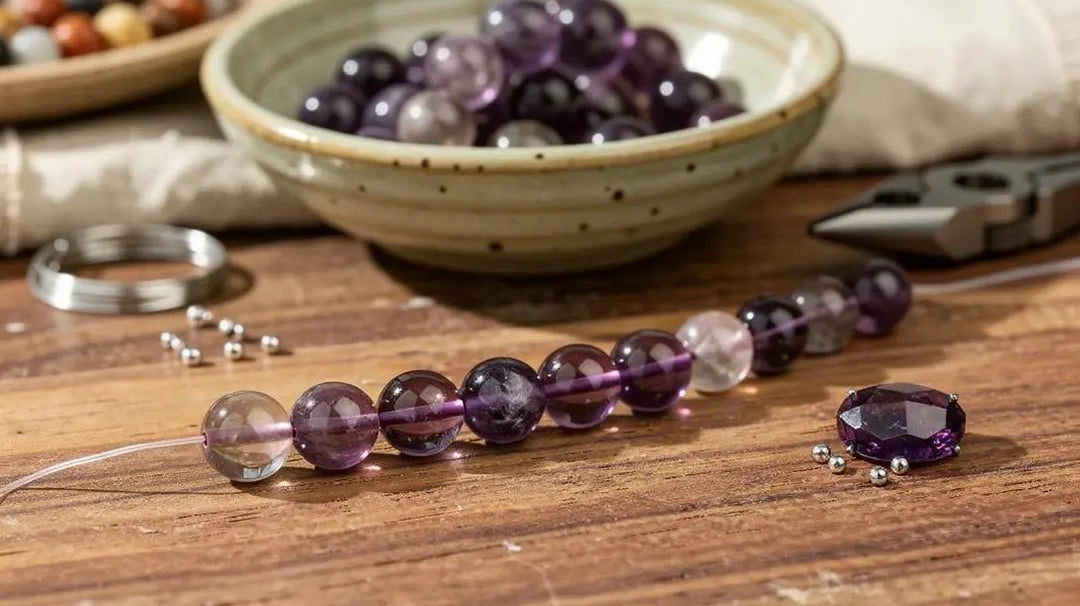
At first glance, Madagascar sunstone and Oregon sunstone might sound like two versions of the same gemstone. They share a name, belong to the feldspar mineral group, and are known for their beautiful, shimmering appearance. But take a closer look, and you'll find that there are quite a few differences between the two.
For starters, Oregon sunstone is a type of labradorite feldspar that's particularly known for its copper inclusions and striking range of colors. Madagascar sunstone, on the other hand, is typically an oligoclase feldspar that gets its signature sparkle from tiny iron-oxide inclusions. And while both are beautiful in their own right, they can vary quite a bit in price, appearance, and availability.
So, what does all of this mean when you're shopping for sunstone beads? Whether you're comparing gemstone strands for your next jewelry project or simply curious about what makes each variety unique, we're breaking down the differences between Madagascar and Oregon sunstone to help you understand what you're buying.
Madagascar vs. Oregon Sunstone at a Glance
Although both gemstones share the sunstone name, there are several differences worth knowing before purchasing beads.
| Feature | Oregon Sunstone | Madagascar Sunstone |
|---|---|---|
| Mineral | Labradorite feldspar | Typically oligoclase feldspar |
| Sparkle | Native copper inclusions | Usually iron-oxide inclusions |
| Colors | Champagne, peach, pink, red, green, and bicolor | Peach, orange-brown, red-brown, and champagne |
| Bead availability | Rare and generally expensive | Widely available and affordable |
| Common uses | Faceted gemstones and focal pieces | Necklaces, bracelets, earrings, and other beaded jewelry |
| Treatment | Typically untreated | Typically untreated |
| Hardness | Approximately 6–6.5 on the Mohs scale | Approximately 6–6.5 on the Mohs scale |
Of course, there's a little more to these gemstones than their color and sparkle. Where they're found, how they form, and what gives them their shimmer all play a role in their appearance and value. And if you're shopping for sunstone beads specifically, those differences can help you decide which variety makes the most sense for your next jewelry project.
"Sunstone" Describes a Look, Not a Single Mineral
One of the most interesting things about sunstone is that the name doesn't refer to just one mineral. Instead, it describes a type of feldspar gemstone known for its beautiful, glittering appearance. That shimmer is called aventurescence, and it happens when tiny, flat mineral inclusions reflect light inside the stone.
This is also why two strands of sunstone beads can look completely different, even when they're both natural gemstones. Sunstone comes from several locations around the world, including Madagascar, India, Norway, and the United States. Each source can produce material with its own distinctive colors and characteristics.
If you've come across the term "agate sunstone" while shopping, that's another distinction worth understanding. Despite its name, agate sunstone isn't actually feldspar. You can learn more about this in our guide, "Agate Sunstone Beads vs. Regular Sunstone: Key Differences." When you're comparing beads to use during jewelry making, these differences matter.
Oregon Sunstone: Copper-Bearing Labradorite From Basalt
Oregon sunstone has a particularly interesting history. It's been the state's official gemstone since 1987, and unlike sunstone found in many other parts of the world, Oregon's material is known for containing natural copper inclusions. These gemstones formed millions of years ago with ancient basalt lava flows. Over time, the surrounding rock weather away, leaving behind the sunstone crystals that miners recover today.
Most commercially mined Oregon sunstone comes from three well-known mining operations: Ponderosa, Dust Devil, and Sunstone Butte. What makes this variety so special is its range of colors. Some stones are nearly colorless, while others display beautiful shades of champagne, peach, red, and green. You can even find bicolor specimens with both red and green in the same gemstone.
The copper is responsible for much of this distinctive appearance. Tiny metallic platelets create the glittering effect known as schiller, while copper within the crystal can also contribute to its body color.
Why Oregon Sunstone Is So Rarely Cut Into Beads
If you've spent any time shopping for sunstone beads, you've probably noticed that Oregon sunstone strands are much harder to find than Madagascar sunstone. There's a good reason for that.
Much of the Oregon sunstone recovered from mines is relatively pale, while the most desirable red, green, and strongly glittering material is considerably less common. These valuable colors are often concentrated toward the center of the crystals, which can also contain natural fractures.
For gemstone cutters, that means carefully working around the rough to preserve as much desirable color and clarity as possible. Cutting uniform beads, especially beads that need to be drilled, can waste valuable material. And because exceptional Oregon sunstone can command high prices as a faceted gemstone, there's often little financial incentive to turn it into beads.
That's not to say that Oregon sunstone beads don't exist. However, when you do find them, they're more likely to feature the lighter champagne or nearly colorless material. If you come across unusually inexpensive strands advertised as vivid red or green Oregon sunstone, it's worth asking the seller about its origin before purchasing.
Madagascar Sunstone: Oligoclase With Iron-Oxide Glitter
Madagascar is one of the major sources of sunstone used in gemstone beads, alongside India. The material is generally a type of plagioclase feldspar called oligoclase, which has a different mineral composition from Oregon's copper-bearing labradorite. But the difference most jewelry makers will notice is the sparkle.
Rather than the native copper inclusions associated with Oregon sunstone, Madagascar sunstone typically gets its shimmer from tiny iron-oxide platelets, commonly identified as hematite or goethite. These inclusions create the warm, copper-colored flashes that make sunstone such a beautiful choice for jewelry.
Madagascar sunstone is especially known for its peach, champagne, orange-brown, and reddish-brown shades. Some beads have a subtle shimmer that only becomes noticeable when they catch the light, while others display much more pronounced glitter.
And although it's generally more affordable than Oregon sunstone, that doesn't make it any less appealing for jewelry making. In fact, its availability is one of its biggest advantages. You can find Madagascar sunstone in a variety of bead shapes and sizes, making it easier to create matching necklaces, bracelets, and earrings without spending a fortune on materials.
At The Bead Traders, our Madagascar sunstone selection includes everything from delicate 4mm microfaceted rounds to larger oval beads. The smaller rounds are especially lovely for understated pieces, while the warmer, more saturated ovals make beautiful additions to statement jewelry.
How to Tell Madagascar and Oregon Sunstone Apart
So, how can you tell which type of sunstone you're looking at? While appearance alone can't confirm a gemstone's geographic origin, there are a few characteristics that can help you understand what you're buying:
Look at the Body Color
Start by looking at the gemstone's color rather than its sparkle. Oregon sunstone has a particularly broad color range, including pink, red, green, and even red-green combinations. Madagascar sunstone tends to have warmer, earthier shades, including peach, orange-brown, and reddish-brown. If you're looking at a strand of warm orange-brown beads with copper-colored glitter, Madagascar or Indian sunstone is generally more likely to have this.
Examine the Sparkle
Next, take a closer look at the inclusions. Oregon sunstone is known for its metallic copper platelets, which can create bright, reflective flashes. Madagascar sunstone usually contains iron-oxide inclusions that produce a similar coppery or gold shimmer.
The size and concentration of these inclusions influence how much sparkle you'll see. Some beads have a soft, almost glowing appearance, while others have clearly visible glitter. Because both varieties can display aventurescence, sparkle alone isn't a reliable way to identify their origin.
If you're interested in learning more about adding sparkle to your pieces, read our article, "Micro-Faceted Gemstone Beads: Sparkle in 2-4mm Size."
Consider the Transparency
Oregon sunstone is often prized for its transparency, particularly in material selected for faceted gemstones. You may be able to see the copper inclusions suspended within the crystal.
Madagascar sunstone can also be translucent or transparent, although some bead strands have a softer, cloudier appearance. Transparency can provide another clue, but it shouldn't be your only consideration.
Compare the Price and Origin Information
Price can also tell you quite a bit. For example, our 4mm Madagascar sunstone microfaceted rounds are listed for $40 for a 12-inch strand. Genuine Oregon sunstone beads with comparable color and sparkle would generally be considerably more expensive, assuming you could find them.
More importantly, pay attention to how the seller describes the material. A reputable gemstone supplier should provide accurate information about the stone's identity, known origin, and any disclosed treatments. At The Bead Traders, we identify the geographic origin of our gemstone beads whenever the information is available.
The Copper-Diffusion Problem and Why Origin Matters
There's another reason why accurate labeling is particularly important when purchasing Oregon sunstone. In the early 2000s, the gemstone industry faced controversy over red and green feldspar marketed as natural andesine from locations such as Tibet and Congo.
Testing eventually revealed that some of this material had been artificially treated through copper diffusion, a process that introduces copper into feldspar to create colors resembling naturally occurring Oregon sunstone. The controversy created confusion for gemstone buyers and affected confidence in the Oregon sunstone market.
Fortunately, gemological laboratories have developed testing methods that can help distinguish natural copper-bearing material from certain treated stones. For jewelry makers, the important takeaway is that gemstone names and origins should be accurate.
Whether you're purchasing rare Oregon sunshine or more accessible Madagascar sunstone, you should feel confident that the material matches its description. That's something we take seriously at The Bead Traders. Our Value Pledge includes a No Substitution, No Downgrade commitment, and every order goes through a two-step quality inspection before shipping.
Durability and Care for Both Types of Sunstone
Despite their differences in appearance and mineral composition, Madagascar and Oregon sunstone have fairly similar care requirements. Both belong to the feldspar family, with sunstone commonly rated around 6 to 6.5 on the Mohs Hardness Scale. That makes them suitable for many types of jewelry, although they can scratch or chip if handled roughly.
Feldspar also has natural cleavage planes, meaning it can split along certain directions when it's hit hard enough. Fortunately, keeping your sunstone beads looking beautiful doesn't require anything complicated:
- Clean them gently. Use warm water, mild soap, and a soft brush or cloth to remove dirt and oils.
- Avoid harsh cleaning methods. Ultrasonic and steam cleaners aren't recommended, particularly for stones with natural fractures.
- Store your jewelry separately. Keeping sunstone away from harder gemstones helps prevent unnecessary scratches.
- Choose bead shapes carefully. Rounded beads are often a practical option for bracelets, which tend to experience more bumps and everyday wear.
For bracelets and other frequently worn pieces, flexible beading wire can also help create a secure, comfortable design.
Designing With Sunstone: Which One Should You Buy?
Choosing between Madagascar and Oregon sunstone ultimately comes down to the jewelry you're making, your budget, and the appearance you're hoping to achieve.
If you're creating beaded jewelry, Madagascar sunstone is usually the more practical option. It's readily available in matching strands, comes in a variety of shapes and sizes, and offers that beautiful, warm sparkle without the higher price associated with rare Oregon material.
Oregon sunstone, on the other hand, is especially appealing when you're looking for a distinctive focal gemstone. A faceted Oregon sunstone pendant or a single high-quality drilled stone can make a beautiful centerpiece for a custom design.
Pairing Sunstone with Other Gemstones
One of the things we love about sunstone is how easily its warm colors work with other gemstones. Moonstone is a particularly lovely pairing, especially if you're drawn to the contrast between sunstone's golden shimmer and moonstone's softer glow. Labradorite is another natural choice, offering cooler gray, blue, and green tones that complement sunstone's warmth.
You can also experiment with mixing different bead sizes and textures. For example, small microfaceted sunstone rounds can add subtle sparkle between larger gemstone beads, while sunstone rondelles work beautifully in layered necklaces.
Choosing Metals and Findings
The metal you choose can make a noticeable difference in the finished piece. Gold and copper tones bring out sunstone's natural warmth, making them especially attractive choices for peach and orange-brown beads. Silver, on the other hand, creates a cooler contrast that gives the gemstone a more contemporary appearance.
At The Bead Traders, you'll find a variety of metal beads and findings to complement your designs, including 22kt gold-plated copper beads, bead caps, and cones. For necklaces, our sunstone rondelle gold chain by the foot is another option worth exploring. It's a convenient way to incorporate sunstone into longer designs without having to individually wire-wrap every bead.
Frequently Asked Questions
Is Oregon Sunstone Better Than Madagascar Sunstone?
Not necessarily! Oregon sunstone is rarer and often more valuable, particularly when it displays vivid red or green coloring. However, Madagascar sunstone is generally more accessible and comes in a wider selection of beads. For most beaded jewelry projects, Madagascar sunstone is a practical and beautiful choice.
Why Are Oregon Sunstone Beads So Hard to Find?
High-quality Oregon sunstone is often more valuable when cut into faceted gemstones rather than beads. The most desirable colors are relatively rare, and bead cutting can waste valuable rough. As a result, genuine Oregon sunstone bead strands aren't nearly as common as those made from Madagascar material.
Does Madagascar Sunstone Contain Copper?
Madagascar sunstone typically gets its glittering appearance from iron-oxide inclusions, such as hematite or goethite, rather than the native copper associated with Oregon sunstone. However, individual bead lots aren't always tested to identify their exact inclusions. A copper-colored sparkle doesn't necessarily mean the gemstone contains metallic copper.
Is Sunstone Treated?
Both Oregon and Madagascar sunstone are commonly sold untreated. However, some feldspar gemstones have been artificially treated through copper diffusion to imitate naturally colored material. Purchasing from a supplier that provides accurate gemstone descriptions and treatment disclosures can help you make an informed choice.
Can I Collect Oregon Sunstone Myself?
Yes! The Bureau of Land Management maintains a public sunstone collection area near Plush, Oregon, where visitors can collect sunstone for personal use without paying a fee. However, commercial collecting isn't permitted in the public collection area, and visitors respect the surrounding private mining claims.
How Hard Is Sunstone, and Is It Durable Enough for Bracelets?
Sunstone is generally rated around 6 to 6.5 on the Mohs scale, making it suitable for bracelets with proper care. Because feldspar can scratch or chip, rounded beads are often a good choice for jewelry that's worn frequently. Avoid hard impacts and store your finished pieces separately from harder gemstones.
Shop Beautiful Sunstone Beads at The Bead Traders
Whether you're drawn to the rare colors of Oregon sunstone or the warm, coppery shimmer of Madagascar sunstone, both gemstones have something special to offer. And when it comes to making beaded jewelry, Madagascar sunstone is an especially lovely choice for its versatility, affordability, and beautiful range of colors.
At The Bead Traders, we carry a variety of sunstone beads in different shapes, sizes, and finishes, making it easy to find something that fits your next project. You'll also find complementary gemstones, freshwater pearls, metal beads, and findings to help bring your designs together.
Explore our sunstone collection and see what catches your eye. Plus, make sure to scan our new arrivals each week for exciting pieces. U.S orders over $100 get free shipping.