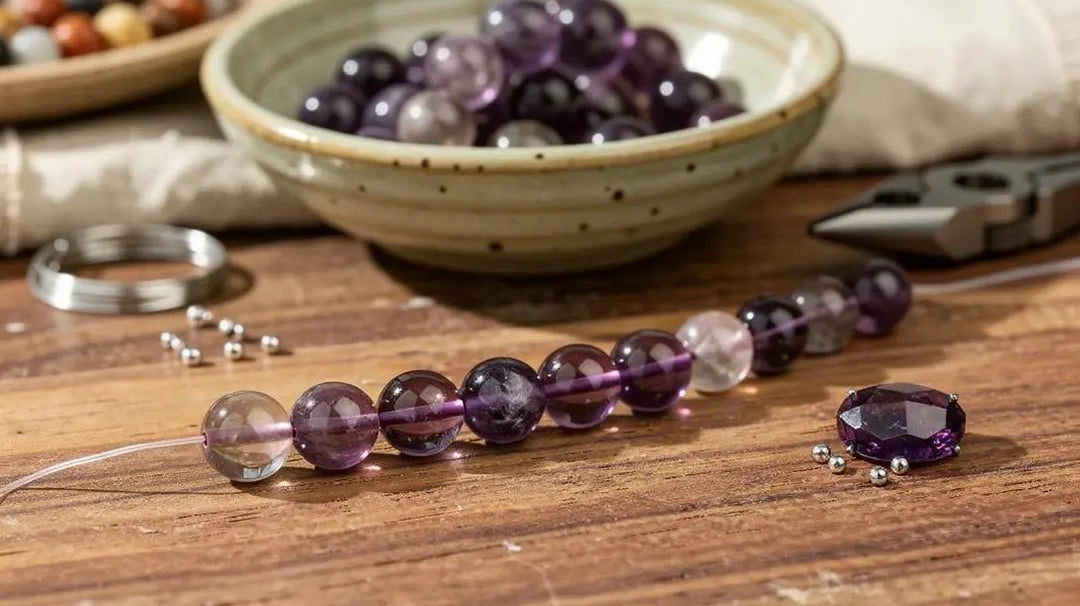
Making an amethyst bead bracelet is a great project whether you're new to jewelry making or simply want to create something you can wear every day. You don't need an especially complicated design, either. With the right beads and a few basic supplies, a simple strand of amethyst can make a beautiful finished bracelet.
There's also plenty of room to make the design your own. Amethyst beads come in different shades, sizes, shapes, and cuts, so you can keep your bracelet simple with classic rounds or add spacers and other details for a completely different look.
In this guide, we'll walk through how to make an amethyst bead bracelet from start to finish, including choosing your beads, measuring your wrist, figuring out how many beads you need, stringing and finishing your bracelet, and making a stretch-cord version if you'd rather skip the clasp.
Why Amethyst Is a Great Choice for a Beaded Bracelet
Amethyst works especially well for bracelets because it's durable enough for regular wear. As a variety of quartz, it ranks 7 on the Mohs Hardness Scale, so it can handle the everyday bumps that come with wearing jewelry on your wrist.
It also gives you plenty of options when it comes to the finished design. Amethyst ranges from pale lavender to deep purple and is available in smooth rounds, faceted beads, rondelles, and other cuts, making it easy to create anything from a simple strand to something with more texture and sparkle.
Amethyst is also the February birthstone and the traditional gemstone associated with a sixth wedding anniversary. That makes an amethyst bead bracelet a relatively simple project that can still feel personal when you're making one as a gift.
What You Need to Make an Amethyst Bead Bracelet
For a clasped amethyst bead bracelet, you'll need:
- Amethyst Beads: Plain rounds in the 5mm to 10mm range are an easy place to start. You can also use rondelles or faceted beads if you want to add more texture or sparkle.
- Flexible Beading Wire: Look for nylon-coated, multi-strand stainless steel beading wire. For most 6mm to 8mm gemstone beads, 0.015" to 0.019" wire works well.
- Crimp Beads or Tubes: You’ll need two, sized to fit your beading wire. You can also add crimp covers and wire guardians for a cleaner finish.
- A Clasp: Lobster, toggle, and magnetic clasps can all work for a bracelet. Our guide to jewelry clasps can help you compare your options.
- Two Jump Rings: Choose 4mm to 5mm jump rings to connect your clasp.
- Optional Metal Spacers: Small metal rounds or daisy spacers can break up the amethyst and add more detail to your design.
- Basic Tools: Have crimping pliers, flush cutters, chain-nose pliers, a flexible measuring tape, and a bead board or folded towel to keep your beads from rolling away.
If you're making a stretch bracelet instead, you can skip the beading wire, crimps, wire guardians, clasp, and jump rings. You'll need 0.5mm to 0.8mm elastic cord and a small amount of jewelry glue instead.
Choosing Your Amethyst Beads
Before you start stringing, think about the size and cut you want for your bracelet. These details will affect both the finished look and the type of wire or cord you can use.
Size
For a first bracelet, amethyst beads between 6mm and 10mm are a good place to start. Smaller 6mm rounds create a more delicate, stackable bracelet, while 8mm beads have a little more presence without feeling too large. If you want a bolder bracelet, try 10mm rounds. Our gemstone bead size chart can help you compare your options before choosing a strand.
Cut
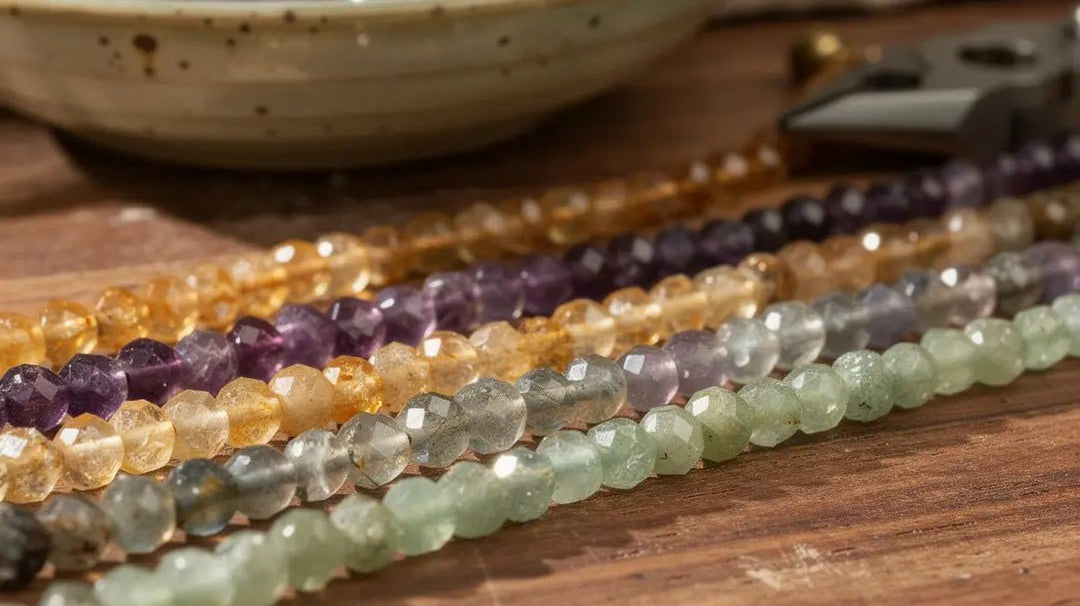
Smooth round beads are easy to string and create a classic amethyst bracelet. If you want more sparkle, faceted rounds or rondelles catch the light and add texture without making the design much more complicated.
You can also combine cuts within the same bracelet, such as using smaller faceted beads as accents between larger rounds. Our guide to the different types of amethyst beads has more inspiration if you're still deciding on a design.
Hole Size
Check the bead hole size before choosing your stringing material, especially if you plan to use an elastic cord. Standard 6mm and 8mm amethyst beads generally work well with fine beading wire, while thicker cord may require beads with larger holes.
The goal is to use the thickest wire or cord that passes comfortably through the bead without forcing it. Our bead hole size guide can help you match your beads with the right stringing material.
How to Make an Amethyst Bead Bracelet
Once you've chosen your amethyst beads and gathered your supplies, you're ready to start putting your bracelet together. Follow these steps to get the sizing right, plan your design, and securely finish your bracelet with beading wire and a clasp.
Step 1: Measure the Wrist and Pick a Fit
Wrap a flexible measuring tape snugly around the wrist just below the wrist bone, where the bracelet will naturally sit. If you don't have a measuring tape, wrap a strip of paper around the wrist, mark where the ends meet, and measure it with a ruler.
Next, add a little extra length depending on how you want the finished bracelet to fit:
- Snug fit: Add 1/4" to 1/2"
- Comfort fit: Add 3/4" to 1"
- Loose fit: Add about 1 1/4"
A comfort fit is usually a good choice for a beaded bracelet because round beads take up more space around the wrist than a flat chain. For example, a 6 1/2" wrist would typically need a finished bracelet around 7 1/4" long for a comfortable fit.
Step 2: Calculate How Many Beads You Need
Once you know your finished bracelet length, you can estimate how many amethyst beads you'll need. Convert the bracelet length to millimeters (1 inch = 25.4mm), subtract the length of your clasp and jump rings, and divide the remaining length by the diameter of your beads.
For example, a 7 1/4" bracelet is about 184mm long. If the clasp and jump rings take up approximately 12mm, that leaves about 172mm for beads:
- 6mm beads: 172 / 6 = about 28 beads
- 8mm beads: 172 / 8 = about 21 beads
- 10mm beads: 172 / 10 = about 17 beads
Use this as a starting point rather than an exact count. Clasps, spacers, and individual bead sizes can all affect the finished length, so lay out your beads and check the bracelet against the wrist before you crimp the ends.
If you're adding spacers, remember to include their width in your calculation. For example, alternating an 8mm amethyst bead with a 4mm spacer creates a 12mm unit, so you would need about 14 sets to fill 172mm.
Step 3: Lay Out Your Bracelet Design
Before you start stringing, arrange your beads on a bead board or folded towel in the order you want them to appear. Natural amethyst can vary slightly in color from bead to bead, so laying everything out first gives you a chance to balance lighter and darker stones and make any adjustments before they're on the wire.
You can keep your first bracelet as simple or detailed as you like. A few easy designs include:
- All Amethyst: Use one bead size and cut for a simple, classic bracelet.
- Amethyst With Metal Spacers: Place small metal spacers between each bead or every few beads to break up the purple and add some contrast.
- Amethyst With Another Gemstone: Mix amethyst with complementary stones like rose quartz or moonstone, or add freshwater pearls for a different texture and finish.
Once you're happy with the layout, check that you have enough beads to reach your desired bracelet length before you start stringing.
Step 4: String and Crimp the Beading Wire
Start by cutting a piece of beading wire about 4" to 6" longer than your finished bracelet length. The extra wire will make it much easier to work with the ends and secure your crimps.
Slide a crimp bead onto one end of the wire, followed by a wire guardian if you're using one. Loop the wire through the guardian and back through the crimp bead, leaving a short tail.
Use crimping pliers to secure the crimp. Place it in the back notch of the pliers and squeeze to create a crease, then rotate the crimp 90 degrees and use the front notch to fold it closed. Give the wire a gentle tug to make sure everything is secure before you start adding beads.
String the first few beads over both the main wire and the short tail to hide the end, then continue adding your amethyst beads according to the layout you planned. If you're using crimp covers, you can also add one over the finished crimp for a cleaner look.
Before finishing the other end, hold the bracelet around your wrist with the clasp components in place and check the fit. Add or remove beads if necessary.
To finish, add your second crimp bead and wire guardian, then pass the wire back through the crimp and the last few beads. Pull the wire until the beads sit comfortably together without being packed too tightly, then crimp the end, trim the excess wire, and add a crimp cover if you're using one.
Finally, use jump rings to connect your clasp to the ends of the bracelet. Open each jump ring by twisting the ends sideways rather than pulling them apart, attach the clasp, and twist the ring securely closed.
How to Make a Stretch Amethyst Bead Bracelet
If you'd rather make an amethyst bracelet without a clasp, elastic cord is an easy alternative. The basic design process is the same, but you'll secure the bracelet with a knot instead of crimps and hardware.
Start by choosing an elastic cord that fits comfortably through your bead holes. For most 4mm to 6mm beads, 0.5mm elastic works well, while 0.7mm to 0.8mm cord can be a better choice for larger beads. Cut about 12" of the cord and gently stretch it several times before stringing to help prevent the finished bracelet from loosening with wear.
Place a small binder clip or piece of tape on one end of the cord to keep your beads in place, then string your design. For a stretch bracelet, aim for the wrist measurement plus about 1/4" to 1/2", since the elastic itself will stretch over the hand.
Once you're happy with the fit, tie the ends together with a surgeon's knot and pull it securely closed. Add a small amount of jewelry glue to the knot and allow it to dry before trimming the excess cord. If the bead holes are large enough, tuck the finished knot inside the nearest bead for a cleaner finish.
Caring for an Amethyst Bracelet
Amethyst is relatively easy to care for, but prolonged exposure to intense light can cause some stones to fade over time. Store your bracelet away from direct sunlight and avoid exposing it to high heat or sudden temperature changes.
For everyday cleaning, use warm, soapy water and a soft brush, then rinse and dry the bracelet thoroughly. Avoid steam cleaning, and store your bracelet separately from harder gemstones that could scratch the amethyst.
If you made your bracelet with elastic cord, remove it before showering or swimming. Keeping the elastic away from water and chemicals can help it last longer before the bracelet needs to be restrung.
Find Amethyst Beads for Your Next Bracelet
At The Bead Traders, we hand-select genuine gemstone beads with close attention to color, cut, polish, and overall quality. Our amethyst collection includes everything from classic rounds to faceted and specialty cuts, so you can find beads that fit the bracelet you have in mind.
Each product page includes the strand length and bead size to make planning your project easier, along with any known treatments. You can also explore our metal beads and findings, freshwater pearls, and other gemstone beads if you want to add spacers or mix materials into your design.
Browse our amethyst beads to find a strand for your next bracelet. U.S. orders over $100 also qualify for free shipping. New amethyst cuts land regularly in new arrivals.
Frequently Asked Questions
How Many 8mm Amethyst Beads Do I Need for a Bracelet?
A 7 1/4" clasped bracelet will typically need about 21 8mm beads after allowing space for the clasp and jump rings. The exact number can vary depending on your wrist size and any spacers or other beads in the design.
Should I Use Beading Wire or Elastic for an Amethyst Bracelet?
Beading wire is a durable option for a bracelet with a clasp, while elastic cord makes it easier to create a simple stretch bracelet without additional hardware. Choose based on the style you want to make and the size of your bead holes.
Can You Wear an Amethyst Bracelet Every Day?
Amethyst ranks 7 on the Mohs Hardness Scale and is durable enough for regular jewelry wear. Still, protect your bracelet from prolonged intense sunlight, high heat, sudden temperature changes, and activities that could expose it to hard knocks.
How Long Does a Stretch Bracelet Last?
There isn't one set lifespan for a stretch bracelet. Elastic naturally wears and loses some of its stretch over time, so you may eventually need to restring the beads. Removing the bracelet before swimming or showering and avoiding unnecessary stretching can help protect the cord.
Make Your Own Amethyst Bead Bracelet With The Bead Traders
Once you know how to measure your wrist, calculate your bead count, and securely finish the ends, making an amethyst bead bracelet is a project you can easily customize. Change the bead size, add a few metal spacers, mix in another gemstone, or use elastic cord instead of a clasp to create a completely different look.
The same basic techniques also carry over to plenty of other jewelry-making projects. If you’re ready to keep experimenting, our Beading 101 resources and guide to making bracelets with beads can help you build on what you learned here.
Ready to start your bracelet? Explore The Bead Traders’ amethyst beads, along with metal beads and findings, freshwater pearls, and other gemstone beads to create your design. U.S. orders over $100 ship free.