Freshwater pearls and gemstone beads are a beautiful combination for handmade jewelry. Pearls bring their signature luster and soft, organic shapes, while gemstones introduce rich colors, interesting patterns, and a variety of textures. Together, they open up endless possibilities for creating jewelry that feels both timeless and personal.
But pairing these materials involves more than choosing a few pretty beads. The colors, proportions, and finishes you select all influence how the finished piece looks and feels.
Whether you're designing a delicate bracelet, a colorful necklace, or a pair of statement earrings, the following advice on making pearl and gemstone jewelry will help you combine these natural materials with confidence.
Why Freshwater Pearls and Gemstone Beads Work so Well Together
Part of what makes freshwater pearls and gemstones such a lovely pairing is the contrast between their natural characteristics.
Freshwater pearls have a soft, reflective luster that gives jewelry an elegant appearance. Unlike perfectly uniform manufactured beads, they often feature subtle variations in shape, size, and surface texture. These differences can add character to everything from classic pearl necklaces to more contemporary designs.
Gemstone beads offer another layer of variety. Depending on the stone, you can introduce vibrant colors, translucent finishes, intricate patterns, or sparkling facets. A strand of deep purple amethyst, for example, creates a completely different effect when paired with creamy white pearls than it would alongside darker gemstones.
Both materials are also remarkably versatile. You can combine small, evenly sized beads for a refined look or experiment with irregular pearls and larger gemstones for something more expressive. The key is finding a balance that allows the unique qualities of each material to stand out.
How to Balance Bead Sizes, Shapes, and Textures
Once you've chosen your color palette, the next step is deciding how your pearls and gemstones will work together in terms of size and shape. These details can make a significant difference in the finished design, especially when you're combining materials with very different appearances.
Choose Bead Sizes That Complement Each Other
You don't necessarily need pearls and gemstones of identical sizes, but their proportions should feel intentional. For delicate jewelry, try pairing 3-4 mm gemstone beads with small freshwater pearls. This combination works particularly well for lightweight necklaces, minimalist bracelets, and dainty earrings.
If you're creating something more substantial, 6-8 mm gemstones can complement medium-sized pearls without either material overwhelming the design. Larger beads can also work beautifully, particularly when used as focal points. For example, a single oversized baroque pearl surrounded by smaller faceted gemstones creates an interesting contrast in both scale and texture.
Keep the type of jewelry in mind, too. A statement necklace can accommodate heavier beads, while earrings require more attention to weight and comfort.
Experiment With Different Shapes and Finishes
Freshwater pearls come in a variety of shapes, from traditional rounds and near-rounds to oval, potato, rice, and irregular baroque forms. Each shape brings something different to a design.
Round pearls create a classic appearance, while baroque pearls introduce an organic quality that pairs especially well with irregular gemstone beads. That said, gemstone shapes offer just as much variety. Consider combining:
- Faceted rondelles with round pearls for subtle sparkle and contrast.
- Smooth gemstone rounds with baroque pearls for a balance of polished and organic shapes.
- Gemstone nuggets with rice pearls for a relaxed, artisan-inspired look.
- Small gemstone beads with a large focal pearl for a design that draws attention to one central element.
The goal isn't to incorporate as many shapes as possible. Instead, choose one or two contrasting features that complement the overall style. For an extra finishing detail, small metal spacer beads can separate different materials and establish a repeating pattern throughout the piece.
Six Beautiful Freshwater Pearl and Gemstone Combinations
1. Rose Quartz and White Freshwater Pearls
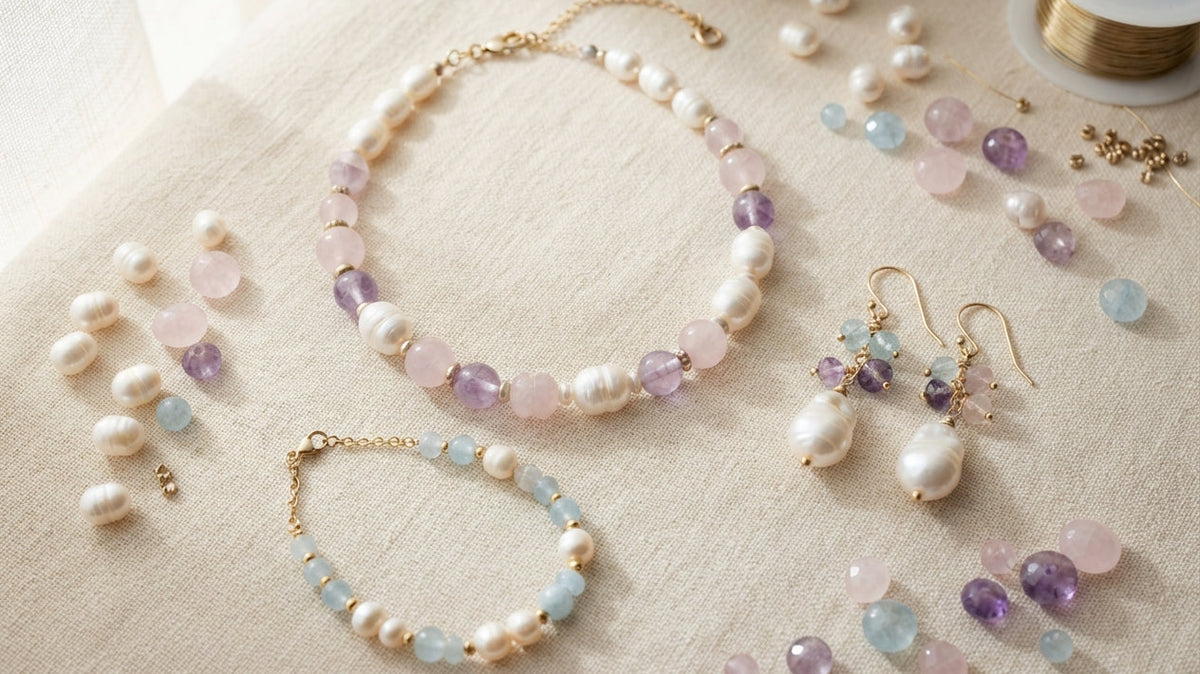
Soft pink rose quartz and luminous white pearls create a delicate combination that's especially well suited to romantic jewelry designs.
Try alternating small rose quartz rounds with freshwater pearls for a bracelet or using a single pearl as the focal point of a rose quartz necklace. Gold-filled or rose-gold accents can introduce warmth, while silver-toned findings keep the palette feeling cool and understated.
2. Amethyst and Lavender or White Pearls
Amethyst's purple coloring creates a beautiful contrast against white freshwater pearls, while lavender pearls offer a softer, more coordinated alternative. For a little sparkle, combine faceted amethyst rondelles with smooth pearls.
You can also use deeper purple gemstones as accents in a predominantly pearl-based design. This pairing works particularly well for elegant necklaces, drop earrings, and jewelry intended for special occasions.
3. Aquamarine or Amazonite and White Pearls
For jewelry inspired by coastal colors, consider pairing white freshwater pearls with aquamarine or amazonite.
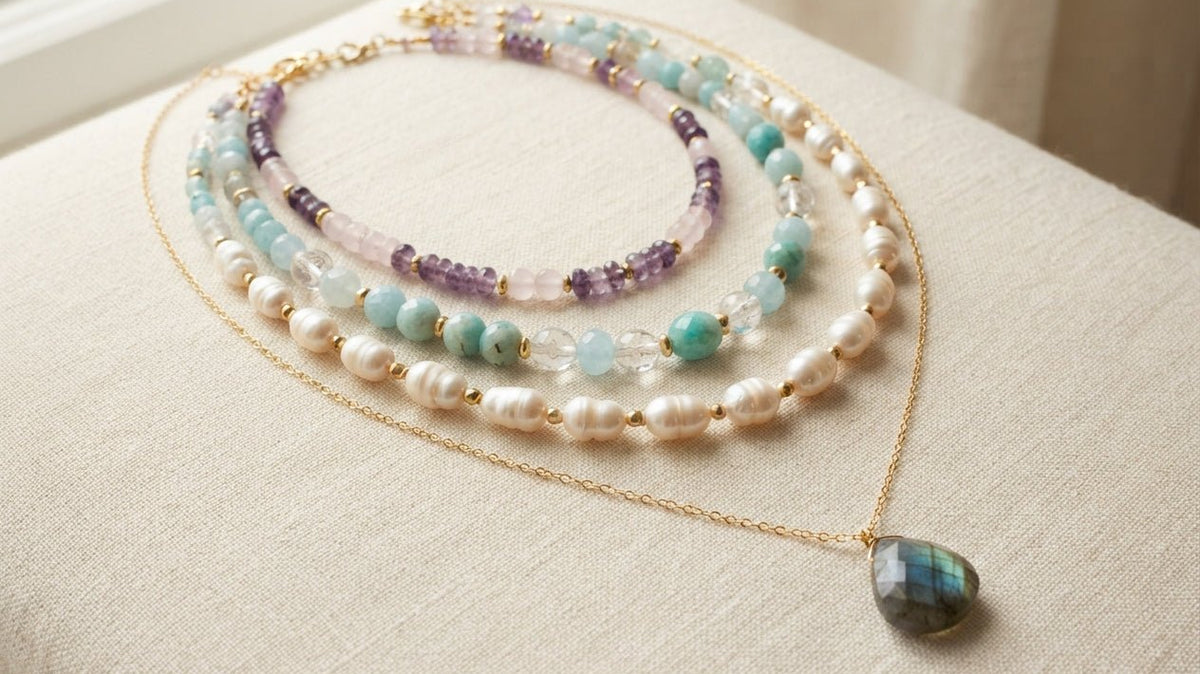
Aquamarine beads introduce delicate blue tones, while amazonite beads offer a more saturated blue-green appearance. Both can create a fresh, airy palette when combined with pearls. Try a bracelet featuring alternating amazonite and pearl beads, or create a delicate necklace with small aquamarine accents spaced between freshwater pearls.
Silver-toned findings complement cooler colors, while gold accents provide a subtle contrast.
4. Labradorite and Gray Freshwater Pearls
Labradorite is known for its distinctive flashes of blue, green, and gold, making it an interesting partner for gray freshwater pearls. Together, these materials create a sophisticated palette with plenty of natural variation.
Consider pairing faceted labradorite beads with smooth gray pearls in a necklace or using a larger pearl alongside smaller labradorite accents in a pair of earrings. Silver, gunmetal, or antique-inspired metal components can complement the combination without distracting from the stones.
5. Carnelian and Cream Freshwater Pearls
The warm orange and reddish tones of carnelian beads create a striking contrast against creamy freshwater pearls. This combination works especially well for earthy, autumn-inspired jewelry, although it can be worn seamlessly throughout the year.
Try using carnelian as the dominant gemstone in a bracelet, with cream pearls placed at regular intervals. Brass or gold-toned spacer beads can help bring the warm colors together.
6. Black Onyx and White Freshwater Pearls
Few combinations are as timeless as black and white. Pairing polished black onyx with white freshwater pearls creates a bold contrast that works beautifully in both classic and contemporary jewelry.
For a simple necklace, alternate black onyx rounds with similarly sized pearls. You could also create drop earrings featuring a small onyx bead above a larger freshwater pearl. Because the color contrast is already so strong, there's little need for additional embellishment. Simple metal findings can complete the design without overwhelming it.
Pearl and Gemstone Jewelry Ideas
Once you've found a combination of pearls and gemstones you love, it's time to decide how to incorporate them into your jewelry. Different arrangements can completely change the appearance of the same materials, so don't be afraid to experiment with a few layouts before committing to a design.
Mixed-Bead Necklaces
A mixed-bead necklace is a great way to showcase both pearls and gemstones in a single piece. For a classic design, alternate similarly sized freshwater pearls and gemstone beads in a repeating pattern. You might use two pearls followed by one gemstone or group several gemstones between larger pearl accents.
For something more contemporary, try an asymmetrical arrangement with pearls concentrated on one side and gemstones on the other. A small metal bead or decorative connector can create an effortless transition between the two materials.
You can also incorporate The Bead Traders' chain by the foot to create partially beaded necklaces, with gemstone and pearl accents positioned along a delicate metal chain.
Pearl and Gemstone Bracelets
Bracelets offer plenty of opportunities to experiment with different bead combinations, especially when working with smaller pearls and gemstone rounds. Try creating a stretch bracelet with alternating 6 mm gemstone beads and similarly sized freshwater pearls.
For a more distinctive design, position a single larger pearl at the center and surround it with smaller gemstones. You can also use metal spacer beads to separate different sections of the bracelet or introduce subtle decorative details.
Just remember to check the bead-hole sizes before choosing your stringing material. Freshwater pearls often have smaller drill holes than gemstone beads, which can affect whether they're suitable for thicker elastic cord.
Pearl and Gemstone Drop Earrings
Earrings are an excellent choice when you want to experiment with pearl and gemstone combinations without using a large number of beads. For a simple drop earring, pair a small faceted gemstone with a freshwater pearl beneath it. The gemstone adds color and sparkle, while the pearl creates a soft, elegant finish.
You can reverse the arrangement, use a larger baroque pearl as the focal point, or create a short cluster of smaller gemstone beads above a large pearl drop. Head pins, eye pins, jump rings, and coordinating earring findings make it possible to experiment with different arrangements. However, keep the finished weight in mind, particularly when working with larger gemstones or multiple dangling components.
Choose Metal Findings and Stringing Materials
The materials holding your jewelry together are just as important as the beads themselves. Choosing appropriate findings and stringing supplies helps your designs maintain their shape, feel comfortable, and withstand regular wear.
For necklaces and bracelets, flexible beading wire is a practical option for many gemstone and pearl combinations. Its strength makes it suitable for designs featuring heavier beads, while its flexibility allows the finished piece to drape naturally.
Beading thread is another option, particularly for traditional pearl-style necklaces. Knotting between pearls can help prevent them from rubbing against one another and provide additional protection if the strand breaks.
Stretch cord works well for casual bracelets, although it's important to choose a diameter that fits through every bead and can support the finished design. For earrings and decorative dangles, head pins and eye pins allow you to connect individual beads to chains, ear wires, or other components.
Metal finishes also influence the overall appearance of your jewelry. Gold and brass tones can complement warm gemstones and creamy pearls, while silver-toned findings often pair beautifully with cooler colors.
Explore The Bead Traders' metal beads and jewelry findings to find coordinating components for your designs. Whether you're adding decorative spacers, selecting clasps, or assembling pearl and gemstone earrings, the right finishing materials can make all the difference.
Practical Tips for Working With Pearls and Gemstones
Before finishing your jewelry, a few simple precautions can help protect your materials and improve the durability of your designs:
- Handle Freshwater Pearls Gently: With a hardness of approximately 2.5-4.5 on the Mohs Hardness Scale, pearls are softer than many gemstones and can scratch when rubbed against harder materials. Consider using knots or small spacers to separate them from rough or faceted beads.
- Inspect Bead Holes Before Stringing: Check for sharp edges around gemstone drill holes that could damage thread or cord over time.
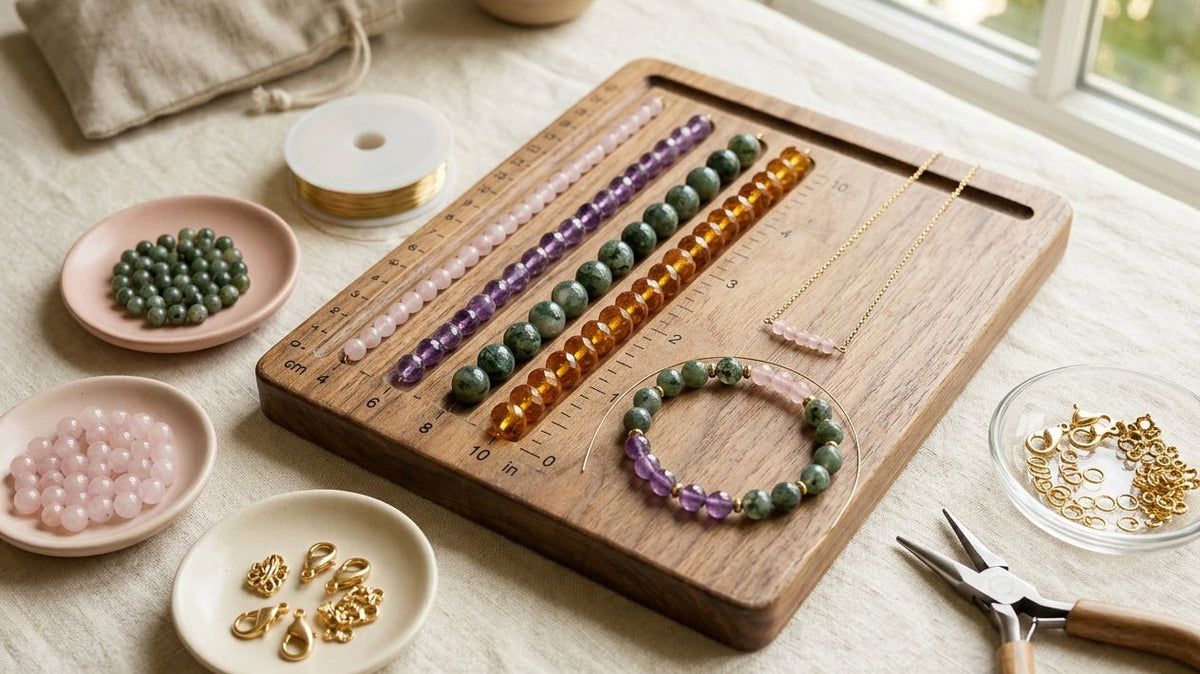
- Arrange Your Beads Before Assembling: Lay out the entire design on a bead board to check spacing, color distribution, and proportions before securing any components.
- Choose Findings That Suit the Design: Make sure clasps, jump rings, and other connections can support the weight of your finished jewelry.
- Store Completed Pieces Carefully: Keep pearl and gemstone jewelry in separate soft pouches or compartments to help prevent scratches and tangling.
Create Beautiful Pearl and Gemstone Jewelry With The Bead Traders
Some of the most memorable jewelry designs come from unexpected combinations. A strand of luminous freshwater pearls paired with colorful gemstones can become a delicate everyday bracelet, an elegant necklace, or a statement piece that feels entirely your own.
Find the materials to bring your ideas to life at The Bead Traders. Explore the freshwater pearl collection, discover gemstone beads in beautiful colors and shapes, and shop coordinating metal beads, chain by the foot, and jewelry findings to complete your designs. With new arrivals added regularly and free shipping on U.S. orders over $100, there's always something new to inspire your next creation.