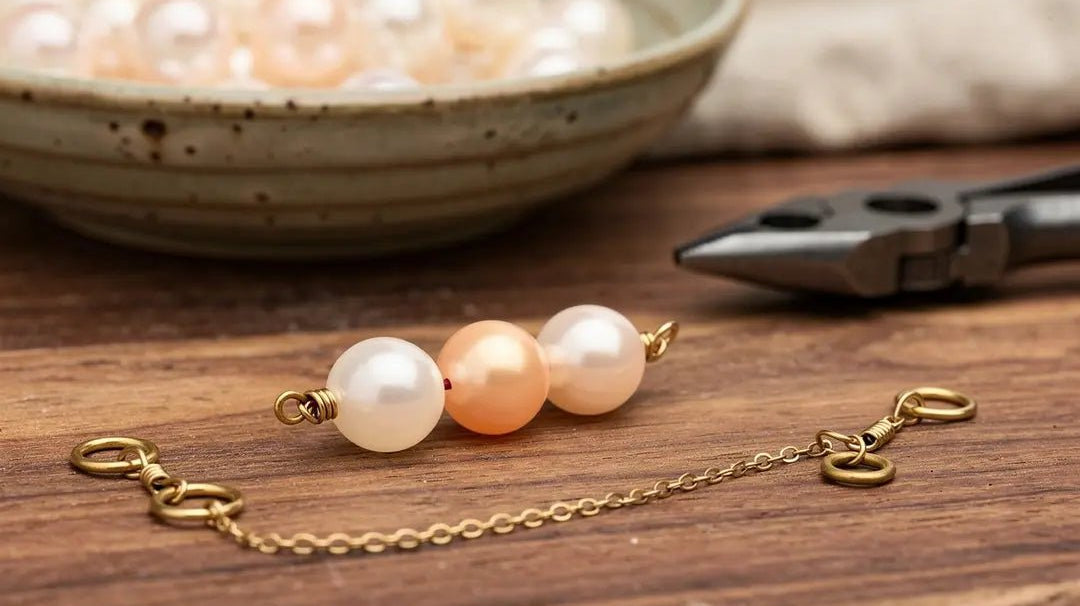
Few details make jewelry feel more intentional than incorporating birthstone beads. Tied to each month of the year, these stones carry personal meaning while also offering a wide range of colors, textures, and design possibilities.
For many, wearing birthstone bead jewelry is a way to symbolize identity. For others, it's a nod to long-standing traditions, where gemstones are associated with protective and healing properties tied to each month of the year. Ultimately, however, birthstone beads strike a balance between meaning and design, giving you materials that feel personal while working beautifully in everyday jewelry.
In this birthstone beads guide, we break down each month's traditional and modern stones, along with what makes them practical for jewelry design. We will also discuss how to use birthstone beads in real designs, from minimalist bracelets to layered necklaces. Whether you're designing for everyday wear or special occasions, this guide will help you turn birthstones in lasting, special pieces.
What Are Birthstone Beads?
Birthstone beads are gemstones associated with specific calendar months, shaped and drilled for use in jewelry design. Each stone is linked to a month of the year, giving it a built-in layer of meaning while still functioning as a versatile design material.
The idea of connecting gemstones to specific months dates back thousands of years. One of the earliest references appears in the Breastplate of Aaron in the book of Exodus, which features twelve stones representing the twelve tribes of Israel. Over time, these stones became associated with the twelve months of the year, laying the foundation for what we now recognize as "birthstones."
However, the modern birthstone list came much later. In 1912, the American National Retail Jewelers Association created the first standardized chart in the United States. The list has been updated various times throughout history, most recently in 2016, when the spinel was added as an August birthstone.
Today, birthstone beans equate to natural gemstone beads shaped, drilled, and polished from the actual stones associated with each month. They work seamlessly in necklaces, bracelets, earrings, focal pendants, and more, symbolizing their evolving diversity.
Many months include both traditional and modern options, giving you flexibility to choose stones that align with your design, style, durability needs, and overall aesthetic.
Month-by-Month Guide to Traditional and Modern Birthstones
Each month is associated with one (or more) birthstones, often split between traditional and modern options. Understanding both options gives you more flexibility when designing or selecting jewelry.
Below, we will breakdown each month's birthstones, including what they look like, how they perform in jewelry, and when each one makes the most sense to use:
January: Garnet
Garnet is the birthstone for January in both traditional and modern lists. While most people associate it with deep red, garnet actually appears in nearly every color except for blue, which you can preview in our Garnet Beads Collection. However, common varieties, like pyrope and almandine, deliver that classic wine-red tone. At Mohs 6.5-7.5, it's durable enough for most jewelry and works especially well in pendants and earrings. This allows the rich, vibrant color to stand out beautifully.
February: Amethyst
Amethyst is February's birthstone color, and it ranges from pale lilac to deep reddish-purple tones. You'll often find that higher-quality stones show strong saturation and even subtle rose flashes. At Mohs 7, it's suitable for everyday wear, including necklaces and bracelets. Additionally, its versatility makes it easy to pair with both silver and gold metals. Review our Amethyst Bead Collection to review your options.
March: Aquamarine and Bloodstone
March is one of the few months who offer both traditional and modern stone options. Aquamarine is the modern March birthstone, known for its pale blue-green tones and symbolizing courage and emotional balance. You can view our Aquamarine Bead Collection to explore current birthstone bead options. At Mohs 7.5-8, it's one of the more durable options that works across all jewelry types.
Bloodstone is the traditional alternative—a dark green jasper with red inclusions. The two offer completely different aesthetics, so the choice ultimately depends on the style of your piece that you're aiming to achieve.
April: Diamond and White Topaz
Diamond is April's traditional birthstone. But at Mohs 10, it's not commonly used in bead form. For jewelry markers, white topaz is the practical alternative in terms of birthstone beads. At Mohs 8, it offers strong durability and a similar brilliance. More specifically, it has a higher refractive index than clear quartz and a similar brilliance to a diamond. You can preview your April birthstone bead options in our White Topaz Beads Collection.
May: Emerald
Emerald, a vibrant green hue that symbolizes love and wisdom, serves as May's gemstone. While it ranks 7.5-8 on the Mohs scale, it's more brittle than expected due to natural inclusions. Because of this, it's best suited for earrings and pendants rather than high-impact pieces. For natural dimension, emeralds pair particularly well with yellow gold and freshwater pearls. Review our Emerald Beads Collection to begin creating your unique piece today.
June: Pearl, Alexandrite, and Moonstone
June boasts three stone options, each with different characteristics. Freshwater pearls are the traditional choice, soft (Mohs 2.5-4), lustrous, and best for low-impact designs. Moonstone, a luminous, milky bead, sits at Mohs 6-6.5, displaying an ethereal glow that works well in pendants and earrings.
Alexandrite is the rarest of all three, shifting from green to red hues depending on the light source. This birthstone bead sits at a Mohs 8.5, serving as an appropriate option for anklets, bracelets, and necklaces.
July: Ruby
Ruby, July's birthstone, is one of the most durable birthstone beads, sitting at a Mohs 9. Because of their resistance to wear, rubies are particularly suitable for all jewelry types—even everyday pieces. Its color ranges from pinkish-red to deep blood-red, with darker tones being the most prized choice. It pairs well with both yellow and white metals, which you can compare when reviewing our Ruby Gemstone Bead Collection.
August: Peridot and Spinel
Peridot is the traditional August stone, known for its bright yellow-green color. As a long-standing favorite, the ancient Romans called peridot the "evening emerald," as it remained visible by lamplight. At Mohs 6.5-7, it's better suited for earrings and pendants. Review your different options in our Peridot Bead Collection.
Spinel, added in 2016 as an August birthstone, offers more durability at a Mohs 8. It comes in a wide range of colors, including red, pink, blue, and purple, making it an extremely flexible option for designs. For a better comparison, scroll through our Spinel Bead Collection and see if anything catches your eye.
September: Sapphire
Sapphire, September's birthstone, is one of the most practical birthstone beads for jewelry making. At Mohs 9, it handles daily wear with ease. While deep blue is this stone's classic color, you can also find it in hues like pink, yellow, green, and even colorless varieties. Sapphire rondelles and faceted rounds, in particular, work well in both delicate everyday pieces and bolder statement designs. For additional options, review our Sapphire Beads Collection.
October: Opal and Tourmaline
Opal serves as October's traditional birthstone, known for its play on color caused by light diffracting through tiny silica spheres. (You can see multiple examples in our Opal Beads Collection.) Sitting at Mohs 5.5-6, opal requires careful handling and separation from heat, chemicals, and hard knocks.
Tourmaline is October's modern birthstone alternative, acting as the more durable option to opal. Sitting at Mohs 7-7.5 and available in a wide range of colors, tourmaline is a common favorite for jewelry makers who value durability. Few the endless color options in our Tourmaline Bead Collection.
November: Topaz and Citrine
November's two stones share warm, golden tones that feel as radiant as they do refined. While blue and golden topaz beads are most popular in jewelry making, you can find them in a range of colors. Additionally, at Mohs 8, these birthstone beads are durable and versatile. Review the different opportunities and styles in our Topaz Bead Collection.
Citrine, November's other birthstone, offers a more affordable option compared to topaz. It has a similar color pattern and sits at Mohs 7, boasting a sunny yellow-orange hue that naturally pairs well with gold metals and neutral accents. Both topaz and citrine work well in rings, earrings, and pendants. To decide between the two, make sure to also visit our Citrine Bead Collection.
December: Turquoise, Tanzanite, Blue Topaz, and Zircon
December offers the most variety of any month, with four recognized birthstones: turquoise, tanzanite, zircon, and blue topaz. Turquoise, one of the oldest gemstones, sits at Mohs 5-6 and requires gentle care. It's most recognized for its blue-green tones and distinctive waxy luster. You can review additional options in our Turquoise Bead Collection.
Tanzanite, added in 2002, provides a vivid violet-blue tone. However, at a Mohs 6-7, it's a relatively soft gemstone that requires gentle cleaning and proper care. Because of this, it's ideal for pieces such earrings. Explore your options through our Tanzanite Bead Collection.
Blue topaz offers a brighter, more accessible option. Typically rated at Mohs 8, it provides strong durability and a clear, cool-toned sparkle that works well across more jewelry types. And finally, zircon is another durable bead, ranging from Mohs 6.5-7.5. Known for its high brilliance, it's commonly recognized for its "diamond-like" luster. It's a practical option for designs that need both visual impact and wearability.
Choosing the Right Stones for Your Jewelry Projects
Choosing the right birthstone beads comes down to more than just color. Durability, metal pairing, and budget all play a role in how your finished piece looks and performs over time.
Below, we will discuss important factors to consider when creating birthstone jewelry products:
Hardness and Wearability
Hardness matters more than most beginners expect. Stones rated 7 or higher on the Mohs scale are generally suitable for everyday pieces, such as rings or bracelets. Softer stones, like opal, pearl, moonstone, and turquoise, are better reserved for earrings or pendants. In pieces such as these, they're less exposed to impact and consistent abrasion.
Metal Pairings
The metal you choose to pair your birthstone beads with can completely shift the final look of your design. Yellow gold, for example, enhances warm stones such as garnet, ruby, and emerald. Silver and white gold, on the other hand, complement cooler ones, such as aquamarine, sapphire, and amethyst. In some pieces, rose gold works particularly well with softer pink hues, peaches, and lighter-toned hues.
For additional inspiration and advice, visit our guide: "Color Theory: Choosing the Best Metals for Your Piece."
Budget Considerations
When shopping for birthstone beads, budget is worth considering early. Naturally, stones like diamonds, alexandrite, and tanzanite sit at the higher end of the price range. More accessible options, like amethyst, citrine, garnet, and peridot, offer strong color and durability at a lower cost. It's important to intentionally reflect on which stones will best suit your design, style, and overall goal of each piece.
We discuss this concept in additional detail in our guide, "What Are Best Gemstone Beads for Jewelry Making?"
Creative Gift Inspiration and Styling Tips
Birthstone jewelry works for more than just birthdays. Many stones are also tied to milestone anniversaries—ruby for the 15th and 40th, emerald for the 20th and 35th, and sapphire for the 5th and 45th. Matching the stone to the occasion adds an intentional layer of meaning without changing the overall design approach.
When using birthstone beads to create thoughtful gifts, here's what to keep in mind:
Combine Multiple Birthstones
Mixing birthstones into one single piece is one of the most personal ways to design jewelry. A bracelet featuring each family member's birth month or a pendant combining two stones creates something specific and intentional. These design choices are especially popular for occasions like Mother's Day, anniversaries, or friendship pieces.
Choose Flexible Jewelry Formats
For gifting, bracelets and pendants are the easiest, most flexible formats. More specifically, they don't require exact sizing, and they fit a wide range of unique styles. This makes them both practical options when you're designing something for someone else—especially if you want to keep it a surprise.
Keep the Design Clean and Wearable
Intricacy in jewelry design has a time and place. For gifting, smaller beads, like 3-4mm faceted rondelles, are ideal. They're easy to work with, pair well with different metals, and create a polished look with adding unnecessary complexity. More importantly, they also come in a range of colors and textures, making it easy to personalize each different piece.
Where to Find High-Quality Beads for Your Projects
The quality of your finished piece starts with the material you choose. Natural gemstone beads should be cut, shaped, drilled, and polished from real stone rather than glass or resin imitations. Consistency is color, clean drilling, and proper finishing all make a noticeable difference in how jewelry looks and wears over time. If you're unsure about previously purchased stones, visit our guide on how to tell if gemstone beads are real or fake.
At The Bead Traders, you'll find a wide selection of natural gemstone beads across nearly every birthstone, including ruby, sapphire, aquamarine, amethyst, garnet, peridot, turquoise, emerald, and opal. We also offer freshwater pearls for June designs, along with chain by the foot, metal beads, and findings. This way, you can complete a piece without sourcing from multiple places. You can also visit our new arrivals section regularly to see what has just come in.
Our inventory focuses on natural gemstone beads that are clearly described and consistently graded. With this promise to customers, you can know what you're working with before you start.
How to Design with Birthstone Beads by Month
Designing with birthstone beads starts with color. The stone sets the tone, while everything else should support it. Cool-toned stones, like aquamarine and sapphire, pair best with silver or white gold for a clean, cohesive look. Warmer stones, like garnet, citrine, and peridot, tend to sit better with gold-filled or brass components, bringing out their natural depth.
For additional guidance on using birthstone beans intentionally in pieces, here are a few factors to keep in mind:
Pair Stones That Naturally Work Together
Some birthstone beads naturally combine well because of shared properties. For example, ruby and sapphire (July and September) come form the same mineral family and have similar durability. Because of this, these are easy gemstone beads to mix into one seamless design. Amethyst and aquamarine (February and March), also work well together. However, they create a softer, cool-toned palette that works particularly well in layered necklaces or delicate bracelets.
Balance Style with Wearability
When designing by month, think beyond color. Consider how the piece will be worn. Harder stones are better suited for everyday wear, while softer stones are ideal for lower-impact pieces. Keeping the design aligned with the stone's durability helps you naturally extend the longevity of your jewelry without sacrificing style.
Store and Care for Stones Properly
Storage matters, especially when combining stones with different hardness levels. Harder stones, like sapphire and ruby, can scratch softer options, like opal and pearl. To avoid this, use padded pouches or divided compartments. For cleaning, most stones can be simply wiped with warm water and soft cloth. However, avoid ultrasonic cleaners for more delicate materials, like emerald, opal, and pearl.
Start your next creative birthstone project using this birthstone beads guide.
When creating birthstone jewelry, there's no right or wrong way to start. Simply pick the birth month that matters most to you, find the stone that fits your style and budget, and build your pieces. This month-by-month structure gives you a balanced framework—but the actual design is yours to shape.
Browse our full range of gemstone beads at The Bead Traders. We have options to span across each month, including different colors and sizes, so you can make each piece entirely unique. And, of course, if you have any questions, The Bead Traders team is here to help.