Buying gemstone beads sounds straightforward until you're staring at dozens of listings, unsure whether you're looking at genuine stone or dyed glass, a 6mm or an 8mm, and whether faceted or smooth will actually work for what you have in mind. This gemstone bead buyer's guide cuts through that confusion. It covers the sizes that suit different projects, how to read bead finishes, what quality actually looks like, and how to match stones to your design style, whether you're just starting out or running a production studio.
Why Gemstone Beads Matter in Jewelry Design
Gemstone beads do something that glass and plastic can't: they carry natural variation. Each bead forms over millions of years, and no two are identical. That means every piece you make with them is genuinely one of a kind.
Beyond uniqueness, gemstones add perceived value. A strand of labradorite or garnet reads differently to a buyer than a strand of acrylic rounds. The color depth, surface character, and weight all signal quality. And stones like opal, with their play-of-color that flashes rainbow hues as light hits them, can anchor an entire design on their own.
Natural inclusions, color shifts, and surface irregularities aren't flaws. They're what make gemstone beads worth using.
How to Choose Bead Size
Size affects proportion, comfort, and how a piece reads at a distance. Get it wrong and even beautiful stones can make a design feel off.
Standard Gemstone Bead Size Ranges
Smaller beads in the 2mm to 4mm range work well for fine chains, earrings, and delicate layering pieces. A standard 15 to 16-inch strand holds roughly 90 to 100 beads at 4mm, giving you plenty to work with for intricate patterns.
The 6mm to 8mm range is the most versatile. These sizes suit everyday bracelets and necklaces, and they're comfortable to wear for long periods. A strand holds around 60 to 65 beads at 6mm and 45 to 48 at 8mm. For bracelets, a standard 7 to 8-inch length works well with either size.
At 10mm and above, you're in statement territory. These beads command attention and work best as focal points or in chunky, bold designs. A strand holds roughly 28 to 30 beads at 10mm.
How Size Affects Design
Larger beads add visual weight. Use them sparingly unless you want a bold, chunky look. Smaller beads give you flexibility for layering and detailed patterns.
For necklaces, a 16-inch strand sits at the collarbone. An 18-inch strand falls just below. Strands of 24 inches or more allow for layering or wrapping. If you're using garnet beads as an example, smaller 3mm plain rounds create a refined, minimalist look, while 8.5 to 14mm rondelles make a stronger visual impact as focal points.
Mixing sizes in one piece works well too. Pair small faceted rondelles with larger plain rounds for texture and visual rhythm.
Bead Hole & Threading Considerations
Bead hole size matters more than most beginners expect. Small holes, typically 0.5mm to 0.8mm, are common in fine gemstone beads and require thinner stringing materials like 24 to 26 gauge wire or 0.010 to 0.012 inch beading wire.
For softer stones like opal, use silk or soft synthetic thread. The softer material reduces abrasion on the bead holes. Always test a few beads before committing to a full strand, especially if you're using a new stone type.
Faceted vs Smooth Gemstone Beads
This is one of the most common decisions you'll make, and it comes down to the look and feel you're after.
What Are Faceted Beads?
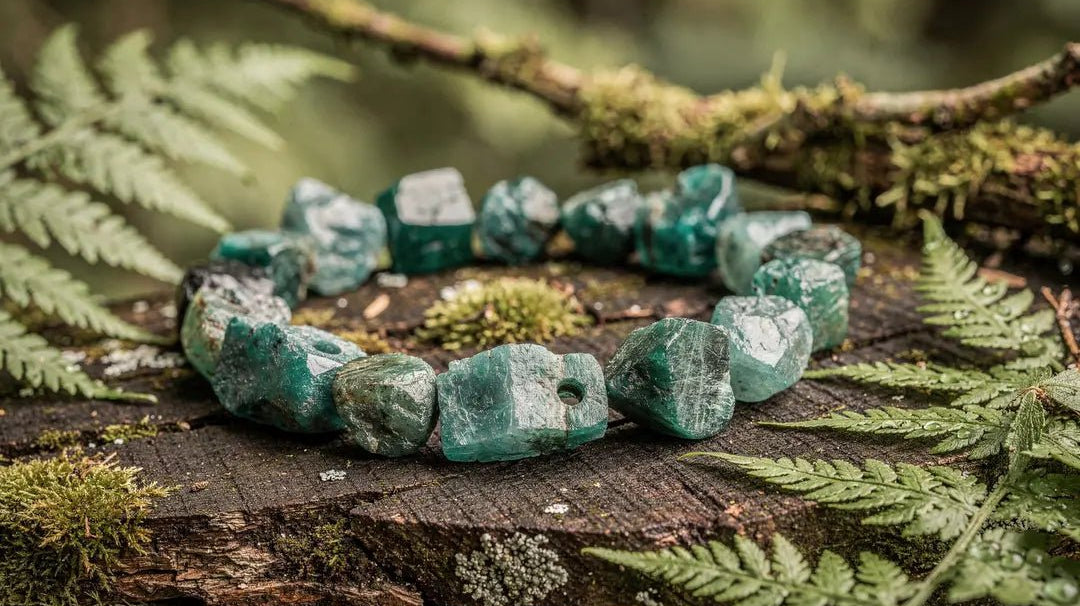
Faceted beads have precision-cut flat faces that reflect light in multiple directions. The result is brilliance and sparkle. They work well in formal, bridal, or statement pieces where you want the stone to catch the eye. Emerald beads in faceted cuts, for example, catch light and add sparkle in a way that plain rounds simply don't.
What Are Smooth (Tumbled) Beads?
Smooth beads are polished to an even surface without cut faces. They have a softer, more organic look. Plain rounds and rondelles work well as spacers, in delicate chains, or in designs where you want texture without visual noise. They're also more forgiving in casual, everyday pieces.
Pros & Cons Overview
FeatureFaceted BeadsSmooth Beads
Sparkle & Light Play
High
Subtle
Style Suitability
Elegant, formal
Casual, earthy
Surface Texture
Angular facets
Even polish
Best For
Statement & bridal pieces
Everyday wear
Matching Gemstone Beads to Jewelry Styles
Classic & Minimalist Jewelry
Stick to smaller beads, 4mm to 6mm, in neutral or understated hues. Stones like quartz, moonstone, or pale amethyst pair well with gold or silver findings for a clean, modern look. Plain rounds work better here than heavy faceted cuts.
Boho & Earthy Designs
Lean into natural textures and irregular shapes. Jasper, agate, and tiger's eye all carry organic patterns that suit relaxed, free-spirited aesthetics. Larger smooth beads, mixed with wood or metal spacers, give you that earthy feel without looking overdone. As our focal bead guide puts it, a boho piece calls for natural materials like gemstones or wood.
Statement & High-End Looks
Go for faceted, high-grade stones in bold colors. Pair them with polished metal accents. Opal rondelles, faceted emeralds, or deep red garnets can serve as the centerpiece of a piece when sized and placed correctly. A focal bead shifts a design from casual to formal, so choose your anchor stone with intention.
Beginner vs. Professional Design Considerations
Beginners: Start Simple & Learn Fundamentals
Start with 6mm to 8mm smooth beads in durable stones like amethyst, agate, or jasper. These are forgiving to work with and widely available. For bracelets, measure your wrist, cut elastic cord to size, thread your beads in a simple pattern, and finish with a secure knot. For necklaces, use beading wire with crimp beads at each end.
Practice a few basic patterns before moving to mixed sizes or complex designs. Getting comfortable with hole sizes and stringing tension first saves a lot of frustration later.
Intermediate & Professional Designers
At this level, you're thinking about batch uniformity, weight distribution, and how different finishes interact in one piece. Wire wrapping with wrapped loops gives you secure connections that hold up with regular wear, especially around focal beads.
Multi-strand designs work well with gemstones. Start with a base strand of small beads, then add layers of complementary stones in varying lengths. Mix metals too: emerald pairs differently with yellow gold than with oxidized silver, and both work.
Think about ethical sourcing. Work with suppliers who disclose treatments and can speak to where their stones come from.
Design Workflow Tips for Pros
- Sort your bead inventory by size, color, and finish so you can pull materials quickly when a design idea hits.
- Sketch or mood-board before ordering. It prevents over-buying and helps you spot gaps in your palette.
- Test weight distribution before finishing a piece. A heavy focal bead that pulls a necklace forward will frustrate whoever wears it.
Gemstone Bead Quality Checklist
- Authentic material: Natural gemstone beads have subtle variations, inclusions, and color shifts. Fake beads are too uniform, too light, and often feel warmer to the touch than real stone.
- Drilling quality: Holes should be centered and clean. Off-center drilling affects how beads sit on a strand and can weaken the bead over time.
- Color consistency: Some natural variation is expected and desirable. But if colors look artificially even or bleed when wet, the beads are likely dyed.
- Polish and finish: Higher-quality beads show richer color, better polish, and fewer visible fractures. AAA-grade beads are widely understood to represent premium quality, with strong color saturation and consistent shapes.
- Treatment disclosure: Ask suppliers whether stones have been dyed, stabilized, or treated. Reputable sellers disclose this. At The Bead Traders, treatments are disclosed so you can make informed choices.
Pricing Expectations & Value Tiers
Glass beads typically run $5 to $20 per strand. Natural stone beads start around $10 to $50 per strand for common semi-precious stones like agate, jasper, or quartz. Rarer or higher-grade stones, think sugilite, high-quality emerald, or premium opal, can push well above $50 per strand, with precious stones in high-end fashion applications reaching $500 or more.
Semi-precious stones offer the look of luxury at accessible price points, which is why they're so popular with independent designers. Buying in bulk brings the cost per strand down, which matters if you're producing in volume. Free shipping on U.S. orders over $100 at The Bead Traders makes stocking up even more practical.
Where to Buy Gemstone Beads
Online marketplaces like Etsy and Amazon carry gemstone beads, but quality control varies widely. You're often buying from resellers with limited product knowledge, and returns can be complicated.
Specialty bead retailers are a better bet. They typically offer detailed product descriptions, high-resolution images, and consistent quality across strands. The Bead Traders sources directly from mining regions worldwide, with decades of experience in the global gemstone trade. That means variety, reliable supply, and transparency about what you're buying. You can browse the full gemstone bead collection and check new arrivals for the latest additions.
Local bead shops are worth visiting if you have one nearby. Handling beads in person lets you check hole size, surface quality, and color accuracy before buying. But selection is usually limited compared to what's available online.
Frequently Asked Questions
What size gemstone beads should I choose for bracelets?
6mm to 8mm is the most common range for bracelets. They're comfortable, proportional, and easy to work with. A standard bracelet runs 7 to 8 inches, and you can add an extender chain for adjustability.
Are faceted beads better than smooth ones?
Neither is better. Faceted beads catch more light and suit formal or statement pieces. Smooth beads have a softer, more organic feel and work well for casual or everyday designs. Choose based on the look you're after.
How can I tell real gemstone beads from treated or imitation ones?
Real stones feel cool to the touch for several seconds before warming. They have natural inclusions, subtle color variation, and some surface irregularity. Fake beads are too uniform, lighter in weight, and often have a glassy or plastic feel. Dyed beads may show color bleeding when wet or have unnaturally even saturation.
What are the best gemstones for beginners?
Amethyst, agate, jasper, and quartz are all solid starting points. They're durable, widely available, affordable, and come in a range of colors. Garnet is another good option, rating 6.5 to 7.5 on the Mohs scale, making it suitable for everyday wear.
Can I mix bead sizes and finishes in one piece?
Yes. Mixing sizes and finishes adds visual interest. The key is balance: use a clear focal point, repeat elements for rhythm, and avoid combining too many competing textures at once. Pairing small faceted rondelles with larger plain rounds is a reliable combination that works across styles.
Final Takeaways for Confident Gemstone Bead Buying
This gemstone bead buyer's guide comes down to a few core decisions: pick the right size for your project, choose a finish that matches your design intent, verify quality before you buy, and match your stone choices to the aesthetic you're building toward.
Start with what you know, build your skills, and don't overlook the basics like hole size and stringing material compatibility. Those details matter more than most people expect.
When you're ready to shop, The Bead Traders carries an extensive range of authentic natural gemstone beads alongside freshwater pearls, metal beads and findings, and chain by the foot. Orders over $100 ship free with free returns in the U.S. Bookmark this guide and come back to it whenever you're planning a new project.