Stretch bracelets are a favorite among jewelry makers for good reason. They're versatile, comfortable to wear, and easy to customize with different colors, textures, and bead combinations. But while the design process may seem straightforward, choosing the right beads can make a significant difference in how your finished bracelet looks, feels, and holds up over time.
Gemstone beads for stretch bracelets are especially popular thanks to their natural beauty, distinctive patterns, and wide variety of colors. From polished amethyst and rose quartz to earthy jasper and richly patterned agate, there's a gemstone to suit nearly every jewelry-making style.
However, appearance is only part of the equation. Bead size, weight, durability, hole quality, and compatibility with stretch cord all deserve consideration.
Whether you're making your first bracelet or selecting materials for an entire handmade jewelry collection, this guide will help you choose beads that balance beautiful design with everyday wearability.
What Makes a Bead Suitable for a Stretch Bracelet?
Unlike bracelets made with chains or clasps, stretch bracelets rely on elastic cord to maintain their shape and fit. Every time you put one on or take it off, the cord stretches around your hand before returning to its original position.
That repeated movement makes bead selection particularly important. Heavy beads, rough drill holes, and sharp edges can place unnecessary stress on the elastic, potentially shortening the life of your bracelet.
The best beads for stretch bracelets generally have smooth surfaces, well-finished holes, and a comfortable weight. They should also work together as a cohesive design without making the finished bracelet feel bulky or restrictive.
Consider the Bead's Weight
Gemstone beads vary considerably in weight depending on their material and size. A bracelet made entirely from large stone beads will generally feel heavier than one featuring smaller gemstones or lightweight accents.
For everyday bracelets, 6 mm and 8 mm gemstone beads often provide a comfortable balance between visual presence and weight. Larger beads can still work beautifully, particularly when used as focal points alongside smaller supporting beads.
If you're working with heavier gemstones, choose a suitable elastic cord and avoid overloading the design with oversized components.
Check the Bead Holes
A beautifully polished gemstone won't do your bracelet much good if its drill hole damages the cord. Before stringing, inspect the openings for rough edges, chips, or visible cracks. Ideally, each hole should be clean, centered, and smooth enough for the elastic to pass through without excessive friction.
Hole diameter matters, too. Beads with openings that are too small may not accommodate your preferred stretch cord, especially if you're planning to double the elastic for additional support. You can learn other helpful tips by reading our full bead hole size guide.
Best Types of Beads for Stretch Bracelets
Gemstones may be a popular starting point, but they're far from the only option. Combining different bead materials can introduce color, texture, contrast, and personality into your bracelet design.
Gemstone Beads
Gemstone beads are a natural choice for stretch bracelets because they offer such a wide range of colors, patterns, and finishes. Some popular options include:
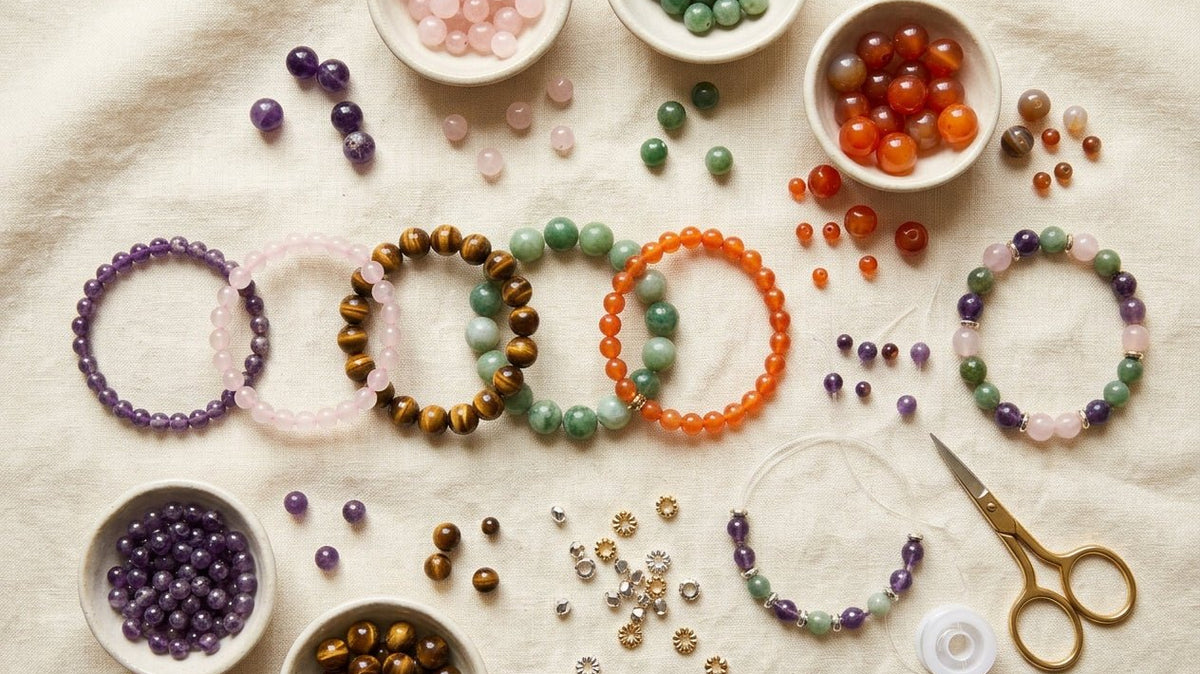
- Amethyst: Purple hues ranging from pale lavender to deep violet.
- Rose Quartz: Soft pink tones that complement delicate, romantic designs.
- Jade: Smooth, polished surfaces and a range of green and other natural shades.
- Agate: Distinctive bands, patterns, and color variations.
- Jasper: Earthy colors and organic patterns that suit nature-inspired jewelry.
- Carnelian: Warm orange and reddish tones that create vibrant accents.
- Tiger's Eye: Golden-brown bands with a characteristic shimmering effect.
- Black Onyx: A sleek, versatile choice for minimalist and contrasting designs.
- Moonstone: Soft, luminous appearance that brings subtle visual interest.
You can use a single gemstone variety throughout a bracelet or combine complementary stones to create something more distinctive. Gemstones are also popular for birthstone-inspired jewelry and designs that incorporate traditional symbolic meanings.
Glass Beads
Glass beads are available in countless colors, shapes, and finishes, making them useful for both simple and elaborate bracelets. Transparent glass beads can introduce light and sparkle, while opaque varieties provide bold, consistent color. Smaller glass beads also work well as accents between larger gemstones.
Keep in mind that glass can chip or crack, so inspect bead edges and holes before stringing.
Wood Beads
For lightweight, earthy designs, wood beads are an excellent option. Their natural textures pair particularly well with jasper, agate, and other gemstones in neutral or warm color palettes.
Wood beads are also comfortable for larger bracelets because they generally add less weight than similarly sized stone beads. Choose well-finished varieties and consider how exposure to water, oils, and everyday wear might affect their surfaces.
Metal Beads and Spacers
Metal beads and spacers can give stretch bracelets a more polished, finished appearance. Small gold-tone, silver-tone, or sterling silver spacers create separation between the gemstone and help define repeating patterns. They can also highlight a focal bead without overwhelming the design.
Look for smooth openings and finishes appropriate for skin contact. Smaller metal components are usually preferable to large, heavy accents.
Ceramic and Polymer Clay Beads
Ceramic and polymer clay beads introduce playful shapes, handmade textures, and decorative details. They can be particularly effective as focal beads or in mixed-material bracelets. However, some ceramic pieces are vulnerable to chipping, while polymer clay bead durability depends on their construction and finish.
Select pieces with smooth holes and avoid placing fragile decorative beads where they'll experience excessive friction.
How to Choose Gemstone Beads for Stretch Bracelets
When shopping for gemstone beads for stretch bracelets, it's tempting to start with color alone. And while finding a stone you love is just as important, several practical details can help you create a bracelet that's just as comfortable as it is attractive.
Choose a Bead Size That Matches Your Design
Bead diameter influences nearly every aspect of a stretch bracelet, from its overall appearance to its weight and flexibility.
|
Bead Size |
Best For |
|
4 mm |
Delicate bracelets, subtle accents, and lightweight stacking designs |
|
6 mm |
Everyday bracelets and versatile gemstone combinations |
|
8 mm |
Classic gemstone bracelets with a more noticeable presence |
|
10mm and larger |
Statement bracelets, oversized designs, and focal beads |
Six- and eight-millimeter beads are especially versatile because they're substantial enough to showcase gemstone patterns without making most designs overly bulky.
You can also combine different sizes to add dimension. For example, an 8 mm gemstone focal bead surrounded by 6 mm beads creates a subtle variation in scale while maintaining a balanced appearance.
Think About Color and Pattern
One of the greatest advantages of working with natural gemstones is that no two beads are necessarily identical. Agate beads may feature striking bands, jasper often displays intricate earthy patterns, and rose quartz typically offers a softer, more understated appearance.
When planning your bracelet, consider whether you want a cohesive palette or a more contrasting design. A few reliable approaches include choosing one dominant gemstone, combining complementary colors, or pairing patterned stones with neutral accents.
It's also helpful to arrange your beads in natural light before stringing. This allows you to see how their colors and patterns interact and make adjustments before committing to the finished bracelet.
Consider Durability
Not all gemstones respond to everyday wear in the same way. Hardness, commonly measured using the Mohs scale, indicates a mineral's resistance to scratching. However, hardness alone doesn't determine whether a gemstone will resist chipping or breaking.
Quartz varieties, including amethyst and rose quartz, have a Mohs hardness of approximately 7, making them relatively resistant to everyday scratches. Many agates and jaspers offer similar scratch resistance.
Softer or more delicate stones may be better suited to bracelets worn occasionally rather than during demanding daily activities. Regardless of the gemstone, removing stretch bracelets before swimming, cleaning, or strenuous activity can help protect both the beads and the elastic cord.
Look for Consistent Quality
Natural variation is part of what makes gemstone jewelry appealing. Differences in color, veining, and pattern can add character rather than detract from the design. However, there's a difference between natural variation and poor bead quality.
When selecting gemstone beads, check for consistent sizing, even polishing, smooth drill holes, and minimal chips or fractures. Beads don't need to look identical, but they should fit together comfortably and maintain a consistent level of craftsmanship.
Choose Beads Based on Comfort
A bracelet can look beautiful on a jewelry display and still feel uncomfortable on the wrist. Smooth, round gemstones are generally a reliable choice for everyday wear because their surfaces rest comfortably against the skin.
Larger faceted or irregular beads can work, too, provided they don't have sharp points or abrasive edges. Consider the bracelet's total weight and how it will feel when stacked alongside other jewelry. A lighter design may be preferable for someone who regularly wears several bracelets at once.
Matching Bead Size to Stretch Cord
Even the best gemstone beads need the right foundation. Stretch cord comes in different diameters, and the appropriate choice depends on the size and weight of your beads, the diameter of their holes, and the finished bracelet design.
Thicker elastic can provide additional support for heavier beads, but only if it passes comfortably through the openings. Some jewelry makers also double their cord for additional reinforcement. This requires bead holes large enough to accommodate both strands without excessive friction.
Before stringing your entire bracelet, test a few beads with your chosen elastic. Make sure the cord moves through the holes smoothly and leaves enough room to complete a secure knot.
Practical Tip: Select a cord diameter that works comfortably with your bead holes rather than forcing thicker elastic through openings that are too small.
Popular Design Combinations for Stretch Bracelets
Once you've selected your materials, experimenting with bead combinations is where the creative process really begins. Here are a few popular stretch bracelet ideas for inspiration:
Single-Stone Bracelets
Using one gemstone throughout a bracelet allows its natural color and pattern to take center stage. An entire strand of amethyst, rose quartz, or black onyx creates a cohesive design that can be worn alone or stacked with other pieces. For a subtle finishing touch, incorporate one or two small metal spacers.
Mixed Gemstone Designs
Combining gemstones can create beautiful contrasts in color and texture. Try pairing earthy jasper with warm carnelian, or combine rose quartz with amethyst for a softer palette. A repeating pattern helps the bracelet feel intentional, particularly when you're working with stones that have different markings.
Gemstone and Metal Accents
Metal spacers are an easy way to introduce definition into a gemstone bracelet. Gold-tone accents can complement warm stones such as tiger's eye and carnelian, while silver-tone spacers pair beautifully with cooler gemstones like amethyst. Keep the accents relatively small so the gemstones remain the focal point.
Gemstone and Crystal Designs
Pairing opaque gemstones with sparkling crystal beads creates an appealing contrast between natural texture and light reflection. Consider using crystal beads around a central gemstone or placing them at regular intervals throughout the bracelet. A few carefully positioned accents can provide plenty of sparkle without making the design feel overcrowded.
Minimalist Stretch Bracelets
For understated jewelry, smaller beads and simple color palettes are often all you need. Four- or six-millimeter gemstones in a single color family create lightweight bracelets that are comfortable to wear and easy to stack. Choose a consistent bead size and keep decorative components to a minimum for a clean, refined finish.
Bead Shapes to Consider
Although round gemstone beads are a classic choice, experimenting with different shapes can give your stretch bracelets a distinctive look.
- Round Beads: A versatile, comfortable option for traditional bracelet designs.
- Faceted Beads: Reflect light and introduce sparkle and texture.
- Chip Beads: Offer irregular, organic shapes for casual, nature-inspired jewelry.
- Oval and Rondelle Beads: Add dimension and create interesting repeating patterns.
- Heishi Beads: Produce a flatter profile with a modern, layered appearance.
- Focal Beads: Draw attention to a central element or decorative detail.
When working with irregular or faceted beads, pay particular attention to their drill holes and edges. Smooth finishing is especially important for protecting stretch cord from unnecessary wear.
Frequently Asked Questions About Stretch Bracelet Beads
What Are the Best Beads for Making Stretch Bracelets?
Round gemstone beads, glass beads, wood beads, and lightweight metal spacers are all excellent choices. The best material depends on your preferred style, bracelet weight, and intended use. Smooth, well-finished beads with clean drill holes are particularly important.
What Size Beads Are Best for Stretch Bracelets?
Six- and eight-millimeter beads are popular choices because they offer a balance of comfort and visual impact. Four-millimeter beads are ideal for delicate designs, while 10 mm and larger beads work well for statement bracelets.
Can You Use Gemstone Beads on Stretch Cord?
Gemstone beads work well with stretch cord when their drill holes are smooth and appropriately sized. Choose an elastic diameter suitable for the beads' weight and test the fit before stringing your bracelet.
How Many Beads Do You Need for a Stretch Bracelet?
The number depends on your desired bracelet circumference and bead diameter. For example, a bracelet with approximately 7 inches of beaded circumference may require around 22 round 8 mm beads or 30 round 6 mm beads. Actual counts vary depending on spacers, bead shape, and fit.
Are Faceted Beads Suitable for Stretch Bracelets?
Faceted beads can add beautiful sparkle and texture to stretch bracelets. Choose varieties with smooth drill holes and avoid pieces with sharp edges that may damage the elastic.
Find the Right Gemstone Beads for Your Next Stretch Bracelet
The best stretch bracelets begin with thoughtfully chosen materials. From selecting the right gemstone size to checking drill holes and balancing colors, each decision contributes to a finished piece that's attractive, comfortable, and made to last.
Whether you prefer delicate single-stone designs, bold gemstone combinations, or bracelets finished with metallic accents, there's plenty of room to experiment.
Explore The Bead Traders' selection of gemstone beads, metal spacers, freshwater pearls, and jewelry-making supplies to find beautiful materials for your next stretch bracelet project. U.S. orders over $100 get free shipping.