Planning a new bracelet or necklace? Before you start stringing, it helps to know how many beads you'll need to bring your design to life. Too few, and you could end up with an unfinished project. Too many, and you're left with supplies you may not have planned to purchase.
The number of beads you need depends on the finished length of your jewelry, the size and shape of your beads, and any spacers or decorative components you plan to include. Fortunately, a little math can help you estimate the right quantity before you begin.
Here's how to calculate your bead count, along with handy reference charts for bracelets and necklaces:
How to Calculate How Many Beads You Need
The easiest way to estimate bead quantity is to divide the length of your jewelry by the size of the beads you're using. Since jewelry lengths are typically measured in inches and bead sizes in millimeters, you'll need to convert inches to millimeters first.
Use this simple formula:
Number of beads = (Finished jewelry length in inches x 25.4) ÷ Bead size in millimeters
For example, let's say you're making a 7-inch bracelet using 8 mm round gemstone beads. You would...
- Multiply 7 inches by 25.4 to get 177.8 mm.
- Divide 177.8 by 8 mm to get 22.225.
- Round up to approximately 23 beads.
That gives you a useful starting point for planning your design. However, the calculation assumes you're using uniformly sized round beads placed closely together. Spacer beads, clasps, focal beads, and variations in bead shape can all affect the final quantity.
For the most accurate estimate, measure the space each bead occupies along the stringing material rather than relying solely on its advertised diameter.
How Many Beads Do You Need for a Bracelet?
Most bracelets measure approximately 6 to 8 inches in length, although the ideal size depends on the wearer's wrist and preferred fit. The smaller your beads, the more you'll need to complete the bracelet.
The chart below provides approximate bead counts for common bracelet lengths and round bead sizes:
|
Bracelet Length |
4 mm |
6 mm |
8 mm |
10 mm |
12 mm |
|
6 inches |
39 |
26 |
20 |
16 |
13 |
|
6.5 inches |
42 |
28 |
21 |
17 |
14 |
|
7 inches |
45 |
30 |
23 |
18 |
15 |
|
7.5 inches |
48 |
32 |
24 |
20 |
16 |
|
8 inches |
51 |
34 |
26 |
21 |
17 |
These quantities are rounded-up estimates for closely strung round beads without spacers or clasps. Actual counts may vary based on bead dimensions and the finished fit.
For example, a 7-inch bracelet made with 6 mm gemstone beads requires approximately 30 beads, while the same length made with 10 mm beads requires only about 18.
How Many Beads for a Stretch Bracelet?
Stretch bracelets are popular for gemstone jewelry because they're comfortable to wear and don't require a traditional clasp. However, getting the right fit is just as important as calculating the number of beads.
Start by measuring the wrist with a flexible measuring tape. Then add a little extra length depending on how you'd like the bracelet to fit:
- Snug Fit: Add approximately 1/4 inch.
- Comfortable Fit: Add approximately 1/2 inch.
- Loose Fit: Add approximately 3/4 to 1 inch.
Use that measurement as your starting point when calculating bead quantity. Keep in mind that larger round beads can make a bracelet fit more tightly than its measured circumference suggests, so it's worth testing the design before tying the cord.
If you're incorporating decorative spacers or a larger centerpiece, account for the space those components occupy rather than calculating the entire bracelet using one bead size.
The Bead Traders offers a variety of gemstone beads in different sizes, colors, and shapes, making it easy to experiment with everything from delicate stretch bracelets to bold, statement-making designs.
How Many Beads Do You Need for a Necklace?
Necklaces generally require more beads than bracelets, but the exact quantity depends on the length and style you're creating. A shorter, fully beaded necklace might use fewer than 50 larger gemstone beads, while a long layering necklace made with smaller beads could require well over 100.
Use the chart below to estimate how many round beads you'll need for common necklace lengths:
|
Necklace Length |
4 mm |
6 mm |
8 mm |
10 mm |
12 mm |
|
16 inches |
102 |
68 |
51 |
41 |
34 |
|
18 inches |
115 |
77 |
58 |
46 |
39 |
|
20 inches |
127 |
85 |
64 |
51 |
43 |
|
24 inches |
153 |
102 |
77 |
61 |
51 |
|
30 inches |
191 |
127 |
96 |
77 |
64 |
These estimates assume a continuous strand of round beads with minimal spacing. Subtract the length of any clasps, connectors, or other components before calculating your final bead count.
Of course, not every necklace needs to be beaded from end to end. Combining gemstone beads with chain can create a lighter design while allowing your favorite stones to take center stage.
For example, you might use a short section of gemstone beads as the focal point of a necklace, then complete the remaining length with chain. The Bead Traders' chain by the foot collection offers options for incorporating metal elements into custom necklaces, whether you're creating a delicate pendant design or a more elaborate mixed-material piece.
You can also experiment with alternating gemstone beads and metal beads and findings to introduce contrast, texture, and visual interest without relying on a single bead size throughout the design.
What Affects the Number of Beads You Need?
Bead size is a good starting point, but it's not the only factor that determines how many beads you'll need. The shape of your beads and the other components in your design can make a noticeable difference in the finished length.
Bead Size and Shape
Smaller beads generally require higher quantities, while larger beads take up more space along your stringing material. However, two beads with the same advertised diameter won't necessarily occupy the same amount of space.
For example:
- Round Beads: Their diameter provides a straightforward starting point for estimating quantity.
- Rondelle Beads: Their flattened shape means they typically occupy less length along the string than round beads of the same diameter.
- Tube Beads: Their length, rather than their width, determines how much space they occupy.
- Irregular Gemstone Beads: Natural variations in shape and size can make exact calculations more difficult.
When working with different bead shapes, measure each bead from hole to hole to determine how much length it contributes to your design.
Mixing shapes can also make a simple bracelet or necklace more interesting. Try alternating round gemstone beads with smaller rondelles, or use a few larger stones to create a focal point. The Bead Traders' gemstone bead collections offer plenty of opportunities to experiment with different sizes, cuts, and combinations.
Spacer Beads, Clasps, and Findings
Spacer beads, clasps, and other jewelry-making components take up space that would otherwise be filled by your primary beads. Accounting for these elements early helps you avoid making a bracelet that's too long or a necklace that doesn't sit where you intended.
For example, imagine you're creating a 7-inch bracelet with 8 mm gemstone beads, but your metal spacers and focal components occupy approximately 3/4 inch of the design. Subtract that 3/4 inch from your desired length before calculating your primary bead quantity:
(7 - 0.75) x 25.4 ÷ 8 = approximately 20 gemstone beads
You'll then add your chosen spacers and focal components to complete the design. This is also where the right finishing details can make a difference aesthetically. The Bead Traders' metal beads and findings collections offer options for introducing contrasting finishes, separating gemstone colors, and completing bracelets and necklaces with coordinating components.
Whether you're adding a few understated metal accents or designing around a decorative centerpiece, plan these elements alongside your gemstone beads rather than treating them as an afterthought.
How Many Beads Come on a Strand?
When shopping for jewelry-making supplies, it's important to remember that a strand of beads doesn't always contain enough to complete an entire bracelet or necklace. The number of beads per strand depends on the strand's length, bead size, and shape.
For example, a 15-inch strand of 6 mm Unakite round beads may contain approximately 63 beads, while a strand of the same length featuring 10 mm beads may contain around 38. Natural gemstone beads can also vary slightly in size, so quantities aren't always exact.
Before purchasing, check the product listing for the strand length, approximate bead count, and individual bead dimensions. This is especially helpful when creating matching bracelets, multi-strand necklaces, or repeating patterns that require consistent quantities.
As you explore the gemstone bead collections at The Bead Traders, compare strand measurements with your estimated bead count to determine how many strands you'll need. For designs featuring multiple gemstone varieties, calculating each type separately can also help you purchase the right quantities without unnecessary extras.
Tips for Buying the Right Number of Beads
Even with a reliable estimate, it's worth planning for a little flexibility. A few extra beads can make adjustments easier, especially when working with natural gemstones or more detailed designs.
Keep these tips in mind before placing your order:
- Purchase a few extras. Buying approximately 5-10% more beads than your estimated quantity provides room for adjustments, damaged beads, or future repairs.
- Plan repeating patterns carefully. If your design alternates colors, shapes, or materials, calculate how many complete repetitions you'll need before ordering.
- Check bead-hole sizes. Make sure your selected beads are compatible with your stretch cord, jewelry wire, or other stringing material.
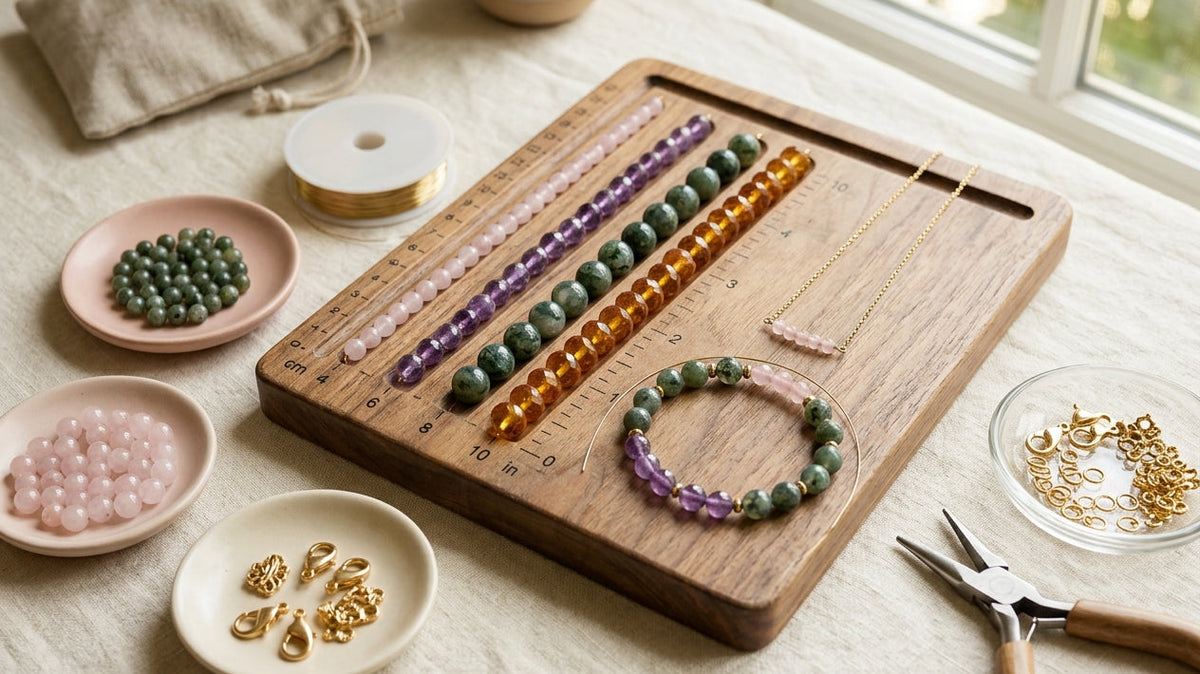
- Lay out your design first. A bead board lets you experiment with arrangements and check the overall length before permanently finishing your jewelry.
- Purchase coordinating components together. Choosing your clasps, metal beads, and other findings while shopping for gemstones makes it easier to plan a cohesive design.
For projects that combine multiple materials, browsing gemstone beads, metal beads, freshwater pearls, and jewelry-making findings together can help you visualize how each component will contribute to the finished piece. It's also a convenient way to coordinate metal finishes and gemstone colors before you begin stringing.
Frequently Asked Questions
Should I Count Beads Before or After Stringing Them?
Count your beads before stringing to estimate how many you'll need, then check the finished length once they're arranged. Beads may sit differently depending on their shape, size, and spacing, so the initial calculation won't always match the final design exactly.
Can I Mix Different Bead Sizes in One Bracelet?
Absolutely! Mixing bead sizes adds dimension and visual interest to a bracelet. To calculate the quantity, plan your pattern first, then add up the space occupied by each bead size. For example, alternating 8 mm gemstone beads with 4 mm metal beads will require a different quantity than using 8 mm beads alone.
Does Bead Hole Size Affect How Many Beads I Need?
Bead hole size doesn't directly determine the quantity, but it affects which stringing materials you can use. Larger holes accommodate thicker cords, while smaller holes may require finer jewelry wire. Always check compatibility before purchasing, particularly when mixing gemstone and metal beads.
Can I Use One Strand of Beads to Make Multiple Bracelets?
It depends on the bead size, strand length, and bracelet design. Divide the approximate number of beads on the strand by the quantity needed for each bracelet to estimate how many you can make. Remember to account for any beads you plan to reserve for adjustments or matching designs.
Find the Right Beads for Your Next Jewelry Project
The right materials can turn a simple jewelry idea into something truly special. From colorful gemstone bracelets to layered necklaces with intricate metal accents, every design is an opportunity to experiment with new combinations of shapes, textures, and finishes.
Bring your vision to life with The Bead Traders. Browse our curated collections of gemstone beads, metal beads and findings, freshwater pearls, and chain by the foot, and explore our New Arrivals for fresh inspiration. With new pieces added regularly and free shipping on U.S. orders over $100, there's always something new to discover for your next creation.