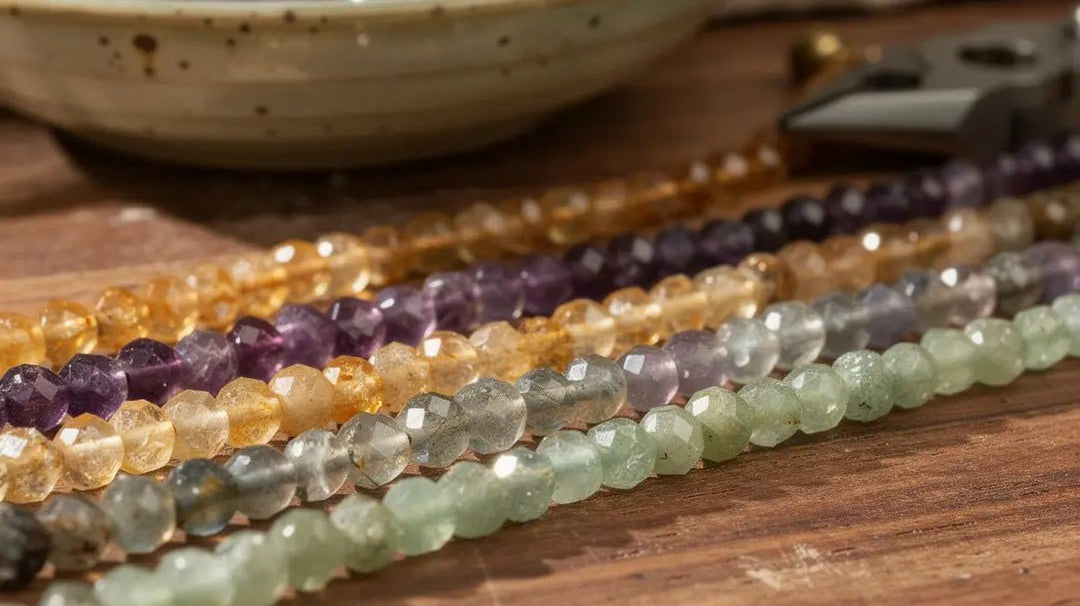
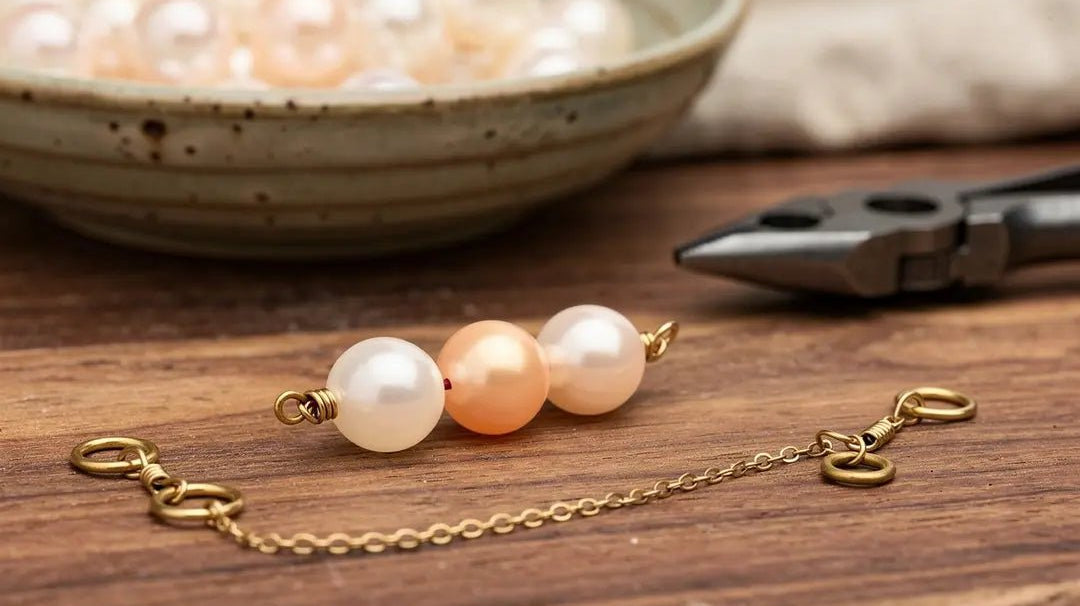
Buying wholesale gemstone beads online can feel like a leap of faith. You're committing real money to materials that you can't inspect in person, compare under a light, or return to the shelf if you change your mind. And at wholesale quantities, even small surprises can become expensive ones.
A strand that looks more muted in person, beads that run smaller than expected, or noticeable variation between strands can quickly disrupt design plans, inventory needs, or purchasing budgets. That's why understanding how to evaluate an online supplier matters just as much as choosing the gemstones themselves.
In this guide, we'll walk you through how to buy wholesale gemstone beads online with confidence. This includes what to look for in supplier policies, how wholesale pricing works, and which red flags to look for before placing an order. We'll also use The Bead Traders' 3 Promise "Value Pledge" as a practical example of the kind of transparency serious wholesale buyers should expect.
Why Buying Wholesale Gemstone Beads Online Can Be Risky
Gemstone beads vary naturally in color, cut, clarity, size, and finish, so some level of variation is expected. However online shopping becomes much riskier when product descriptions are vague, photos don't accurately reflect current inventory, or supplier policies leave too much room for interpretation. Ultimately, comparing options over a screen can be incredibly complicated.
Wholesale pricing should automatically offer better value at higher volumes, not less accessibility. Unfortunately, however, not every supplier treats bulk purchasing with the transparency it deserves. Since large orders involve greater financial commitment, clear policies and accurate product representation matters even more.
To better understand how high-quality suppliers treat this process, visit our page on Wholesale Pricing.
Wholesale Savings Only Matter If the Quality Matches
A low per-strand price may look appealing... until you open the box and half the beads need sorting before they're usable. Inconsistent color, uneven drilling, or poor polishing can slow personal production, create unnecessary waste, and affect the quality of your finished pieces.
And most importantly, it impacts trust. When you receive poor quality materials, you may be less likely to purchase wholesale shipments online again. However, it's important to remember that not every supplier is the same.
At The Bead Traders, we understand that true wholesale value comes from usable inventory—not just more affordable pricing. If a jewelry maker buys 20 strands but can only confidently use 14, those "savings" essentially become invaluable.
Learn more about the importance of proper suppliers in our guide, "Gemstone Beads buying Guide for Professionals: Selecting, Purchasing & Utilizing Wholesale Beads."
Online Gemstone Listings Require Extra Scrutiny
A trustworthy product listing should clearly outline essentials, like bead size, strand length, shape, finish, and any relevant quality details. If those basics are vague, or the photos don't clearly show the beads from multiple angles, you're being asked to make a purchasing decision with incomplete information.
The more specific a listing is, the easier it is to evaluate what you're actually buying. And, more importantly, the easier it is to hold the supplier to those details.
How to Buy Wholesale Gemstone Beads Without Getting Burned
Buying wholesale gemstone beads with confidence comes down to a few practical steps. This includes understanding what your project requires, comparing products on equal terms, reviewing supplier policies, and knowing how bulk pricing actually works.
Most costly purchasing mistakes happen when one of those steps gets overlooked. To help you through this process, we will discuss each step in detail below.
Start with Your Jewelry Project Requirements
Before browsing product listings, get clear on what your project requires. Consider factors such as bead size, hole size, shape, color range, strand quantity, and intended use. Each component directly influences which products make sense for your design.
Someone making a jade bead bracelet, for example, may need tight size consistency across an entire strand. A jewelry maker creating a freshwater pearls necklace, on the other hand, might be more comfortable with natural variation.
Without these specifications in mind, it's easy to shop based on price or appearance alone. However, this is where costly mismatches tend to happen.
Compare Like with Like Before Judging Price
Two gemstone listings may look similar at first glance but represent very different products. Differences in bead size, strand length, cut quality, polish, treatment, or grade can all impact pricing. A 6mm stand and an 8mm strand of the same stone, for example, are not equivalent.
Additionally, as the International Gemstone Society (IGS) stated, while gemstone treatments are common, noticing them isn't always straightforward. It's important to confirm this before buying gemstones, as one supplier may use treatments without directly clarifying.
Place a Smaller First Order When Trying a New Supplier
A smaller test order is often far less costly than a disappointing bulk order. Ordering a few strands from a new supplier allows you to evaluate things like product quality, packaging, shipping reliability, and overall service before committing to a larger budget.
Then, if the experience meets your expectations, scaling up feels much more practical.
Red Flags to Watch for Before Buying Wholesale Gemstone Beads
Many wholesale purchasing issues can be traced back to a handful of common supplier warning signs. Knowing what to look for ahead of time makes it much easier to avoid costly surprises after your order.
If you're unsure of what this process entails, we've created a comprehensive list to preview before purchasing. Following these steps can help you make more informed decisions and less costly mistakes.
Red Flag: Substitution Without Permission
Substitution happens when a buyer receives something different from what they actually ordered without prior approval. Depending on the order, that may be a different gemstone, size, shape, or finish. For jewelry makers working from a specific design plan or fulfilling customer orders, that kind of swap can create significant problems. A supplier's inventory issue should not become your production issue.
Why a No Substitution Policy Matters
A clear No Substitution Policy helps protect both your design process and your budget. If an item becomes unavailable or cannot be fulfilled as expected, a trustworthy supplier should provide a transparent resolution, not quietly send a replacement that may not work for your project.
The Bead Traders' No Substitution Policy is a strong example of this approach. Rather than making unauthorized swaps, we prioritize clear communication and appropriate resolution when an item cannot be fulfilled as expected.
When an item is unavailable or deemed unsatisfactory for fulfillment, we will offer you a refund or another item of equal / higher value.
Red Flag: Downgrading Quality While Keeping the Same Description
Quality downgrading can be harder to spot outright than substitution. The beads may technically be the correct stone type, but arrive with duller color, uneven polishing, or noticeably less consistency than the listing suggested. This often happens when product descriptions are broad enough to give suppliers flexibility in what they ship.
Why a No Downgrading Policy Matters
At The Bead Traders, we directly address downgrading by emphasizing consistent grading standards rather than using fine print to justify lower-quality replacements. This also stands true for sale or closeout inventory. We prefer to protect—and keep—our customers, not hide behind silently disclosed descriptions.
Learn more about this in our post, "Natural vs Treated Gemstone Beads: Price and Durability."
Red Flag: Vague or Overly Generic Gemstone Names
Listings that use terms like "mixed stone," "natural style," or "gemstone look" without clear material details can be problematic when you need specific materials for a project. Genuine gemstone bead listings should clearly identify the actual stone type, not rely on vague catchall language.
If a supplier cannot clearly tell you what material you're buying, that's a reason to pause before placing an order.
Red Flag: Hidden Fees That Change the Real Cost
The listed strand part is only part of the total cost. Shipping fees, handling charges, minimum order requirements, restocking fees, and potential return costs can all affect whether a wholesale purchase is actually good value.
Before checking out, calculate the full delivered cost, not just the product price. More specifically, a $3 strand may look appealing but can become significantly less desirable with $15 shipping and a $10 return fee.
Red Flag: Unclear Return or Damage Policies
If you can't easily find a supplier's return window, condition requirements, or process for handling damaged or incorrect items, that's a warning sign. These details matter the most when something goes wrong, so they should be clearly outlined before you buy.
Before purchasing, check whether returns are accepted on gemstone beads, what condition the items must be in, and whether damage or defects are handled separately from standard returns.
To better understand how quality wholesale suppliers handle this process, visit The Bead Traders' Returns, Exchanges, and Shipping Protection page.
What to Look for in a Supplier's Quality Guarantee
A quality guarantee should be more than a marketing promise. It should clearly outline the supplier's actual commitments, including accurate order fulfillment, transparent product descriptions, policies around substitutions, procedures for damaged items, and clearly defined return terms.
Additionally, accessible customer service is an essential factor of the process. Should questions, comments, or concerns arise, you should know exactly how to reach out to someone for support.
Below, we will provide in-depth examples of what to look for in a supplier's quality guarantee:
Clear Product Descriptions
Trustworthy suppliers provide clear details based on bead measurements, strand length, material identification, and relevant quality notes. Since many gemstone beads naturally vary, strong product descriptions should set realistic expectations rather than imply perfect uniformity.
When a listing openly acknowledges natural variation, it signals that the supplier understands the product they're selling and is presenting it transparently.
If you're interested in learning more, review our guide: "AAA Gemstone Beads: What the Grade Means for Your Craft."
Consistent Fulfillment Standards
Order accuracy becomes even more important when purchasing in bulk. Receiving the product you actually ordered, and in the grade and condition described, should be standard—not a bonus.
The Bead Traders' No Substitution / No Downgrade approach is a strong example of clear fulfillment standards. If an item cannot be fulfilled as ordered, their policy prioritizes appropriate resolution rather than sending a lower-quality replacement. That's a policy you can plan around.
Transparent Return and Support Policies
A trustworthy supplier should make return windows, condition requirements, and procedures for incorrect or damaged shipment easy to find before placing an order. Clear policies can ultimately reduce uncertainty, making it easier to resolve issues if something happens unexpectedly.
At The Bead Traders, we provide a straightforward example of this transparency with clearly outlined return and exchange policies. More specifically, we accept both returns and exchanges within 30 days of the order date along with a clear process for defect reporting.
Additionally, U.S. orders over $100 qualify for free shipping and returns, reducing the friction of testing new products or resolving issues.
Accurate Photos and Realistic Expectations
Gemstones can appear different depending on lighting, screen settings, and viewing angles. With this in mind, some visual variation is completely normal when shopping online. However, this is why trustworthy listings include clear photos and descriptions that acknowledge natural differences in color, pattern, or finish.
A supplier that presents gemstones realistically tends to inspire more confidence than one that only showcases the most idealized version of the gemstone.
How Bulk Strand Pricing Works
Wholesale strand pricing is influenced by several factors, including material rarity, bead size, cut, finish, strand length, quality consistency, and quantity purchased. While lower per-strand pricing often comes with larger purchases, it can also reflect differences in grade or product specifications.
Understanding what drives pricing makes it much easier to tell whether a wholesale deal actually comes from strong value or simply looks appealing without diving deeper.
To understand what to look for, here's a more comprehensive breakdown of bulk strand pricing:
Per-Strand Pricing vs. Lot Pricing
Per-strand pricing is simple: you pay a set amount for one strand. Lot pricing, on the other hand, bundles multiple strands together, often at a lower per-strand cost. To compare the two fairly, calculate the cost per strand in each option
For an even clearer picture, estimate the cost per finished piece. If one strand yields multiple bracelets, earrings, or necklaces, that breakdown can better help you understand the true material cost behind the design.
We discuss this concept in our guide, "How Much Are Freshwater Pearl Earrings? Retail vs DIY Cost." It can serve as a helpful resource regardless of design intent.
Why Some Gemstone Beads Cost More in Bulk
Several factors influence wholesale gemstone bead pricing, including stone type, rarity, bead size, faceting, polish, color consistency, and the labor required for cutting, drilling, and sorting. Higher-quality strands naturally cost more because fewer beads meet stricter quality standards.
Additionally, that added cost generally reflects real craftsmanship and material consistency. A tightly matched strand of well-polished gemstone beads ultimately requires more sourcing and grading work than a mixed or lower-grade alternative. And that difference shows in the finished piece.
How to Calculate Your True Cost Per Design
Start by estimating how many finished pieces you can realistically make from a single strand. From there, factor in the cost of findings, chain, clasps, packaging, and your portion of shipping to determine the full material cost per piece.
If you’re sourcing components for complete jewelry designs, consolidating purchases can also help simplify cost planning. The Bead Traders carries complementary supplies like metal beads and findings, chain by the foot, and freshwater pearls, making it easier to source multiple design elements in a single order.
Questions to Ask Before Placing a Wholesale Bead Order
Before checking out, take a moment to confirm the key details that can impact both quality and total cost. Is the gemstone clearly identified by name and type? What size and strand length are listed? Are substitutions allowed, and what happens if an item is unavailable?
It's also worth reviewing the practical details, like shipping and return policies, minimum order requirements, and additional charges that could affect the final cost.
If you're unsure where to start, follow our tips below:
Questions About Product Quality
If product details are unclear, ask specifics like bead size tolerance, color variation, finish quality, drilling consistency, and overall strand uniformity. These details can make a meaningful difference in how usable beads are for your particular design.
Additionally, if gemstone treatments such as dyeing, heating, or stabilization are relevant, it’s also worth confirming whether the supplier discloses them
Questions About Order Fulfillment
Before placing a wholesale order, clarify how the supplier handles fulfillment issues. Will they contact you if an item cannot be fulfilled as ordered, or do they reserve the right to make substitutions without approval? It’s also worth asking about backorders and whether partial shipments are possible.
A supplier with clear fulfillment policies should be able to answer these questions directly. If the process feels vague, that uncertainty may become a bigger issue after checkout.
Questions About Total Cost
The listed product price is only part of the equation. Before placing an order, factor in shipping, taxes, minimum order requirements, potential return costs, and whether any free shipping thresholds could affect your total.
For example, for U.S. buyers ordering from The Bead Traders, orders over $100 qualify for free First Class shipping, which is worth building into your order planning.
Smart Buying Habits for Jewelry Makers and Bead Sellers
Wholesale buying isn't a one time transaction; it's an ongoing sourcing practice. And, honestly, the process works best when keeping this approach in mind.
Experienced jewelry makers and bead sellers tend to refine their process over time. They track what works, document reliable suppliers, and create systems that make purchasing decisions more predictable.
The habits we'll discuss below can help reduce costly surprises and make sourcing feel far more efficient in the long run.
Keep Records of Bead Sizes, Colors, and Supplier Notes
Keeping simple records can make future wholesale buying much easier. Note product names, order dates, strand sizes, quantities, design outcomes, and even how customers responded to finished pieces if you sell your work.
This doesn't have to be a complicated process. Simply just keep a straightforward record of what you purchased, how it performed, and what sold well. This can make future purchases easier and much more efficient.
Reorder Early for Best Consistency
Gemstone beads naturally vary from batch to batch. For example, the labradorite you ordered in March may look slightly different from the same listing in October.
If consistency matters for an ongoing collection, reordering before you run out can improve your chances of receiving a closer match. Waiting until inventory is depleted may mean working with a noticeably different batch.
Build Relationships With Reliable Suppliers
Working with reliable suppliers can make wholesale sourcing significantly more efficient over time. Clear policies, broad product selection, and responsive customer support reduce the guesswork that often comes with online ordering, leaving you with more time to focus on designing and selling.
A dependable supplier relationship is often worth more than a slightly lower listed price from an unknown seller with limited accountability.
Where The Bead Traders Fits Into a Safer Buying Process
The Bead Traders carries gemstone beads, freshwater pearls, metal beads and findings, and chain by the foot—a broad enough range to source a complete design in one place.
Just as importantly, the supplier policies align with many of the best practices covered throughout this guide. The Bead Traders’ No Substitution Policy, two-step quality inspection process, and customer-friendly shipping and return policies reflect the kind of transparency and accountability that can make wholesale buying feel far less risky.
Additionally, our new arrivals section is useful for spotting fresh materials, seasonal colors, and new bead shapes before they become widely used. For designers planning future collections, it's worth checking regularly.
By following these tips, you can buy wholesale gemstone beads online with confidence.
Safe wholesale buying comes down to a few consistent habits: check supplier policies before you order, watch for the red flags that turn a deal into a loss, understand what drives bulk strand pricing, and choose suppliers who clearly stand behind what they ship.
Knowing how to buy wholesale gemstone beads well isn't about finding the cheapest price. Instead, it's about finding the best value from a source you can trust. When you're ready to source materials, browse The Bead Traders' Gemstone Beads and related jewelry-making supplies with those criteria in mind.