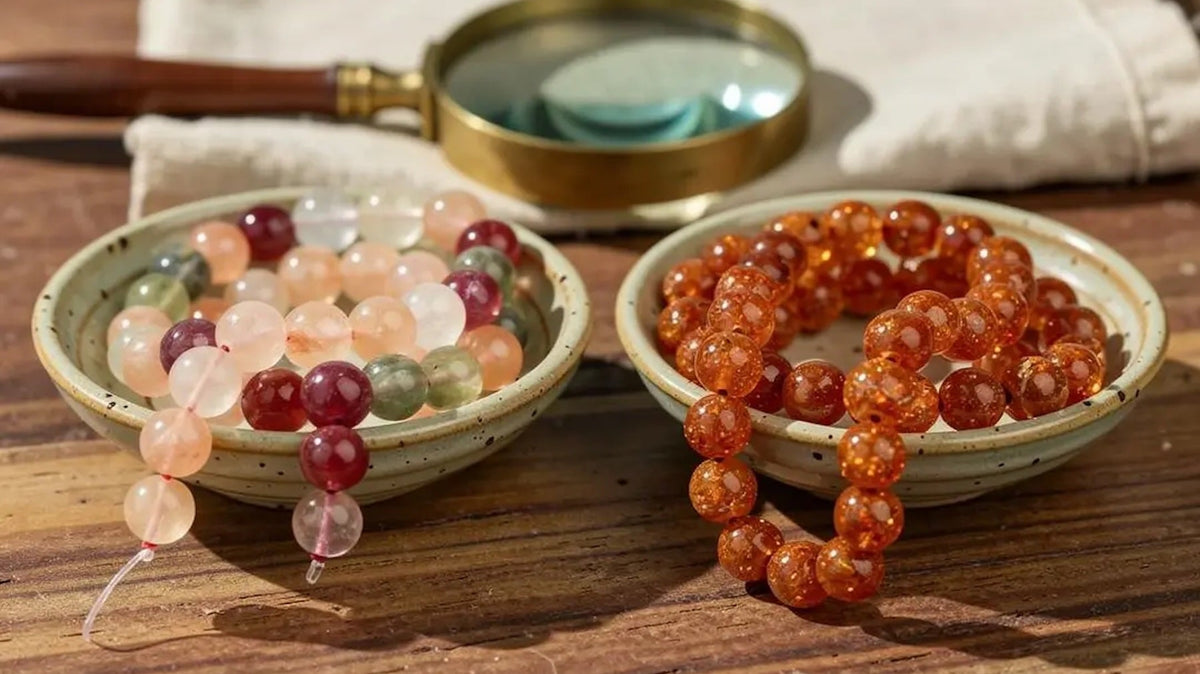
Red pearl beads bring rich color and natural texture to jewelry designs, making them a striking alternative to traditional white and neutral pearls. Their warm red tones work beautifully in everything from simple strands to statement earrings, layered necklaces, and mixed-gemstone pieces.
Like other freshwater pearls, red pearls are available in a variety of sizes and shapes, each of which can completely change the look and feel of a finished design. Smaller pearls lend themselves to delicate, detailed pieces, while larger or more organic shapes can become a focal point all on their own.
Choosing the right pearls is only part of the process. Ahead, we'll break down red pearl bead sizes, shapes, drill styles, and stringing methods. Our hope is that by the end, you'll have the confidence to select the best materials and techniques for your next jewelry project.
What Are Red Pearl Beads, and When Should You Use Them?
Red pearl beads are typically color-treated freshwater pearls that combine the organic texture and luster of pearls with a rich, saturated red hue. Because naturally cultured pearls don't develop this vivid color on their own, red pearls are a great choice when you want the classic look of pearl jewelry with a bolder finish.
Most freshwater pearls begin as natural cultured pearls before being color-enhanced during the process. As we explain in our pearl color guide, harvested pearls may be treated in warm and cold chemical baths and dyed colors like red, salmon, peacock, and lavender before they're drilled, polished, and strung.
Red pearls work well in statement necklaces, stretch bracelets, drop earrings, charm accents, bridal jewelry, and mixed-gemstone designs. Pair them with gold-toned components for a warmer, more dramatic look, silver for cooler contrast, or neutral and complementary gemstone beads to let the red become the focal point.
Shop The Bead Traders' wide selection Red Pearl Beads here.
Natural Pearl Character
No two freshwater pearls are exactly alike. Because each pearl forms individually inside a mussel, you can expect natural variations in shape, surface texture, color depth, and luster from bead to bead. Even pearls within the same strand may have subtle differences.
These variations are part of what gives freshwater pearl jewelry its organic character. More uniform pearls work well when you want a polished, symmetrical design, while irregular and baroque pearls make those natural differences more prominent.
Best Design Styles
Red pearl beads can shift from classic to contemporary depending on their shape, size, and the materials you pair with them. Here are what the main categories often look like:
- Romantic: Pair luminous red pearls with gold components, cream pearls, or delicate chain.
- Bohemian: Use baroque and irregular pearls alongside mixed gemstones and textured metals.
- Classic: Choose more uniform round or near-round pearls for knotted necklaces and bracelets.
- Holiday: Combine rich red pearls with gold, silver, or other metallic accents.
- Gothic-Inspired: pair deep wine and burgundy pearls with black gemstones or darkened metal.
- Minimalist: Make a single red pearl the focal point of a fine-chain necklace or simple drop earring.
- Mixed-Metal: Alternate red pearls with silver, brass, gold-filled, or other metal components for added contrast.
At The Bead Traders, alongside our extensive bead collections, we also create helpful guides for creating unique pieces. Start with: "Elegant Beads to Use in Your Winter Jewelry Collection" and "Boho Beaded Jewelry Ideas with Natural Colors and Textures."
What Sizes Work Best for Different Jewelry Projects?
The best red pearl bead size depends on the scale and style of the finished piece. Smaller pearls are well suited to delicate details and layered designs, medium pearls offer plenty of versatility, and larger pearls naturally draw the eye in statement pieces. Size also affects the weight, drape, and overall proportions of a design. Because of this, consider your cord, wire, findings, and clasp alongside the pearls themselves.
Freshwater pearls are available across a broad range of sizes, with popular pearl sizes often falling between approximately 6.5mm and 11mm. Even a difference of one or two millimeters can noticeably change how substantial a stand or finished piece appears.
Small Pearls for Delicate Designs
Small pearls around 2mm to 5mm work well when you want color and luster without making the pearls the dominant element. Use them for delicate necklaces, fine bracelets, earring details, fringe, or as spacers between larger gemstone and pearl beads.
Explore our 5mm Copper Red Baroque Freshwater Pearls to see what this bead size often looks like.
Medium Pearls for Everyday Jewelry
Pearls around 6mm to 8mm offer a versatile middle ground between delicate and statement-making. The 7mm to 8mm range is particularly associated with classic pearl jewelry, making these sizes a natural choice for knotted necklaces, bracelets, simple strands, station necklaces, and earrings.
For those interested in this bead size, you may appreciate our 7-8mm Wine Large Hole Off Round Pearls.
Large Pearls for Statement Pieces
Pearls around 9mm and larger have more visual weight, making them especially useful for statement necklaces, bold bracelets, pendant arrangements, and focal elements. You can use a full strand of larger pearls for maximum impact or incorporate just a few among smaller beads to create contrast and variation.
Decide whether this bead size fits your piece by exploring our 10-11mm Red Brown Baroque Large Hole Pearls.
Which Pearl Shapes Create the Look You Want?
Pearl shapes can change the entire character of a jewelry design. Round and near-round pearls create a more classic, symmetrical look, while oval, coin, button, baroque, and other organic shapes introduce texture and visual movement. The right choice ultimately depends on whether you want your finished piece to feel polished and uniform or intentionally one of a kind.
Our Freshwater Pearl Collection includes pearls in baroque, oval, off-round, coin, button, keshi, and other shapes, giving jewelry makers plenty of options behind the traditional round strand.
Round and Near-Round Pearls
Near and near-round pearls are ideal for symmetrical necklaces, classic bracelets, and polished earrings. Choose these shapes when uniformity and balance are important to the finished design.
Rice and Oval Pearls
Rice and oval pearls have an elongated profile that adds subtle variation to a strand without the pronounced irregularity of baroque pearls. They work especially well in delicate necklaces, beaded links, bracelets, and earrings where you want a little more shape and movement.
Button and Coin Pearls
Button and coin pearls have flatter profiles that create a different silhouette from traditional round beads. Their broader surfaces can also enhance their color and luster, making them useful for earrings, station necklaces, focal elements, and designs that play with contrasting shapes.
Baroque and Nugget Pearls
Baroque and nugget pearls embrace the natural irregularity of freshwater pearls, with variations in shape and surface that make each bead distinct. Use them in artisan jewelry, asymmetrical layouts, mixed-gemstone strands, and other designs where organic texture is part of the look.
How Should You Choose Color, Luster, and Drill Style?
When choosing red pearl beads, look beyond size and shape to consider color, luster, surface character, and drill style. These details affect both the finished appearance of your jewelry and how easily the pearls can be incorporated into your design. In particular, check the drill placement hole size before selecting your stringing material or findings.
Red Tone and Undertone
Red pearl beads can range from bright cherry and cranberry tones to deeper wine, garnet, brick, and burgundy shades. Consider the undertone alongside the other materials in your design. Warmer reds, for example, pair naturally with gold, copper, cream, and earthy gemstones, while cooler or deeper reds create strong contrast with silver, black, gray, white, and cool-toned stones.
Because dyed freshwater pearls can show slight variations in color from bead to bead, these differences can also add depth to a finished strand.
Luster and Surface Texture
Luster describes the way light reflects from a pearl's surface and contributes to its characteristic glow. Pearls with stronger luster appear brighter and more reflective, while pearls with softer luster have a more subdued appearance.
Surface texture is something else to consider. Freshwater pearls may have small ridges, dimples, or other natural variations from the formation process. More uniform surfaces create a polished look, while visible texture can complement organic and artisan-style designs.
Drill Styles and Project Fit
Drill placement determines how a pearl hangs, sits, or connects with other components, so choose a style that suits your intended design method. Here's a brief overview:
- Center-Drilled: A versatile choice for traditional strands, bracelets, and other continuous stringing projects.
- Top-Drilled: Allows the pearl to hang vertically, making it useful for drops, dangles, and earrings.
- Side-Drilled: Often used with flatter pearl shapes when the design calls for a particular orientation along the strand.
- Half-Drilled: Designed to accommodate posts or pegs that are secured inside the pearl, commonly used for stud earrings and pendant-style components.
For additional guidance, you may appreciate our article: "Gemstone Bead Shapes Guide for Clean, Purposeful Design."
What Is the Best Way to String Pearls for Bracelets and Necklaces?
The best way to string red pearl beads depends on the type of jewelry you're making and the finish you want. Beading wire creates durable everyday strands, silk or nylon cord works well for traditional knotted designs, elastic is convenient for stretch bracelets, and chain or wire links can create more open, contemporary styles. Before you begin, check the pearl hole size against your chosen stringing materials and findings.
Additionally, lay out your pearls before stringing so you can plan the order, spacing, and finished length. If your pearls vary naturally in size or shape, arranging them first also lets you decide whether to graduate the strand or distribute those variations throughout the design.
Beading Wire for Secure Strands
Beading wire is a durable, beginner-friendly option for pearl necklaces and bracelets, particularly when you want a flexible strand without knotting between individual beads. Choose a wire diameter that passes comfortably through the pearl holes, then finish the strand with appropriately sized crimp beads and a clasp. Crimp covers and wire guardians can also be added for a cleaner, more finished appearance.
Silk or Nylon Cord for Knotted Pearls
Silk is a traditional choice for knotted pearl necklaces because it's soft and creates an effortlessly elegant drape. Nylon cord offers another durable option and can be useful for jewelry designed for more frequent wear.
Knotting between individual pearls keeps them separated and helps prevent an entire strand from scattering if the cord breaks. Just make sure to choose a cord diameter that fits securely through the drill holes without forcing the pearls onto the strand.
Elastic Cord for Casual Bracelets
Elastic cord is a simple option for creating slip-on pearl bracelets without a clasp. Choose an elastic that fits through the drill holes while still being substantial enough to support the weight of the pearls, and pre-stretch it before assembling the bracelet to help minimize loosening with wear.
Finish your piece with a secure knot recommended for your particular elastic cord. And if you decide to use adhesive on the knot, make sure it's compatible with the cord material rather than assuming any jewelry glue will work. (This helps protect your piece's longevity!) We discuss this more in our article, "Crafting with Gemstone Beads: Step-by-Step Jewelry Guide."
Chain and Wire Links for Modern Designs
Chains, eye pins, head pins, and wrapped wire loops give you more freedom to space pearls throughout a design rather than stringing them continuously. These techniques work particularly well for station necklaces, rosary-style links, charm designs, and dangling earrings.
For a ready-made starting point, explore our pearl chain by the foot, or combine individual red pearl beads with metal chain by the foot to create your own linked design.
What Findings and Accent Beads Pair Well With Red Pearls?
Red pearls pair easily with metal findings, gemstone beads, and contrasting pearl colors. Here's some ideas for inspiration:
Gemstone Accents
Gemstone beads can either reinforce the richness of red pearls or provide contrast. For example, garnet and jasper continue a warm palette, onyx and smoky quartz add depth, and clear or lightly colored stones keep the design from feeling too heavy. Brown our full Gemstone Beads Collection to find complementary colors, textures, and shapes. You can also find additional guidance by reading "Gemstone Bead Color Combinations Using Color Theory."
Spacers, Caps, and Clasps
Spacers can separate pearls or introduce a repeating metal detail, while bead caps help frame larger focal pearls. Choose clasps and other findings in proportion to the size and weight of the finished piece so they feel intentional rather than oversized or delicate. Additionally, you can shop metal beads and findings at The Bead Traders for sourcing finishing components all in one place.
How Do You Plan a Balanced Red Pearl Jewelry Design?
Because red is visually strong, consider how prominently you want it to appear before building the rest of your design. A full strand makes red the obvious focus, while individual pearls or smaller groups can introduce color without dominating the piece.
Focal Point Placement
If you're using a large pearl, pendant, charm, or central cluster, give it enough surrounding space to stand out. Repeating smaller red pearls elsewhere in the design is an excellent way to help connect the focal element to the rest of the piece.
Color Balance
Balance saturated reds with neutrals, metals, clear quartz beads, or softer pearl colors, or lean into a tonal design with burgundy, garnet, and other deep shades. Repeating a few colors or materials throughout the piece can help even an asymmetrical design feel cohesive.
Comfort and Proportion
Consider the finished weight and scale as well as appearance. Larger pearls can add noticeable weight to bracelets and earrings, while heavier necklaces may require more substantial clasps and findings. Components should feel proportional to one another and comfortable when worn.
How Do You Care for Finished Red Pearl Jewelry?
Pearls are relatively soft compared to many popular jewelry gemstones, ranking around 2.5 to 4.5 on the Mohs Hardness Scale. Because of this, gentle cleaning and careful storage can help protect both their surface and color.
Cleaning After Wear
Wipe pearls gently with a soft, slightly damp cloth after wearing them. Also, avoid abrasive cleaners and ultrasonic cleaning, and limit contact with perfumes, hairsprays, lotions, and other chemicals. Many of these formulas contain acids and alcohols that can eat away at the pearl's delicate outer layer. You can learn more about proper cleansing methods in our article, "How to Clean Freshwater Pearls."
Safe Storage
Store pearl jewelry separately from harder gemstones and metal jewelry that could scratch the surface. A soft pouch or lined jewelry box, for example, can be a good way to provide added protection. Also, keep dyed pearls away from prolonged direct sunlight, as this helps preserve their color.
Stringing Checkups
Periodically inspect knots, crimps, elastic, clasps, and wire connections for signs of wear or loosening. Pay particular attention to frequently worn bracelets and necklaces so you can restring or repair them before something breaks.
Frequently Asked Questions
Are red pearls natural or dyed?
Most vivid red pearl beads are dyed or otherwise color-treated freshwater pearls. They are still real cultured pearls; the treatment simply changes their color rather than creating an imitation pearl.
Can red pearl jewelry be worn every day?
Yes, but pearls require gentler handling than harder gemstones. Limit exposure to chemicals, moisture, and abrasion, and put pearl jewelry on only after applying perfume, hairspray, and other personal care products.
Do red pearls work for bridal jewelry?
Yes, red pearls can work particularly well in romantic, vintage-inspired, dramatic, or nontraditional bridal jewelry. Pair them with ivory pearls, crystals, gold-toned components, or complementary gemstones depending on the wedding palette.
What necklace length works well for pearl strands?
The best length for a necklace depends on the neckline, pearl size, and overall design. An approximately 18-inch-princess-length strand is a versatile option, while shorter strands sit closer to the neck and longer strands lend themselves to layering.
Bring rich color into your next jewelry design with red pearl beads from The Bead Traders.
From delicate accents to full statement strands, red pearl beads give jewelry makers plenty of ways to introduce rich color while retaining the natural luster and character of freshwater pearls.
Explore our freshwater pearls, gemstone beads, metal beads and findings, chain by the foot, and new arrivals to find materials for your next design. Orders over $100 in the U.S. ship free with free returns.