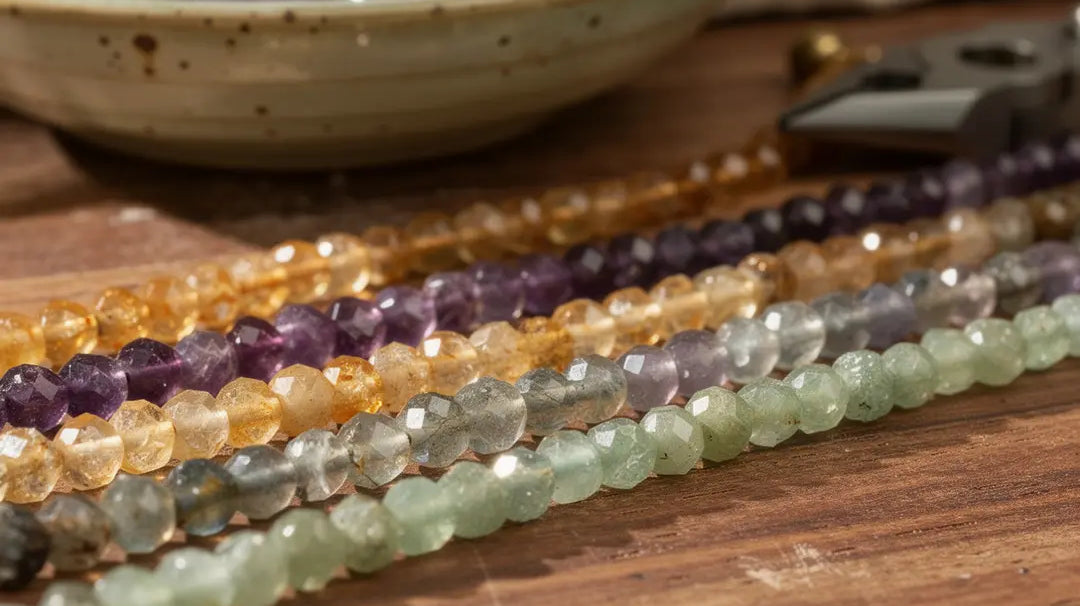
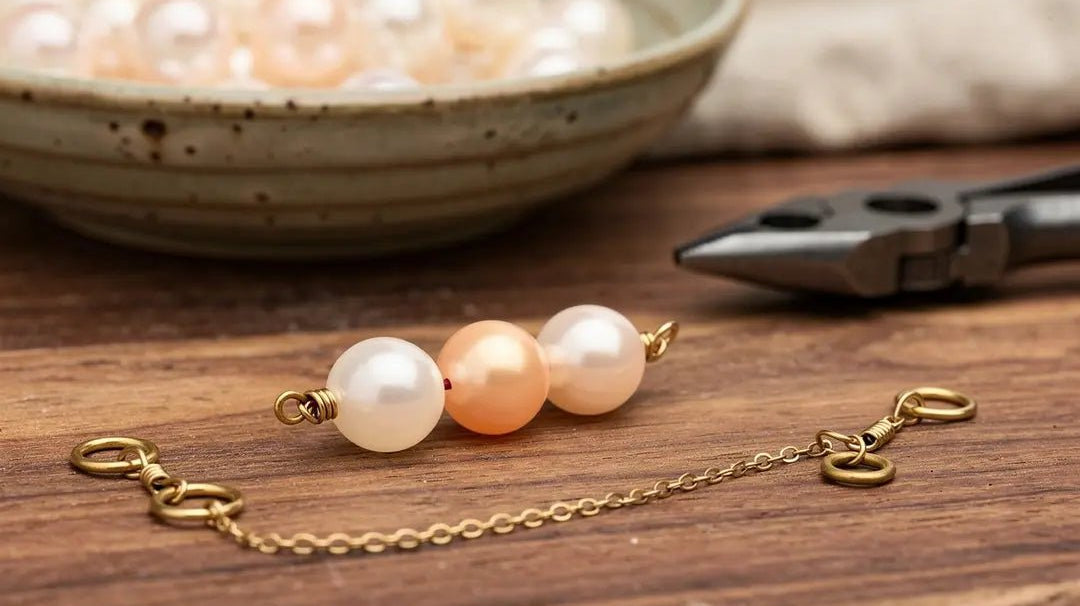
Gemstone bead size charts fix two very common issues: running short on beads mid-project and buying too many beforehand and wasting the money. A chart is able to tell you exactly how many beads fit on a strand, how many you need for a bracelet or necklace, and which size suits your design. If you're still unsure how this process works, this post will walk you through it.
Gemstone Bead Size Chart Essentials
Gemstone beads are sized by diameter in millimeters. Generally, most people work with 4mm, 6mm, 8mm, and 10mm beads. However, you'll also find sizes ranging from 2mm to 12mm and higher, depending on the stone and supplier.
Bead count changes significantly with size, making a gemstone bead size chart essential. A 4mm bead, for example, takes up less than half the space of a 10mm. As a result, the number of beads you need for the same necklace length can more than double depending on the size you choose.
Natural gemstones also introduce small variances, such as cutting tolerances, drilling angles, and the stone itself. While one 6mm bead from one batch might fit your strand perfectly, a 6mm bead from another batch might sit too significantly tighter or looser.
However, at Bead Traders, we understand supply consistency matters, especially for those building entire product lines around specific gemstones, sizes, and bead styles. While our Gemstone Beads can vary slightly depending on drilling, cutting style, and manufacturer tolerances, our careful selection and sorting helps ensure visual compatibility.
Understanding Basic Bead Measurements
Bead diameter is measured in millimeters while strand length is typically measured in inches. And more often than not, you'll see both units used together constantly. For example, many brands feature product descriptions such as "8mm beads on a 15.5-inch strand." Keeping track of which unit refers to which measurement prevents a lot of confusion at the planning stage.
Hole size is the other measurement that matters. Most standard gemstone beads have holes around 0.5mm to 1mm. Large-hole beads can have openings of 2.5mm or more. The hole size determines what cord, wire, or elastic you can use.
As a general guide for wire gauge compatibility:
- Small holes (0.5mm–0.8mm): use 24–26 gauge wire or 0.010–0.012 inch beading wire
- Standard holes (around 1mm): 20–22 gauge wire works well
- Large holes (2mm+): thicker cord, leather, or chunky chain
If you're making stretch bracelets, visit our Jade Bead Bracelet Guide. In it, we discuss how a premium 0.7mm elastic cord works well, providing both durability and longevity necessary for quality production.
How Many Beads Per Inch?
Here's a quick reference guide. These estimates are based on round beads with minimal spacing:
- 4mm beads: Roughly 6 beads per inch
- 6mm beads: Roughly 4 beads per inch
- 8mm beads: Roughly 3 beads per inch
- 10mm beads: Roughly 2.5 beads per inch
- 12mm beads: Roughly 2 beads per inch
For a standard 15–16 inch strand, that translates to approximately:
- 4mm: 90–100 beads
- 6mm: 60–65 beads
- 8mm: 45–48 beads
- 10mm: 28–30 beads
These are the strand benchmarks we use across our Gemstone Beads collection. They give you a solid starting point for any project calculation.
For those wanting to calculate a custom length, simply multiply your target length in inches by 25.4, then convert
To calculate a custom length, use this simple formula: multiply your desired length (in inches) by 25.4 to convert to millimeters, then divide by the bead diameter (in millimeters). This will give you an approximate bead count.
Planning the Right Number of Beads for Bracelets
Standard adult bracelets run 7 to 8 inches. However, most adults add approximately half an inch to their wrist measurement for additional comfort. For maximum comfort and security, measure your wrist first, then cut the elastic or wire to that specific length prior to stringing.
Using the beads-per-inch figures above, here's what a 7.5-inch bracelet needs at each size:
- 4mm: around 45 beads
- 6mm: around 30 beads
- 8mm: around 22–23 beads
- 10mm: around 18–19 beads
If you're adding a clasp, subtract roughly 10–15mm from your total bead count to account for the hardware. For stretch bracelets, keep it simple—string the full wrist measurement for a comfortable, natural fit.
When it comes to strand yield, here’s a quick way to think about it: a standard strand of 4mm beads (around 90–100 beads) typically gives you enough for two bracelets. The same goes for 8mm beads, which usually come in strands of 45–48. Once you get into 10mm, expect one bracelet per strand—with just a few beads left over.
As for sizing, it really comes down to the look you’re going for. Smaller beads (4–6mm) feel more refined and understated, while larger sizes (8–10mm) make more of a statement and let the stone take center stage.
Planning the Right Number of Beads for Necklaces
Standard necklace lengths follow a fairly consistent set of conventions, which each length creating a slightly different visual effect. Generally, lengths follow these guidelines:
- Choker: 14-166 inches
- Princess: 18 inches (the most common length)
- Matinee: 20–24 inches
- Opera: 28–34 inches
For an 18-inch princess necklace, bead counts at each size work out to roughly:
- 4mm: around 108 beads (just over one strand)
- 6mm: around 72 beads (one strand plus a few extra)
- 8mm: around 54 beads (one strand covers it)
- 10mm: around 45 beads (one to two strands depending on count)
Remember to always cut your beading wire a few inches longer than your target finished length, as you need that margin to attach your clap and crimp properly. Once you've finished stringing, tuck the knot or crimp into the nearest bead to keep the end clean.
Additionally, if you're using spacer beads between each gemstone, factor those in. Each spacer adds to the total length, meaning you need fewer gemstone beads to reach your target measurement. Small metal spacers (2–3mm) are common and can shift your count noticeably over a long necklace.
For layered or multi-strand necklaces, plan each strand separately and account for the fact that inner strands sit closer to the neck. As a result, they need to be slightly shorter than outer strands.
Additional Tips for Stringing and Designing
Before you commit to final assembly, lay your beads out on a bead board or a folded towel. Check the length, check the pattern, and check that the design looks balanced from end to end. It's much easier to adjust at this stage than after you've tied off.
A few things worth keeping in mind:
- Natural gemstones vary in color and pattern. Sort your beads before stringing so you can distribute variation evenly rather than clustering similar pieces together.
- If you're mixing bead sizes in one piece, calculate each section separately and add the counts together.
- Accent beads at the center of a necklace draw the eye. Plan their placement before you start so you don't end up with them off-center.
- For stretch bracelets, finish with a surgeon's knot (two loops through the first wrap) and add a small drop of clear-drying jewelry glue before trimming the tail. This keeps the knot from working loose over time.
Explore High-Quality Gemstone Beads and Findings
Once you know your counts, you need materials you can rely on. At Bead Traders, wholesale gemstone beads are at the heart of what we do. We have a wide range of sizes, stones, shapes, and colors, all on standard 15-16 inch stands. This way, planning numbers remains consistent from order to order.
More importantly, our gemstone bead strands are carefully selected and sorted through, allowing buyers to prioritize creating beautiful, consistent jewelry rather than searching for materials.
For structural components, our metal beads and findings collection has clasps, crimps, jump rings, and spacers. If you want to incorporate chain into your design, our chain by the foot section lets you buy exactly what you need. And if you want to see what's new, the new arrivals section is updated regularly.
Orders over $100 ship free within the United States, which makes stocking up on multiple strands or a full project's worth of findings much more practical. And, even better, the higher your cart value, the higher your discount.
Making the Most of the Gemstone Bead Size Chart
The gemstone bead size chart is most useful when you treat it as a starting point, not a fixed rule. Use the per-inch counts to get your baseline number, then add 10–15% extra to account for natural variation, breakage, or design changes mid-project. Running short on a specific stone during creation can be frustrating, and a smaller buffer helps prevent it.
If you're building a product line or making multiples of the same design, the chart becomes even more important. Consistent bead sizes mean consistent finished lengths, which matters when you're selling or gifting pieces that need to match. Our gemstone strands are selected with this in mind, so the counts and sizing stay reliable across orders.
Keep a simple notebook or spreadsheet with your bead counts per project. Over time, you'll build a personal reference that reflects your specific designs, your preferred bead sizes, and any adjustments you've made for clasp length or spacing.
Level Up Your Jewelry Making
Getting your bead counts right isn't complicated, but it does require a few minutes of planning before you start. Use the per-inch figures, factor in your finished length, account for clasps and spacers, and order a little extra. That's the whole process.
The more you work with a gemstone bead size chart, the quicker you'll be able to finish projects and account for any necessary changes. More importantly, you'll stop guessing and start making decisions based on actual numbers, which means fewer wasted materials and better results.
If you're interested in learning more, view The Bead Traders website. We have gemstone beads, focal beads, freshwater pearl blends, chains, and metal beads and findings all made with consistency, quality, and consumer experience in mind. Don't sacrifice your standards for the sake of convenience; choose materials that are designed to last.