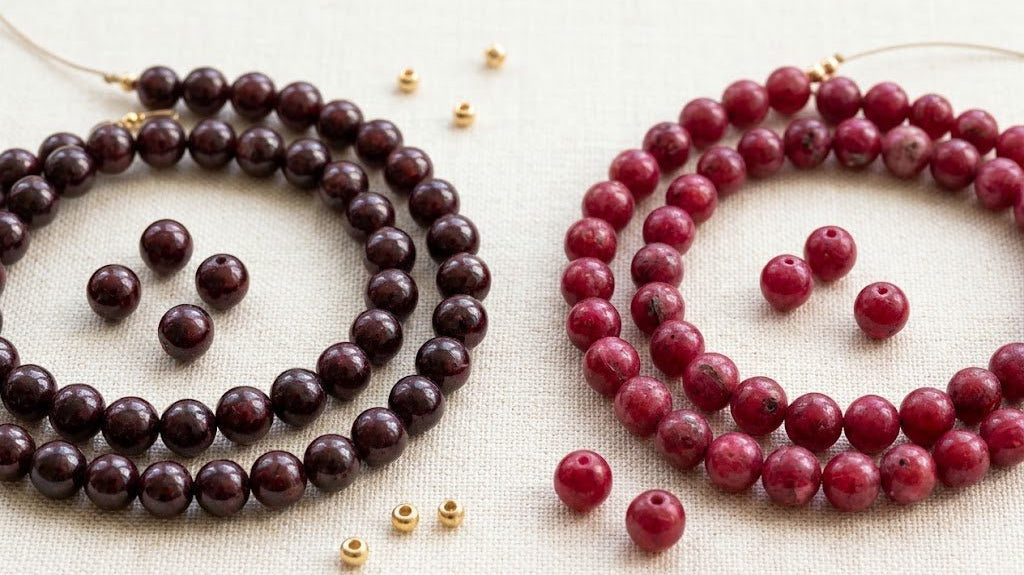
Red gemstone beads can bring a beautiful pop of color to handmade jewelry, but choosing between garnet and ruby isn't always straightforward. Both are known for their rich red tones, yet they can look surprisingly different once you start comparing individual beads.
Garnet beads often have a deeper, wine-colored appearance, while ruby beads are commonly associated with brighter, more saturated reds. But color isn't the only difference worth considering. Durability, price, bead quality, and the type of jewelry you're making can all influence which gemstone works best.
If you're comparing garnet vs ruby beads for your next project, understanding these differences can help you choose materials that suit both your design and your budget. Let's take a closer look at how they compare.
Garnet vs. Ruby Beads at a Glance
Garnet and ruby may share similar red tones, but they're different gemstones with their own characteristics. Here's a quick look at how they compare for jewelry making:
|
Feature |
Garnet Beads |
Ruby Beads |
|
Color |
Deep red, burgundy, wine, and orange-red tones |
Bright red, pinkish-red, and deep crimson |
|
Appearance |
Often warm, earthy, and rich in color |
Often vivid and saturated, though some beads are opaque or included |
|
Mohs Hardness |
6.5-7.5, depending on variety |
9 |
|
Durability |
Suitable for many jewelry designs but more prone to scratching |
More scratch-resistant, though inclusions and fractures can affect durability |
|
Price |
Generally more affordable, depending on variety and quality |
Often more expensive, particularly for higher-quality material |
|
Availability |
Widely available in different shapes, sizes, and grades |
Available in various grades, with fine-quality material typically harder to find |
|
Best For |
Everyday necklaces, bracelets, and warm-toned designs |
Bold red accents, statement pieces, and jewelry intended for frequent wear |
These are general differences rather than fixed rules. Both garnet and ruby beads can vary considerably in color, clarity, treatment, and quality, so it's worth looking closely at the individual beads before making your choice.
What Is the Difference Between Garnet and Ruby?
Although garnet and ruby can look similar at first glance, they're made up of different minerals.
Garnet isn't a single gemstone but a group of closely related minerals. Different varieties have their own chemical compositions and colors, ranging from the familiar deep red of almandine garnet to the warmer, orange-red tones of certain pyrope and spessartine garnets. Garnets also occur in green, yellow, and other colors, although red varieties are especially popular for jewelry making.
Ruby, on the other hand, is the red variety of corundum, a mineral that also produces sapphires. Its red color comes primarily from traces of chromium. Depending on the stone, ruby can range from pinkish red to deep crimson.
Another important distinction is that gemstone beads don't always look like the polished stones you see in fine jewelry. Ruby beads, for example, may be opaque, heavily included, or treated, while garnet beads can vary in transparency and color consistency.
Neither gemstone is automatically the better choice. What matters most is the appearance and quality of the individual beads and how well they suit your design.
Garnet vs. Ruby: Color and Appearance
Color is often the first thing jewelry makers consider when choosing between garnet and ruby. While both gemstones are known for their red tones, the shade, intensity, and overall appearance can make a noticeable difference in a finished design.
What Color Are Garnet Beads?
Red garnet beads often have deep, warm tones ranging from burgundy and wine red to reddish brown and purple-red. Some varieties, particularly certain pyrope and spessartine garnets, can also display brighter orange-red shades.
Depending on the variety and quality, garnet beads may appear translucent or nearly opaque. Darker garnets can look especially rich under direct lighting, while appearing almost black in dimmer conditions.
What Color Are Ruby Beads?
Ruby is typically associated with vivid red, but ruby beads can range from pinkish red and raspberry to deep crimson. Some have a relatively even color, while others show natural inclusions, cloudy areas, or variations throughout the strand.
It's also worth remembering that ruby beads aren't always transparent. Opaque and included material is common in jewelry-making supplies, so the appearance can differ considerably from the clear, faceted rubies used in fine jewelry.
Which Gemstone Has a Richer Red Color?
That depends on the shade you're looking for. Ruby is often preferred for a brighter, more saturated red, while garnet is a popular choice for deeper, warmer tones. If you're shopping for beads online, look at multiple product photos when possible. Lighting, photography, and screen settings can all affect how red gemstones appear, and the actual color may differ slightly from what you see on your screen.
Garnet vs. Ruby: Durability and Hardness
When choosing gemstone beads, appearance is only part of the equation. You'll also want to consider how well the stones hold up to everyday wear, especially if you're making bracelets or other pieces that regularly come into contact with hard surfaces.
How Durable Are Garnet Beads?
Garnet typically ranks between 6.5 and 7.5 on the Mohs Hardness Scale, depending on the variety. This makes it a reasonably durable choice for necklaces, earrings, and bracelets, although it can still be scratched or chipped.
For designs that get frequent wear, pay attention to how the beads are arranged. Spacers or knots can help reduce rubbing between beads, while secure stringing materials can protect against unnecessary movement and strain.
How Durable Are Ruby Beads?
Ruby ranks 9 on the Mohs Hardness Scale, making it significantly more resistant to scratching than garnet. However, hardness doesn't mean a gemstone is impossible to damage.
Ruby beads with fractures, significant inclusions, or certain treatments may require extra care. Drilled holes can also create vulnerable areas, particularly if the surrounding material is already fractured.
Which Is Better for Everyday Jewelry?
Ruby has the advantage when it comes to scratch resistance, making it a strong option for jewelry intended for frequent wear. That doesn't mean garnet should be reserved for special occasions, though.
Well-made garnet jewelry can hold up beautifully with proper care. The quality of the beads, the stringing materials, and the overall construction are just as important as the gemstone's hardness.
Garnet vs. Ruby: Price and Availability
Garnet is generally the more budget-friendly option, but prices can vary considerably for both gemstones. The type of stone, bead size, color, clarity, and overall quality can all influence what you'll pay.
Garnet Bead Prices and Availability
Garnet beads are widely available in different shapes, sizes, and finishes, making them a practical choice for jewelry makers working with a range of budgets. You'll often find garnet sold in full strands, including round, faceted, and irregular bead shapes. Common red varieties tend to be more affordable, while rarer garnets or beads with exceptional color and clarity may cost considerably more.
Ruby Bead Prices and Availability
Ruby is generally more expensive, particularly when the material has strong color saturation and good transparency. However, not every ruby bead comes with a fine-jewelry price tag.
Many ruby beads are made from opaque, included, or treated material, which can make them more accessible for everyday jewelry-making projects. Prices can also vary depending on whether the beads are natural, treated, or made from composite material.
What Affects the Price of Garnet and Ruby Beads?
When comparing bead strands, consider:
- Color and Clarity: Rich, desirable colors and greater transparency can increase prices.
- Size and Shape: Larger beads and precisely cut shapes may cost more.
- Consistency: Strands with closely matched beads often command higher prices.
- Treatments: Enhancements and composite materials can affect both price and care requirements.
- Strand Length: Compare bead counts and strand lengths rather than relying on the listed price alone.
Ultimately, the most expensive beads aren't necessarily the best fit. Choose materials that offer the appearance, quality, and quantity your particular design needs.
Which Gemstone Is Better for Different Jewelry Designs?
Both garnet and ruby can make beautiful jewelry, but each brings something different to a design. The best choice often comes down to the color palette, style, and type of piece you're creating.
When to Choose Garnet Beads
Garnet is a great choice when you want rich color without necessarily making red the boldest element in your design. Its deeper tones work especially well in vintage-inspired jewelry, layered pieces, and warm, earthy color palettes.
Consider using garnet beads for:
- Beaded Necklaces: Create a classic strand of deep red garnet or alternate garnet with smaller gold-filled spacer beads.
- Layered Bracelets: Combine garnet beads with smoky quartz, onyx, or neutral gemstones for a coordinated stack.
- Mixed Gemstone Designs: Pair burgundy garnet with warm-toned stones to add depth without overwhelming the other materials.
Garnet's range of bead shapes and price points also makes it a practical option for larger projects that require more material.
When to Choose Ruby Beads
Ruby works beautifully when you want red to stand out. Its potentially vivid color makes it especially appealing for statement jewelry, delicate accents, and designs with strong contrast.
Try ruby beads in:
- Drop Earrings: Feature a ruby bead beneath a simple gold-filled or sterling silver finding.
- Pendant Necklaces: Use a larger ruby bead as a focal point, surrounded by smaller neutral accents.
- Minimalist Bracelets: Add a few ruby beads to a delicate chain or simple gemstone strand for a subtle pop of color.
Ruby's higher hardness is another advantage for frequently worn pieces, although the quality and condition of the individual beads still matter.
Can You Use Garnet and Ruby Beads Together?
Combining garnet and ruby can create a beautiful red-on-red design, particularly when the stones have noticeably different tones.
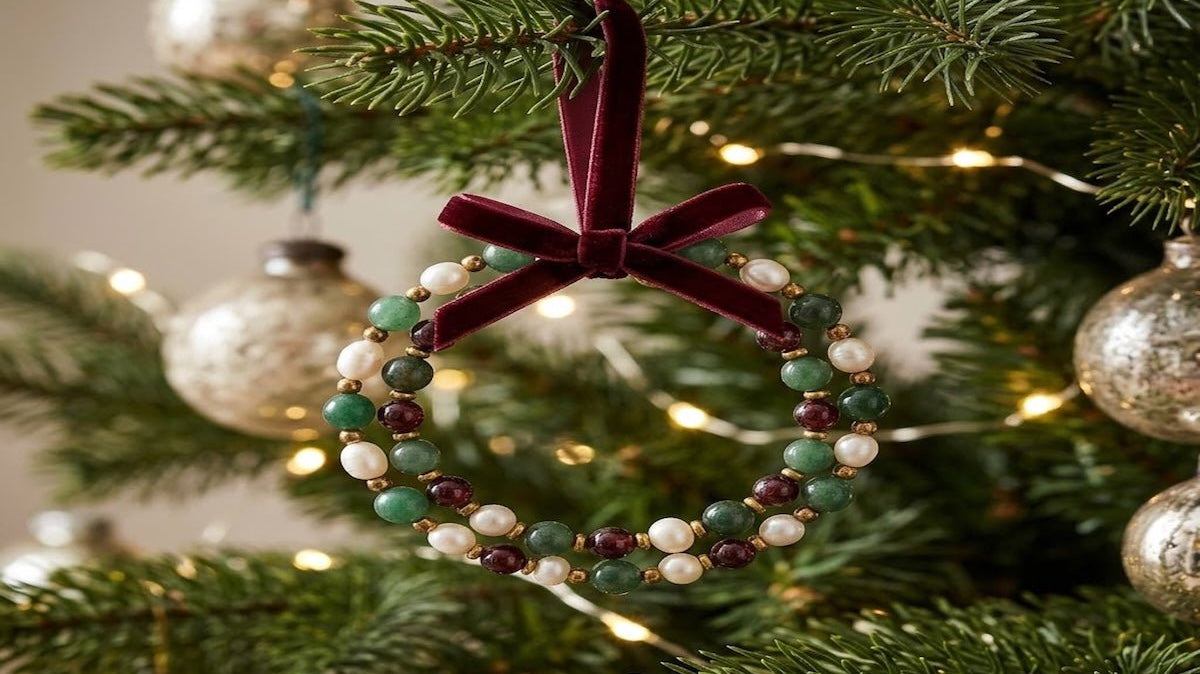
Try using darker garnet beads throughout a necklace with a brighter ruby accent near the center. You can also separate the gemstones with small metal spacers to give each shade room to stand out. The key is choosing colors that look intentional together rather than expecting every red bead to match perfectly.
Care and Jewelry-Making Tips for Garnet and Ruby Beads
Both garnet and ruby beads need proper care, especially when they're part of jewelry you plan to wear regularly. A few simple precautions can help protect the gemstones and keep your finished pieces looking their best.
- Inspect Beads Before Stringing: Check for chips, cracks, or rough edges around drilled holes that could damage your stringing material.
- Choose Appropriate Findings: Use clasps, wire, and other jewelry findings that can comfortably support the weight of your beads.
- Protect Softer Gemstones: Store garnet separately from harder stones like ruby to help prevent scratches.
- Check for Treatments: Some ruby beads are treated or made with composite materials that require special care. Always follow the supplier's cleaning recommendations.
- Clean Gently: Wipe beads with a soft cloth after wearing and avoid harsh chemicals or abrasive cleaners.
Taking the time to inspect your materials and care for your finished jewelry can make a difference in how well your designs hold up over time.
Find Garnet and Ruby Beads at The Bead Traders
Whether you prefer the deep, warm reds of garnet or the vibrant color of ruby, both gemstones offer beautiful possibilities for handmade jewelry. The right choice comes down to the look you want to create, how you plan to use the beads, and your budget.
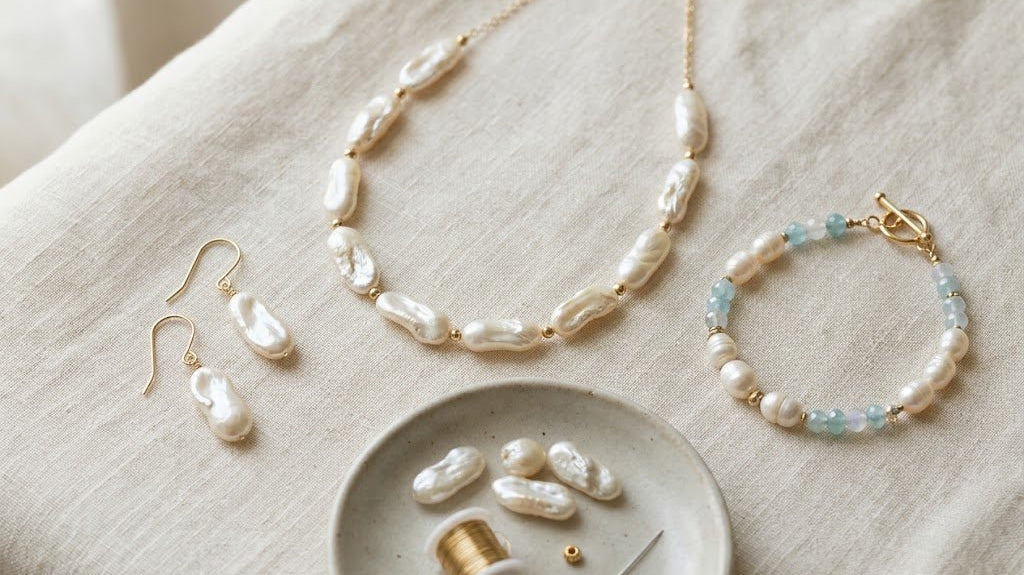
At The Bead Traders, you'll find a selection of garnet and ruby beads to inspire your next project. You can also explore our gemstone beads alongside metal beads and findings, spacers, and freshwater pearls to bring your design ideas to life.
Shop garnet and ruby beads at The Bead Traders and explore our New Arrivals to find the perfect materials for your next creation. U.S. orders over $100 get free shipping.