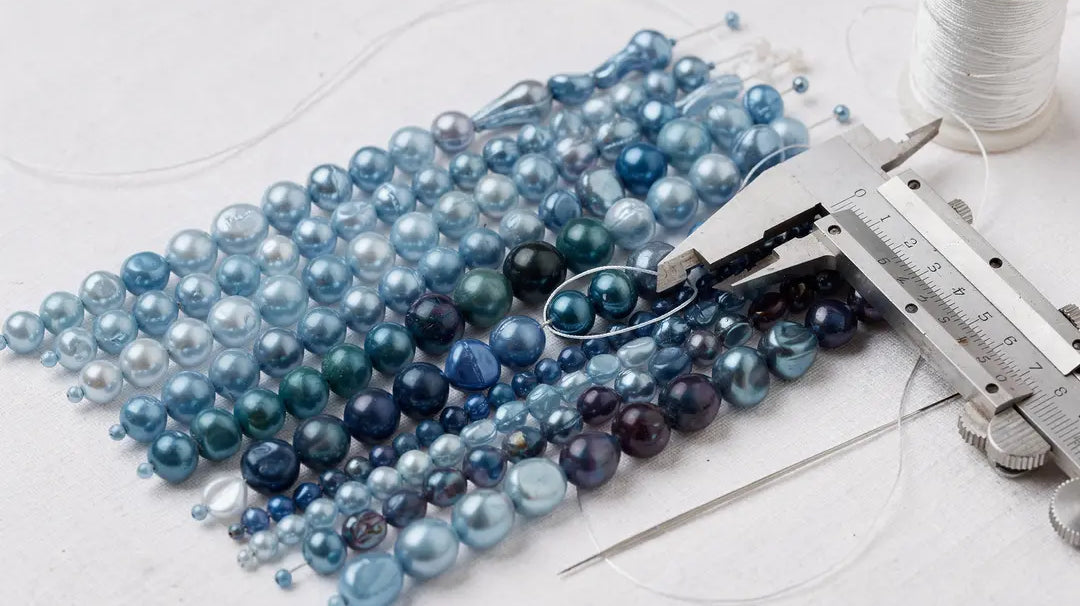
Blue pearl beads bring cool color and natural luster to jewelry designs, whether you're creating a delicate pair of earrings, a mixed-bead bracelet, or an entire pearl strand. And with shades ranging from pale silvery blue to deeper teal and peacock tones, there are plenty of ways to incorporate them into your own style.
Choosing the right pearls, however, involves more than finding a color you love. Size, shape, drilling, and stringing method all influence how the bead looks and behaves in a finished piece.
In this guide, we'll break down popular blue bead sizes and shapes, how to choose the right option for your project, and the best ways to string and care for your pearls. You can also explore our full collection of freshwater pearl beads as you plan your next design.
What Are Blue Pearl Beads?
Blue pearl beads are cultured pearls with colors ranging from soft blue-gray and aqua to deeper teal, navy, and peacock tones. In freshwater pearls, these colors may be naturally influenced by the pearl's formation or created and enhanced through treatments such as dyeing. Many of the more saturated blue, green, and peacock freshwater pearls used in jewelry making are color-treated.
What sets them apart from other blue beads is their luster. Rather than a flat or opaque color, pearls reflect light across the surface, giving blue tones additional depth and variation.
Natural Variation and Surface Texture
Because cultured freshwater pearls develop individually inside mussels, slight differences from bead to bead are expected. Depending on the strand, you may notice subtle rings, dimples, ridges, or variations in color and shape.
Some designers prefer smoother, more consistent strands for polished or symmetrical pieces, while others choose pearls with more visible variation for organic and freeform designs. The right option depends on the look you want to create.
Learn more and find inspiration by reading our article, "Freshwater Pearls Buying Guide: How to Pick the Perfect Pearl."
Common Blue Tones
Blue freshwater pearl beads are available in a wide range of shades, making it easy to choose a color that complements the rest of your design. Here are some of the most common options:
- Pale Blue and Aqua offer a light, subtle wash of color.
- Teal and Denim Blue add richer color without becoming too dark.
- Gray-Blue creates a cooler, more neutral effect.
- Peacock and Deep Blue provide darker, more saturated tones with greater contrast
These aren't your only options, though. Find other tones and hues by reading "Rarest Pearl Color Today."
What Sizes Work Best for Blue Pearl Jewelry?
Blue pearl beads come in a wide range of sizes, from tiny accent beads to larger pearls that can serve as the focal point of a design. As a general guide, 2mm to 5mm pearls create a finer, more delicate look, 6mm to 9mm pearls offer versatile mid-size proportions, and pearls 10mm or larger make a stronger visual impact.
Keep in mind that pearl shape also affects how large a bead appears, so always check the individual strand measurements when planning your project. Here's how it can look in practice:
Small Pearls for Delicate Details
Blue pearls around 2mm to 5mm work well when you want color and luster without adding much visual weight. Try them in delicate necklaces and bracelets, bead embroidery, small clusters, or as accents between larger beads.
This range is also a practical choice when you want the pearls to be noticeable without making them the dominant element of the piece. Start exploring by looking at our 3mm Sky Blue Shell Pearl Microfaceted Rounds.
Medium Pearls for Everyday Designs
Pearls around 6mm to 9mm offer enough size to show off their color and luster while remaining easy to incorporate into a variety of jewelry styles. They can be used for full pearl strands, bracelets, earrings, or mixed designs with gemstone beads.
This range is also a practical choice when you want the pearls to be noticeable without making them the dominant element of the piece. See what this style looks by exploring our 6-7mm Aqua Blue Shaded Baroque Pearls.
Large Pearls for Statement Pieces
At 10mm and larger, blue pearls have greater visual presence and can work well as focal beads, prominent drops, or part of a larger-scale strand. You can see what this may look like with our 10mm Seablue Chalcedony Faceted Coins.
Try using them in statement earrings, bold necklaces, or bracelets where their size, shape, and blue coloring can be clearly seen. You can also space larger pearls with metal components or sections of chain to create contrast and keep the overall design balanced.
Which Shapes of Blue Pearls Should You Choose?
Shape changes both the appearance of a blue pearl and how it sits within a finished piece. Round- and near-round create more consistent strands, while oval, rice, potato, coin, Biwa, and baroque shapes introduce varying degrees of texture and irregularity.
Explore our Freshwater Pearls by shape to compare options and consider how much uniformity or natural variation you want in your design.
Round and Near-Round Pearls
Round- and near-round blue pearls are a natural choice for symmetrical necklaces, bracelets, and earrings. Their consistent proportions create a more uniform appearance across a strand and make them easy to repeat throughout a design.
Near-round pearls offer a similar look with subtle variations in shape and surface, making them a good option when you want some of the natural character of freshwater pearls without pronounced irregularity.
Rice, Oval, and Potato Pearls
Rice, oval, and potato pearls fall between highly uniform round pearls and more irregular baroque shapes. Their elongated or softly rounded profiles introduce variation while still being easy to repeat throughout necklaces and bracelets.
They also mix easily with other bead shapes, making them useful for designs that combine blue pearls with gemstones, spacers, or metal components.
Coin, Baroque, and Biwa Pearls
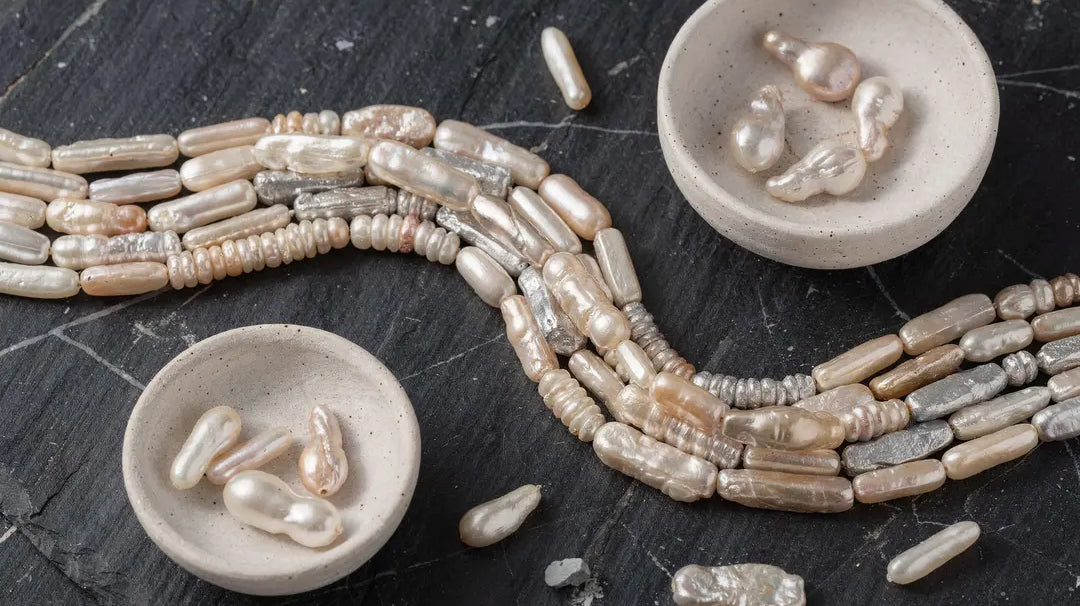
For more visible shape and surface variation, consider coin, baroque pearls, or elongated Biwa-style pearls.
Coin pearls offer a flatter profile and broader surface for showing off color and luster, while baroque pearls feature naturally irregular silhouettes that vary from bead to bead. Biwa-style stick pearls create an even more elongated look and can work especially well as drops or focal elements.
For example, a Peacock Biwa Stick Pearl can introduce both deep blue-green color and a contrasting linear shape to a mixed-pearl design.
How Do You String Blue Pearls Without Damaging Them?
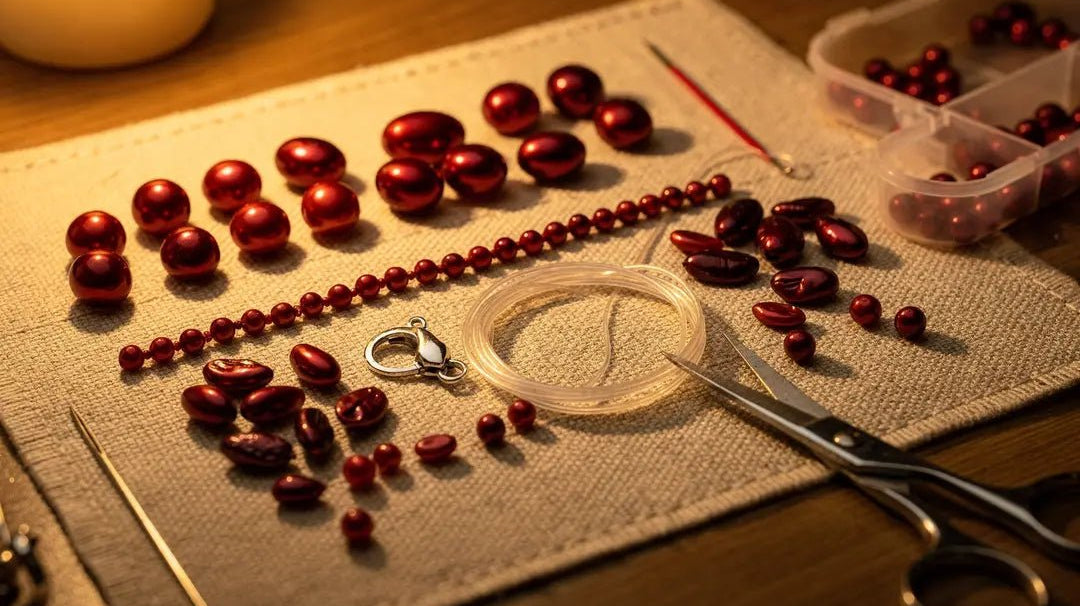
Blue freshwater pearls can be strung on silk, nylon, flexible beading wire, or other materials suited to the design. Because pearls are softer than many gemstones, work gently and avoid forcing stringing material or findings through narrow drill holes.
Before you begin, inspect the pearls for drill-hole size and placement. This is especially important with irregular freshwater pearl shapes, since the holes may not be identical from bead to bead.
Choose the Best Stringing Materials
The best stringing material depends on the type of jewelry you're making. Here's a brief overview:
- Silk or nylon thread works well for traditional knotted pearl necklaces and bracelets.
- Flexible beading wire provides additional structure for strands that combine pearls with gemstones or metal beads.
- Stretch cord can be used for simple slip-on bracelets when the drill holes accommodate the cord.
- Head pins and jewelry wire are useful for pearl drops, earrings, charms, and wire-wrapped components.
Whatever you choose, make sure the material passes comfortably through the pearl without placing unnecessary pressure on the drill hole.
And once you've chosen your stringing method, The Bead Traders makes it easy to find the other components you need to complete your design. Pair it with our metal beads and findings and chain by the foot to create a finished piece that works with your preferred color, scale, and style.
Consider Knotting Between Pearls
Traditional pearl strands are often knotted between individual beads. The knots help reduce direct contact between neighboring pearls, give the strand flexibility, and can prevent multiple pearls from falling off if the strand breaks.
Choose a thread thickness that works with the size of the drill holes and creates a knot large enough to stay securely between the pearls.
Check Hole Size and Needle Choice
Freshwater pearl drill holes can be relatively small, so check them before selecting your thread, wire, or needle. A fine beading needle may be necessary when working with silk or nylon, particularly for smaller pearls.
For earrings and wire-wrapped designs, choose a wire or head pin gauge that fits easily through the pearl while still providing enough strength for the finished piece. Never force a needle, wire, or cord through a tight drill hole, as this can chip or damage the pearl around the opening.
Finishing with the Right Findings
Clasps, bead tips, crimps, crimp covers, and jump rings can all play a role in finishing a pearl strand, depending on the stringing method you choose.
When combining pearls with metal components, select findings that are appropriately sized for both the strand and the weight of the finished jewelry.
What Beads and Findings Pair Well with Blue Pearls?
Blue pearl beads can be paired with gemstones, metal components, and chains to introduce contrasting color, texture, or shape. Consider the specific shade of blue as well as the size and shape of the pearls when choosing coordination materials.
Here's what this looks like in practice:
Gemstone Pairings
Neutral, translucent, and blue-green gemstones can complement blue pearls without competing with their color. Moonstone, labradorite, clear quartz, and aquamarine tones are natural places to start, while contrasting gemstones can introduce a stronger color difference.
Browse The Bead Traders collection of gemstone beads to compare colors, shapes, and sizes alongside your pearls.
Metal Tones and Findings
Metal choice can noticeably change the overall appearance of blue pearls. For example:
- Silver tones complement their cooler coloring
- Gold or gold-filled components introduce warmer contrast.
- Brass can give the design a warmer, more vintage-inspired appearance.
- Oxidized metals create darker contrast against lighter or brighter blue pearls.
Start to get an idea of which metal pieces may best fit your piece by exploring our options like Gold-Plated Ellipse Cut Bicones and Antique Silver-Plated Multi-Strand Cones Connectors.
Chain Accents and Mixed-Media Designs
Chain offers another way to incorporate blue pearls without creating a full beaded strand. Use chain by the foot to create pearl stations, extenders, layered necklaces, or asymmetrical designs.
For an option that already incorporates pearls, freshwater pearl chains can also be added to necklaces, bracelets, and other mixed-media designs.
Frequently Asked Questions About Blue Pearl Beads
Are blue pearls real pearls?
Many blue pearl beads are genuine cultured beads. Their color may be natural, dyed, or otherwise enhanced depending on the pearl. Imitation blue pearls, by comparison, are manufactured to recreate the appearance of genuine pearls rather than being cultured inside a mollusk. Always check the individual product description if pearl type or color treatment is important to your project.
Do blue pearl colors fade?
Dyed or color-treated pearls can retain their appearance with proper care, but exposure to harsh chemicals, excessive sunlight, heat, and abrasive cleaners may affect their color or luster over time. To help preserve them, apply perfume, hairspray, and lotion before putting on pearl jewelry and clean the pearls gently with a soft, slightly damp cloth after wear.
Should pearl beads be sealed or coated before use?
Freshwater pearl beads generally do not need to be sealed before being incorporated into jewelry. Adding an unnecessary coating can alter their natural surface and luster. Instead, handle the pearls gently while stringing and protect finished pieces from chemicals, scratches, and abrasive cleaning methods.
Bring Your Blue Pearl Design to Life With The Bead Traders
From subtle blue-gray pearls to saturated teal and peacock tones, blue freshwater pearls offer plenty of options for adding color and luster to handmade jewelry. Consider size, shape, drilling, and stringing method together to choose beads that work with both your design and the way you plan to construct it.
Explore The Bead Traders' freshwater pearl beads and pair your favorites with our gemstone beads, metal beads and findings, or chain by the foot. You can also browse our New Arrivals to see the latest beads and jewelry-making supplies added to the shop.
The Bead Traders offers free U.S. shipping on orders over $100, so you can stock up on pearls and coordinating materials for your next project.