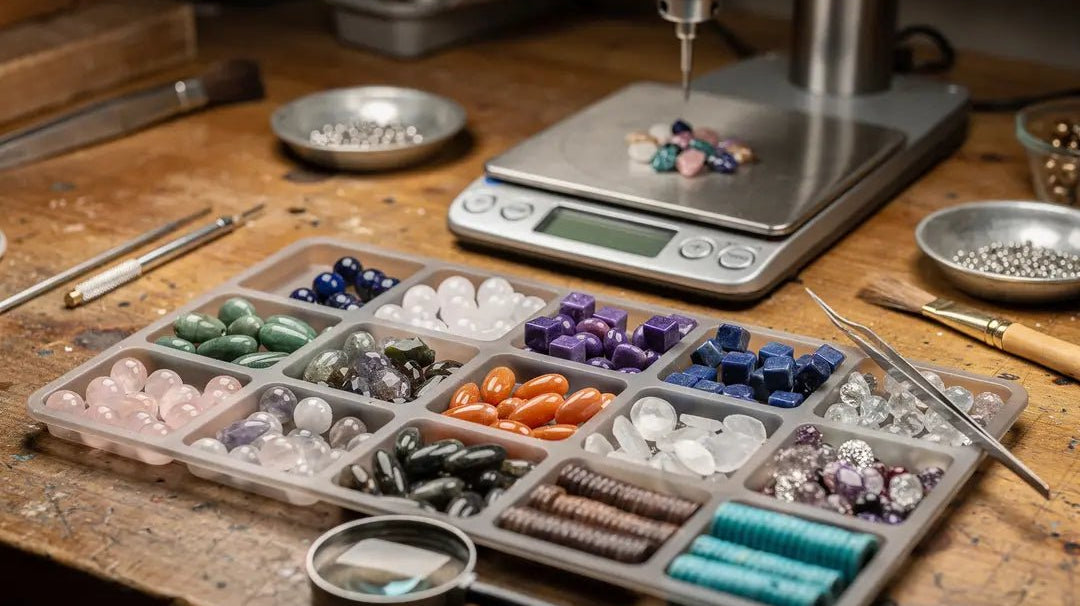
Gemstone bead shapes define how a piece looks, feels, and wears. The same labradorite can appear refined, earthy, bold, or understated depending how it's cut. Similarly, a smooth round bead creates timeless bracelets, whereas teardrop shapes naturally draw the eye as pendants or earrings.
Ultimately, a gemstone's bead shape affects far more than appearance alone. It influences how a piece drapes, how it reflects light, how comfortably it wears, and how easily it pairs with other materials. However, understanding the differences may be challenging at first glance.
In this gemstone bead shapes guide, we'll break down the most common shapes you'll encounter, including rounds, rondelles, faceted beads, nuggets, teardrops, and more. We'll also discuss practical design guidance for each unique shape. Whether you're creating delicate bracelets or statement-worthy necklaces, choosing the right shape helps your design from the start.
Gemstone Bead Shapes Guide: Why Shape Matters in Jewelry Design
As we mentioned above, shape affects more than appearance. It influences how a finished piece drapes, catches light, feels on the body, and how much visual weight it carries. A smooth round bead, for example, creates a softer, more even glow. At the same time, a faceted rondelle reflects with a sharper, more noticeable sparkle.
Shape also determines how a bead sits on its stringing material. Rounds move easily and align evenly, tubed and ovals feel more directional, teardrops naturally hang downward, and chips stack loosely. Each of these unique approaches impacts the way a piece will reflect light, wear, and function.
Ultimately, there is no universal "correct" choice. It depends more on how you want your finished piece to look. An everyday stretch bracelet will require significantly different needs than a bridal pendant necklace. Start with your design goal first, then choose the bead shape that supports it.
Quick Reference: Best Gemstone Bead Shapes by Project Type
Different gemstone bead shapes naturally lend themselves to different design styles and construction methods. But if you're new to jewelry making, it can be hard to understand where to start. Use this quick reference guide as a starting point when planning your next piece:
- Rounds: Classic strands, stretch bracelets, knotted necklaces, mala-style jewelry
- Rondelles: Spacers, patterned necklaces, elegant bracelets, layered strands
- Faceted beads: Dressier designs, evening jewelry, delicate layering necklaces, earrings
- Nuggets: Bohemian necklaces, chunky bracelets, organic statement pieces
- Teardrops: Drop earrings, pendant necklaces, lariat ends, wire-wrapped focals
- Cubes and geometric shapes: Modern bracelets, geometric earrings, minimalist necklaces
- Ovals and barrels: Comfortable bracelets, long necklaces, men's and unisex jewelry
- Chips: Casual layered strands, wrap bracelets, memory wire, multi-strand designs
- Briolettes and fancy cuts: Wire-wrapped earrings, pendant necklaces, charm clusters, special occasion pieces
For even more information, visit our guide: "What Are Best Gemstone Beads for Jewelry Making?"
Round Gemstone Beads: The Most Versatile Everyday Shape
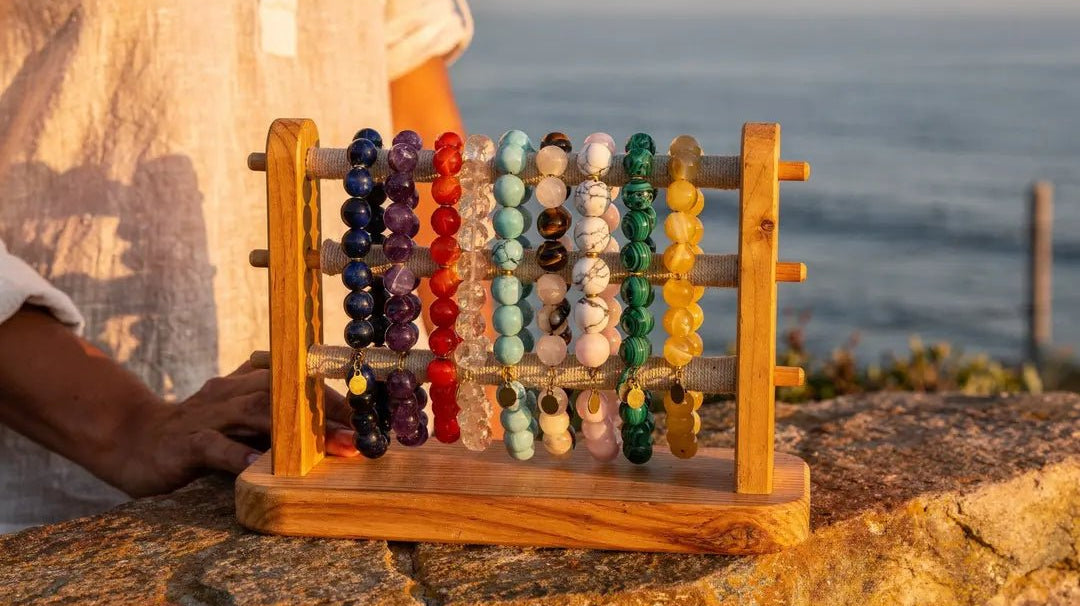
Round gemstone beads are one of the most common shapes, having been used since ancient times. Their balanced symmetry makes them easy to string, comfortable to wear, and simple to mix with other bead shapes, metals, and focal elements. Because of that flexibility, they work well for a majority of design styles.
Smaller round beads, typically 4mm to 6mm, work beautifully in delicate bracelets, stacking designs, and as supporting accents alongside focal stones. Larger rounds, usually 8mm to 12mm, create more visual presence and can easily carry a bracelet or necklace design alone.
If you're interested in learning more about the history of gemstone bead jewelry, visit our post: "A Brief History of Gemstone Beads."
Best Projects for Round Beads
Round gemstone beads work especially well in classic single-strand bracelets, stretch bracelets, knotted necklaces, mala-style strands, beaded hoops, and simple gemstone neckless. Their uniform shape creates clean spacing and an easy, balanced look.
A strand of 6mm rounds makes an effortless everyday bracelet, while 10mm rounds have enough visual presence to stand alone as a simple statement piece.
Stringing and Pairing Tips for Round Beads
Consistent sizing creates a clean, polished look, while mixing two or three round bead sizes can add visual rhythm without making the design feel busy. Round beads also pair easily with metal spacer beads, freshwater pearls, and rondelles to create definition.
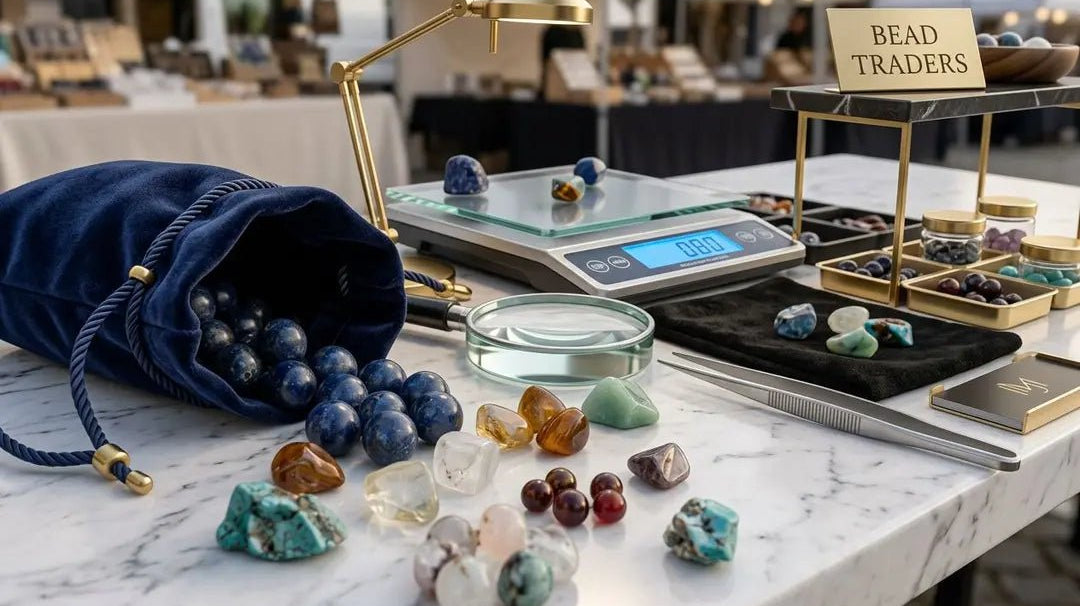
The Bead Traders carries round gemstone beads in a wide range of stones and sizes, making them easy to pair with coordinating metal beads, findings, and other design components.
Rondelle Gemstone Beads: Ideal for Spacing, Sparkle, and Pattern
Rondelle gemstone beads are disc-shaped, with a flatter profile than traditional round beads. That shape allows them to sit differently on a strand, creating cleaner spacing, subtle structure, and definition between larger beads without adding unnecessary bulk.
Faceted rondelles are especially popular because their cut edges reflect light from multiple angles, adding sparkle and a more polished finish. They’re an easy way to introduce shine, pattern, and visual contrast without making a design feel heavy.
Best Projects for Rondelles
Rondelle gemstone beads work especially well in delicate bracelets, patterned necklaces, earrings, layered strands, and designs that alternate gemstone and metal elements. Their slim profile adds structure and definition without overwhelming the overall design.
This bead shape is particularly useful for framing larger focal beads, where you want added detail and contrast without competing for attention.
Stringing and Pairing Tips for Rondelles
To create breathing room and visual rhythm, use rondelle beads between larger gemstones. They pair especially well with freshwater pearls for a softer, elegant look, metal spacer beads for added definition, and faceted rounds when you want consistent sparkle.
Rondelles also work well as transition beads between different sizes in graduated designs. As a result, this helps the overall piece feel more intentional and balanced.
Faceted Gemstone Beads: Best for Shine, Movement, and Dressier Designs
Faceting refers to a bead's surface finish rather than its shape. Instead of a smooth exterior, faceted beads feature multiple flat cut surfaces that reflect light more intensely. This results in an added sparkle and dimension that many jewelry makers appreciate.
You’ll find faceted versions of many popular shapes, including rounds, rondelles, ovals, teardrops, and more. Ultimately, because of the light reflection, faceted gemstone beads can make even smaller designs feel more elevated.
Learn more about these differences in our guide, "Faceted vs. Smooth Gemstone Beads."
Best Projects for Faceted Beads
Faceted gemstone beads work especially well in evening jewelry, bridal-inspired designs, delicate layering necklaces, earrings, and charm bracelets. Their reflective surfaces add visual interest and movement, making even simple designs feel more elevated.
They're particularly effective in smaller sizes, typically 2mm to 4mm, where the added sparkle enhances the piece without overwhelming it. The Bead Traders carries faceted gemstone beads, including rondelles, in sizes ranging from delicate micro beads to larger statement-making options.
Stringing and Pairing Tips for Faceted Beads
Pair faceted gemstone beads with smooth rounds for contrast or freshwater pearls for a softer, more balanced look. They also work beautifully in mixed-media designs, such as refined necklaces that combine faceted gemstone stations with a simple chain by the foot.
If you're stringing delicate thread or cord, check the bead holes carefully before assembling your piece. Some faceted beads can have sharper internal edges than smooth beads, which may cause finer stringing materials to wear more quickly over time.
Nugget Gemstone Beads: Best for Organic, Earthy, and One-of-a-Kind Designs
Nugget gemstone beads are intentionally irregular, with organic shapes that vary from bead to bead. That natural inconsistency is exactly what gives them their appeal. Compared to uniform shapes, nugget gemstone beads create designs that appear relaxed, handcrafted, and full of character.
They also pair especially well with structured design elements, like polished metal spacers or refined findings. This balance creates a beautiful contrast between organic texture and clearer lines.
Best Projects for Nugget Beads
Nugget gemstone beads work especially well in bohemian necklaces, chunky bracelets, statement strands, beach-inspired designs, rustic earrings, and mixed-gemstone pieces. Their organic shapes naturally create texture and movement, making designs feel more relaxed and less structured.
Additionally, smaller polished nuggets can work well as the primary bead throughout an entire strand, while larger nuggets with rough or semi-polished textures tend to shine as focal accents.
Stringing and Pairing Tips for Nugget Beads
Before you begin stringing, sort nugget beads according to size, color, and weight. This creates a more balanced distribution across the entire design. Additionally, because of their irregular profiles, pairing them with small round beads, seed beads, or metal spacers can help improve spacing, reduce friction between edges, and create a cleaner finished look.
In designs using this shape and style, flexible beading wire is often the ideal choice, as it accommodates uneven shapes more naturally. It's important to keep findings and supporting elements relatively simple, allowing the gemstone’s organic texture to remain the focal point
Teardrop Gemstone Beads: Best for Earrings, Pendants, and Focal Movement
Teardrop gemstone beads taper at one end and widen at the other, creating a naturally directional shape that draws the eye downward. That built-in sense of movement becomes especially well suited for designs in which flow and visual emphasis matter.
Smaller teardrops can be clustered to create fuller, layered looks, whereas larger teardrops work beautifully as standalone focal pendants. Nonetheless, both sizes bring a softness and sense of movement that more symmetrical shapes cannot offer.
To preview your options, take a look at The Bead Traders Teardrop Bead Selection, full of unique colors and tones
Best Projects for Teardrop Beads
Teardrop gemstone beads work particularly well in drop earrings, pendant necklaces, charm-style bracelets, lariat ends, wire-wrapped focal designs, and bridal or occasion jewelry. Their naturally tapered shape creates built-in movement and visual focus, making them ideal for designs that benefit from a more elegant silhouette.
In many cases, a single larger teardrop bead on a fine chain is enough to create a complete, polished design with minimal additional elements.
Stringing and Pairing Tips for Teardrops
Teardrop beads can be top-drilled, side-drilled, or briolette-drilled. Ultimately, that drill orientation directly affects how the bead hangs in the finished design. To ensure your gemstone beads align with your goal, it's worth checking this prior to starting.
Top-drilled teardrops create a classic droplet effect, while head-drilled styles position more of the bead below the stringing line for added length and movement.
Beyond this, teardrops pair perfectly with delicate chain, metal findings, freshwater pearls, and small faceted rondelles. Wire wrapping is also an excellent option when you want the bead to move freely and act as a true focal element.
Oval, Barrel, and Tube Gemstone Beads: Best for Flow and Comfort
Oval, barrel, and tube gemstone beads are elongated shapes that naturally introduce length and flow into a design. Additionally, their smooth profiles sit comfortably against the wrist or neckline, making them a practical choice for regularly worn pieces.
While these shapes share a similar elongated silhouette, each creates a slightly different effect. Tube beads feel cleaner and more directional, lending themselves to modern or geometric designs, while ovals and barrels create a softer, more classic look.
Best Projects for Oval, Barrel, and Tube Beads
Elongated gemstone beads work especially well in geometric or architectural designs, such as stretch bracelets, men's and unisex jewelry, long necklaces, station necklaces, and minimalist gemstone pieces. Their shape naturally creates flow and spacing, making them a strong choice for cleaner, more streamlined pieces.
Stringing and Pairing Tips for Elongated Beads
Alternate elongated beads with small round spacers to improve flexibility keep the finished piece from feeling too stiff or uniform. Beyond this, maintaining a consistent orientation creates a cleaner, more structured look, while slightly rotating the beads can make the design feel more relaxed.
These shapes pair especially well with metal beads and findings, which help emphasize their linear, architectural qualities.
Chip Gemstone Beads: Best for Texture, Color, and Casual Layering
Chip gemstone beads are small, irregular pieces that vary naturally in size, shape, and surface texture. That variation creates rich color, movement, and an organic look that uniform beads simply don't replicate.
They’re also often a more accessible way to design with premium gemstone materials, since chip beads in stones like labradorite, tourmaline, or Australian opal are typically more affordable than larger faceted or precision-shaped versions of the same material.
Best Projects for Chip Beads
Chip beads work especially well in layered necklaces, wrap bracelets, anklets, memory wire bracelets, casual earrings, and multi-strand designs. Their irregular shapes create more natural texture variation and movement, making them a strong fit for more organic pieces.
They’re especially useful when you want a gemstone-rich look with noticeable color variation and texture throughout the piece.
Stringing and Pairing Tips for Chip Beads
Use flexible stringing wire or sturdy cord when working with chip beads, since their irregular shapes sit more naturally on materials with some level of movement. Adding smooth spacer beads near clasps or closure points can also improve comfort, especially if the chip edges feel rough against the skin.
To keep the design from feeling dense, pair chip beads with larger focal gemstones, simple chain, or smooth round beads for contrast. A single larger focal bead at the center of a chip strand also gives the eye a natural place to land.
Cube, Square, and Geometric Gemstone Beads: Best for Modern Designs
Cube, square, rectangle, and other geometric gemstone bead shapes bring structure, clean lines, and a more contemporary feel to jewelry designs. Compared to traditional round strands, their angular shapes create a look that feels intentional and architectural.
Additionally, these beads can make a strong statement on their own or be combined with softer shapes to create contrast, texture, or added visual interest.
Begin planning your design by exploring The Bead Traders' Cube Gemstone Bead collection.
Best Projects for Geometric Beads
Geometric gemstone beads work especially well in minimalist bracelets, modern chokers, men's jewelry, and statement necklaces. Their angular shapes naturally create cleaner lines and a more contemporary aesthetic.
Pairing cube or geometric gemstone beads with sleek metal findings enhances that structured look, creating designs that feel polished enough for both everyday wear and more elevated styling.
Stringing and Pairing Tips for Geometric Beads
Use spacer beads between angular shapes to improve flexibility and reduce friction between edges. This proves especially important in pieces worn close to the skin. For styling, pair geometric beads with round gemstone beads to soften the overall look. Or, combine them with chains for a cleaner mixed-metal modern design.
It’s also worth checking hole placement before planning your piece, since some geometric beads are drilled corner-to-corner rather than face-to-face, which can significantly change how they sit and align on the strand.
Briolettes and Fancy-Cut Gemstone Beads: Best for Refined Focal Details
Briolette gemstone beads are typically faceted or pear-shaped, while fancy-cut gemstone beads include shapes like marquise, hearts, leaves, coins, hexagons, and other decorative cuts. Unlike more traditional strand beads, these shapes are usually used as focal details rather than repeated throughout the design.
Because of their distinct silhouette and added visual interest, they bring personality, movement, and polish to a piece. However, they ultimately work the best when given the space to stand out.
Best Projects for Briolettes and Fancy Cuts
Briolettes and fancy-cut gemstone beads work especially well in wire-wrapped earrings, pendant necklaces, charm clusters, birthstone-inspired jewelry, delicate station necklaces, and special occasion designs.
Moreover, a single briolette wire-wrapped onto a fine chain can create an effortlessly elegant finished design, with a cluster of smaller marquise or decorative cuts can add striking visual presence at the center of a necklace or statement piece.
Stringing and Pairing Tips for Fancy Shapes
Check the drill style carefully before finalizing your design, as this determines how the bead will hang and what assembly methods make the most sense. Wire wrapping, jump rings, head pins, and chain are all effective ways to showcase fancy-cut beads while allowing them to sit correctly.
Additionally, for pairing, keep surrounding elements understated. Simple round beads, freshwater pearls, or simple metal spacers help support the focal shape without competing for attention.
How to Pair Different Gemstone Bead Shapes in One Design
Mixed-shape designs work best when there's a clear visual hierarchy, repetition, and balanced contrast. Follow the tips below to create a cohesive piece:
Use One Shape as the Star
Choose one focal shape, such as a teardrop, large nugget, or fancy-cut coin, and support it with simpler beads, such as rounds, rondelles, or small metal spacers. This keeps the design intentional rather than cluttered.
Repeat Shapes to Create Rhythm
Alternating rounds and rondelles, repeating teardrop dangles at regular intervals, or using consistent spacer beads throughout a strand all help the eye understand the pattern. Repetition is what makes mixed shapes feel cohesive rather than random.
Balance Texture with Smooth Elements
Pair faceted beads with smooth gemstones, nuggets with polished rounds, or chips with clean metal findings. Contrast adds interest, but too much texture can make a design feel busy.
Common Mistakes to Avoid When Choosing Gemstone Bead Shapes
Most shape-related mistakes happen when bead selection is based on appearance alone, without considering construction or wearability. Below, we will discuss common things to remain aware of when selecting beads for your design:
Ignoring How the Bead Will Hang
Drill direction directly affects how focal beads will sit in the finished design. A top-drilled teardrop, for example, hangs very differently from a center-drilled one. It's important to always check the drill style before planning your layout.
For additional guidance, review our post: "Bead Hole Size Guide: Match Gemstone Beads to Cord Type."
Using Too Many Competing Shapes
Too many bold shapes in one design can make the piece feel visually crowded. To avoid this, use simpler supporting elements, like spacers, round beads, or chains, to give focal shapes more room to stand out.
Forgetting Wearability
As we mentioned earlier, bead shape affects more than appearance; it also impacts comfort and drape. Heavy focal beads can pull a necklace off-center, while angular shapes may feel uncomfortable against the skin over time. Before finalizing a design, check for awkward weight distribution, sharp edges, or pinch points.
Shopping Tips: How to Choose Gemstone Beads for Your Next Project
At The Bead Traders, we pride ourselves on transparency and quality. In our gemstone bead collection, we offer a range of core materials across all shapes covered in this guide. Additionally, you can find complementing elements such as freshwater pearls and metal beads and findings.
Additionally, make sure to stay up to date with our new arrivals, as we're always receiving new colors and shapes that might spark new inspiration.
Start with the project type, then work through shape, size, finish, and findings. A bracelet needs different shapes than a pendant necklace. Earrings need different drill styles than a strung strand. U.S. customers get free shipping and returns on orders over $100, which makes it practical to stock up across multiple shapes for several projects at once.
When you understand the differences of gemstone bead shapes, you can create cohesive, harmonious pieces.
Round beads offer versatility. Rondelles add polish and spacing. Faceted beads bring sparkle. Nuggets create organic texture. Teardrops make beautiful focal drops. Cubes and geometric shapes add a modern edge. Chips bring casual color and layering depth. Briolettes and fancy cuts give a piece personality and refinement.
Ultimately, none of the options discussed is better than the other. The right choice depends on your project, stringing method, and what you want the finished piece to feel like. Each time you begin a new piece, make sure to use this gemstone bead shapes guide as a helpful reference. This way, you'll spend less time second-guessing, and more time making functional, practical jewelry.